 English
  العربية
 Español
 Русский
When planning a potato chips factory, one of the first decisions is not simply which machine to purchase. You also need to decide what type of potato chips you want to manufacture.
The two main production methods are:
- Fresh-cut potato chips made directly from whole potatoes
- Reconstituted potato chips made from potato flakes, starch and other ingredients
Both products have successful markets, but their raw materials, processing methods, equipment configurations, factory requirements and final product characteristics are very different.
This guide compares the two production methods and explains how to choose the right potato chips production line for your factory.
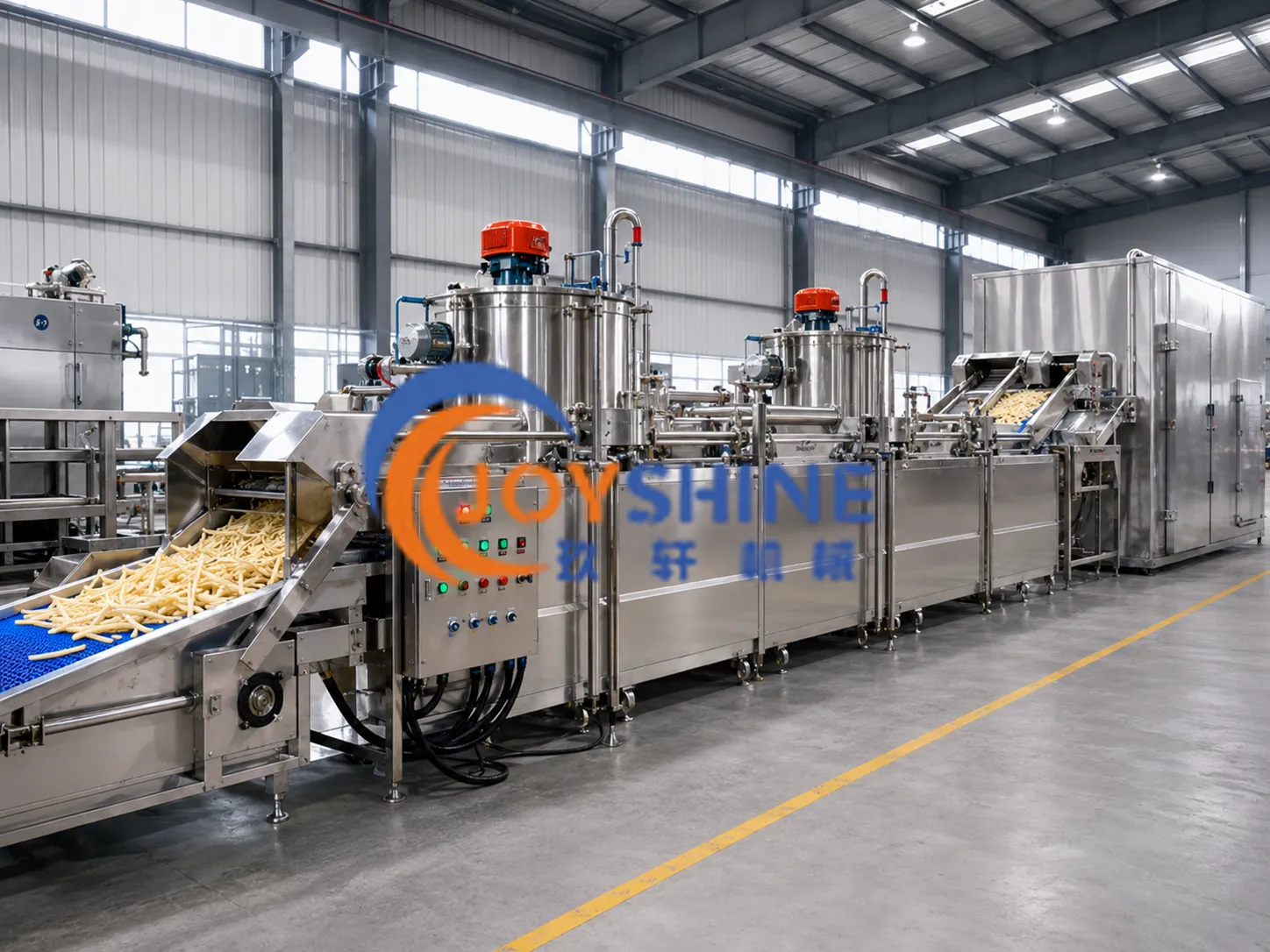
What Are Fresh-Cut Potato Chips?
Fresh-cut potato chips are produced directly from whole potatoes.
After the potatoes arrive at the factory, they are sorted, washed, peeled and cut into thin slices. The slices are then rinsed to remove surface starch before entering the frying, deoiling, seasoning and packaging stages.
A typical fresh-cut potato chips process is:
Potato sorting → Washing → Peeling → Slicing → Starch rinsing → Optional blanching → Dewatering → Frying → Deoiling → Seasoning → Cooling → Packaging
Because the chips are cut directly from natural potatoes, their shapes are not completely identical. Differences in potato size, variety and growing conditions may also produce small variations in color and texture.
These natural differences are often part of the product’s appeal.
Fresh-cut chips are commonly sold as:
- Traditional potato chips
- Kettle-style chips
- Premium natural chips
- Hand-cooked-style chips
- Flavored potato crisps
- Private-label supermarket snacks
What Are Reconstituted Potato Chips?
Reconstituted potato chips are not sliced directly from whole potatoes.
They are normally produced from potato flakes, potato granules, starch, water, oil and seasonings. The ingredients are mixed into a dough, rolled into a sheet and cut or molded into controlled shapes.
A typical reconstituted potato chips process is:
Ingredient dosing → Mixing → Dough preparation → Sheeting → Forming → Frying or baking → Seasoning → Cooling → Stacking or packaging
Because the product is formed from dough, manufacturers can control its:
- Shape
- Thickness
- Weight
- Surface texture
- Curvature
- Ingredient formula
- Flavor profile
This method is commonly used for uniformly shaped chips packed in tubes, trays or carefully arranged bags.
Fresh-Cut vs Reconstituted Potato Chips
| Comparison | Fresh-Cut Potato Chips | Reconstituted Potato Chips |
|---|---|---|
| Main raw material | Whole fresh potatoes | Potato flakes, starch and other ingredients |
| Product shape | Natural and slightly irregular | Uniform and controlled |
| Texture | Natural potato texture | Formula-controlled texture |
| Flavor | Strong natural potato flavor | Flavor can be adjusted through formulation |
| Raw material preparation | Washing, peeling and slicing required | Ingredient weighing and dough mixing required |
| Forming system | Potato slicing machine | Dough sheeting and forming system |
| Raw material variation | More affected by potato quality | More consistent when the recipe is stable |
| Product flexibility | Different slice thicknesses and flavors | Different shapes, formulas and flavors |
| Packaging | Mainly pillow bags or similar snack packaging | Bags, trays or stackable tube packaging |
| Factory focus | Fresh potato handling and frying control | Recipe control, dough forming and shape consistency |
Neither process is automatically better for every factory.
The correct choice depends on your target product, available raw materials, local market, investment plan and desired level of production control.
Advantages of a Fresh-Cut Potato Chips Production Line
1. Natural Potato Appearance
Every fresh potato has a slightly different shape and size. After slicing, the finished chips also have natural variations.
This appearance supports product descriptions such as “made from real potatoes,” “natural-cut” or “traditional potato chips.”
2. Strong Natural Potato Flavor
Because the product is made directly from whole potatoes, the natural flavor of the selected potato variety remains an important part of the finished snack.
The choice of potato variety, storage conditions, reducing sugar level, dry matter content and frying process can all influence the final flavor and color.
3. Relatively Straightforward Product Formula
A basic fresh-cut chip may require only potatoes, frying oil and seasoning.
Manufacturers can then develop different products by changing:
- Potato variety
- Slice thickness
- Frying temperature
- Frying time
- Oil type
- Seasoning formula
- Packaging size
4. Suitable for Premium Product Positioning
Fresh-cut chips can be positioned as natural, traditional or premium snacks.
Manufacturers can also create regional flavors and private-label products without completely changing the main production process.
5. Flexible Capacity Options
Fresh-cut lines can be designed as small semi-automatic systems or large continuous industrial lines.
The right automation level should be selected according to production capacity, available labor, factory space and future expansion plans.
For factories comparing different investment levels, the guide on potato chips production line cost explains the main factors that affect the total budget.
Challenges of Fresh-Cut Potato Chips Production
Raw Potato Quality Can Change
Potatoes from different farms, seasons or storage periods may behave differently during frying.
Important raw material factors include:
- Potato variety
- Potato size
- Dry matter content
- Reducing sugar level
- Storage temperature
- Surface damage
- Sprouting condition
A stable raw material specification helps the factory maintain more consistent chip color and oil absorption.
Peeling Loss Must Be Controlled
An aggressive peeling process removes the skin quickly, but it may also remove too much potato flesh.
The peeling system should balance cleaning efficiency, peeling rate and product yield.
An industrial potato peeling machine can be configured according to the potato condition, required capacity and peeling result.
Slice Thickness Must Be Consistent
Uneven slices do not fry at the same speed.
Thin slices may become too dark or fragile, while thick slices may retain excessive moisture or develop an inconsistent texture.
The slicing machine, blade condition and feeding method should therefore be checked regularly.
Surface Starch and Water Must Be Removed
After slicing, surface starch may cause slices to stick together and can affect frying oil quality.
Rinsing removes loose starch, while dewatering reduces the amount of surface water entering the fryer.
Effective dewatering can also reduce unnecessary heat loss during frying.
Frying and Oil Management Are Critical
The fryer is one of the most important machines in a fresh-cut potato chips line.
A properly designed industrial continuous fryer helps control:
- Frying temperature
- Product residence time
- Conveyor speed
- Oil circulation
- Sediment removal
- Oil filtration
- Final chip color
Oil filtration is particularly important because small potato particles can remain in the oil and continue to cook. Removing these particles helps maintain more stable frying conditions during continuous production.
Advantages of Reconstituted Potato Chips
1. Highly Uniform Product Shape
Because the dough is rolled and molded, the manufacturer can produce chips with a consistent diameter, thickness, weight and curvature.
This is useful for products that need to be stacked or packed in rigid containers.
2. Stable Recipe Control
The manufacturer can adjust the formula to control texture, salt level, color and flavor.
Once the raw material specifications and process parameters are standardized, the finished product can be highly consistent.
3. Flexible Product Development
Reconstituted chips can be developed in different:
- Shapes
- Colors
- Textures
- Base ingredients
- Seasoning styles
- Packaging formats
This gives snack brands more freedom to create a distinctive product identity.
4. Reduced Dependence on Fresh Potato Shape
The production process does not depend on the physical size or external shape of whole potatoes.
However, the quality and consistency of potato flakes, starch and other ingredients still need to be carefully managed.
Challenges of Reconstituted Potato Chips Production
More Complex Formulation
The dough must have the correct moisture, elasticity and consistency.
Small changes in ingredient quality or water addition may affect sheeting, forming and frying performance.
Additional Processing Equipment
A reconstituted line requires ingredient dosing, mixing, dough sheeting and forming equipment that is not needed in a conventional fresh-cut line.
This means the equipment configuration and technical knowledge are different.
Product Development Requires Testing
The manufacturer may need repeated testing to determine the correct formula, thickness, frying parameters and seasoning level.
Developing a stable commercial formula can take longer than producing a basic fresh-cut potato chip.
Different Brand Positioning
Some markets strongly prefer snacks made directly from whole potatoes, while other markets value the uniform appearance and convenient packaging of reconstituted chips.
Market positioning should therefore be studied before equipment is ordered.
Main Equipment in a Fresh-Cut Potato Chips Line
A complete fresh-cut production line normally contains the following sections.
Raw Material Receiving and Sorting
Potatoes are inspected and unsuitable materials are removed before washing.
A storage hopper and elevator can help maintain stable feeding into the production line.
Washing and Peeling
The washing section removes soil, stones and surface impurities.
The peeling method is selected according to potato condition, capacity and acceptable peeling loss.
Slicing and Rinsing
Potatoes are sliced to the required thickness.
The slices are then rinsed to remove loose starch and reduce sticking before frying.
Blanching and Color Control
Some potato varieties or product specifications may require blanching.
The blanching process should be adjusted according to raw material characteristics and the desired finished color rather than applied as a fixed solution to every product.
Dewatering
Water is removed before frying to improve process stability and reduce the amount of moisture entering the hot oil.
Continuous Frying
The fryer controls temperature and residence time while conveying the slices continuously through the oil.
Heating options may include electricity, gas, thermal oil or steam heat exchange, depending on the equipment design and local factory conditions.
Deoiling and Cooling
Excess surface oil is removed after frying.
The chips are then cooled before seasoning and packaging to reduce condensation and protect the final texture.
Seasoning
A seasoning and flavoring machine evenly applies salt, spice powders, oil-based flavorings or other seasonings.
For factories producing several flavors, the seasoning section should be easy to clean and suitable for quick recipe changes.
Packaging
An automatic food packaging machine can combine weighing, bag forming, filling and sealing.
Depending on the market, the packaging system may also include:
- Nitrogen flushing
- Date coding
- Metal detection
- Checkweighing
- Finished bag conveying
- Carton packing
Which Production Method Should You Choose?
Choose Fresh-Cut Potato Chips When:
- You want to use whole fresh potatoes
- Natural potato flavor is important
- Your brand focuses on traditional or premium snacks
- Fresh potatoes are reliably available
- You want to produce several slice thicknesses or flavors
- You prefer a recognizable whole-potato product
- You need a production line that can scale from semi-automatic to fully automatic
Choose Reconstituted Potato Chips When:
- Uniform shape and weight are essential
- You plan to stack the chips in tubes or trays
- Your factory has formulation and dough-processing experience
- You want to create proprietary shapes or recipes
- Potato flakes and other ingredients are reliably available
- Your product positioning is based on uniformity and controlled texture
Information to Prepare Before Requesting a Quotation
Before asking a supplier to design a production line, prepare the following information:
- Target product type: fresh-cut or reconstituted chips
- Required finished-product capacity
- Potato slice thickness or formed-chip dimensions
- Raw material specifications
- Planned flavors
- Automation level
- Heating source
- Local voltage and frequency
- Factory length, width and ceiling height
- Packaging bag size and target pack weight
- Destination country or port
- Future expansion plan
This information allows the equipment supplier to recommend a more accurate process flow, machine configuration and factory layout.
Why Customized Line Design Matters
A potato chips factory is a connected processing system rather than a collection of unrelated machines.
The output of each machine must match the next stage. For example, the slicer capacity must match the washing section, the dewatering system must support the fryer, and the seasoning and packaging sections must handle the final fried output.
A balanced production line can help reduce:
- Product accumulation
- Unnecessary manual handling
- Uneven frying
- Excessive oil use
- Packaging delays
- Cleaning difficulties
- Production bottlenecks
Joyshine provides customized turnkey food processing solutions based on the customer’s product, capacity, factory layout and local utilities.
Conclusion
Fresh-cut and reconstituted potato chips are two different products that require different raw materials and processing technologies.
Fresh-cut chips are suitable for manufacturers that want a natural whole-potato product with traditional appearance and flavor. Reconstituted chips are suitable for brands that need highly uniform shapes, controlled formulas and specialized packaging formats.
The best production method is the one that matches your:
- Target market
- Raw material supply
- Product positioning
- Factory conditions
- Technical experience
- Investment plan
- Packaging strategy
If you are planning a fresh-cut potato chips factory, Joyshine can provide a complete solution covering potato washing, peeling, slicing, rinsing, dewatering, frying, deoiling, seasoning and packaging.
To receive a customized equipment proposal, provide your required capacity, potato specifications, slice thickness, heating source, factory dimensions and packaging requirements.
You can also review Joyshine food processing projects to learn how different production lines are customized for customers worldwide.
Frequently Asked Questions
Are fresh-cut potato chips the same as kettle chips?
Not necessarily. Fresh-cut describes chips made directly from whole potatoes. Kettle-style chips normally refer to a particular cooking method and texture. A fresh-cut production line may produce conventional or kettle-style products depending on the fryer and process design.
Does every fresh-cut potato chips line require blanching?
No. The need for blanching depends on potato variety, sugar content, desired color and product specification. Raw material testing should be completed before the final process is confirmed.
Can one production line make several flavors?
Yes. The main potato processing and frying stages can remain the same while different seasonings are applied after frying. Factories producing multiple flavors should plan suitable cleaning and product-change procedures.
What mainly affects the capacity of a potato chips line?
Capacity is affected by raw potato input, peeling loss, slice thickness, moisture removal, fryer dimensions, frying time and packaging speed. The line should be designed as one balanced system.
What information is needed for a production line quotation?
The supplier normally needs the target product, required capacity, potato condition, slice thickness, heating method, voltage, factory dimensions, packaging requirements and destination.