 English
  العربية
 Español
 Русский
When planning to start or upgrade a potato chips production business, one of the first questions buyers usually ask is:
How much does a potato chips production line cost?
The truth is that there is no single fixed price. A potato chips production line can be small, semi-automatic, and budget-friendly, or it can be a fully automatic industrial system designed for continuous large-scale production.
The final cost depends on many factors, such as production capacity, automation level, frying system, oil filtration, seasoning method, packaging requirements, factory layout, and customized equipment design.
In this guide, we will explain the main factors that affect the price of a potato chips production line and help you understand how to choose the right solution for your factory.
1. Production Capacity Is the Main Cost Factor
Capacity is one of the most important factors that affects the total investment.
A small potato chips line may be suitable for startups, local snack producers, restaurants, or small food factories. A large industrial line is more suitable for established brands, distributors, supermarkets, and export-oriented manufacturers.
Common capacity ranges include:
- 100–300 kg/h: suitable for startups and small snack businesses
- 500–1000 kg/h: suitable for medium food factories and regional suppliers
- 1500–2000 kg/h: suitable for industrial production and large-scale distribution
- Customized capacity: suitable for special factory layouts or high-volume production needs
In general, the higher the capacity, the higher the equipment cost. Larger capacity requires bigger washing machines, peeling machines, slicing machines, blanching systems, continuous fryers, oil filtration systems, seasoning machines, conveyors, and packaging equipment.
However, choosing the largest capacity is not always the best choice. The right capacity should match your current market demand, daily working hours, raw material supply, labor cost, and future expansion plan.
If you are just entering the market, a 100–300 kg/h line may be enough. If you already have stable orders from distributors or supermarkets, a 500–1000 kg/h or larger automatic line may be more suitable.
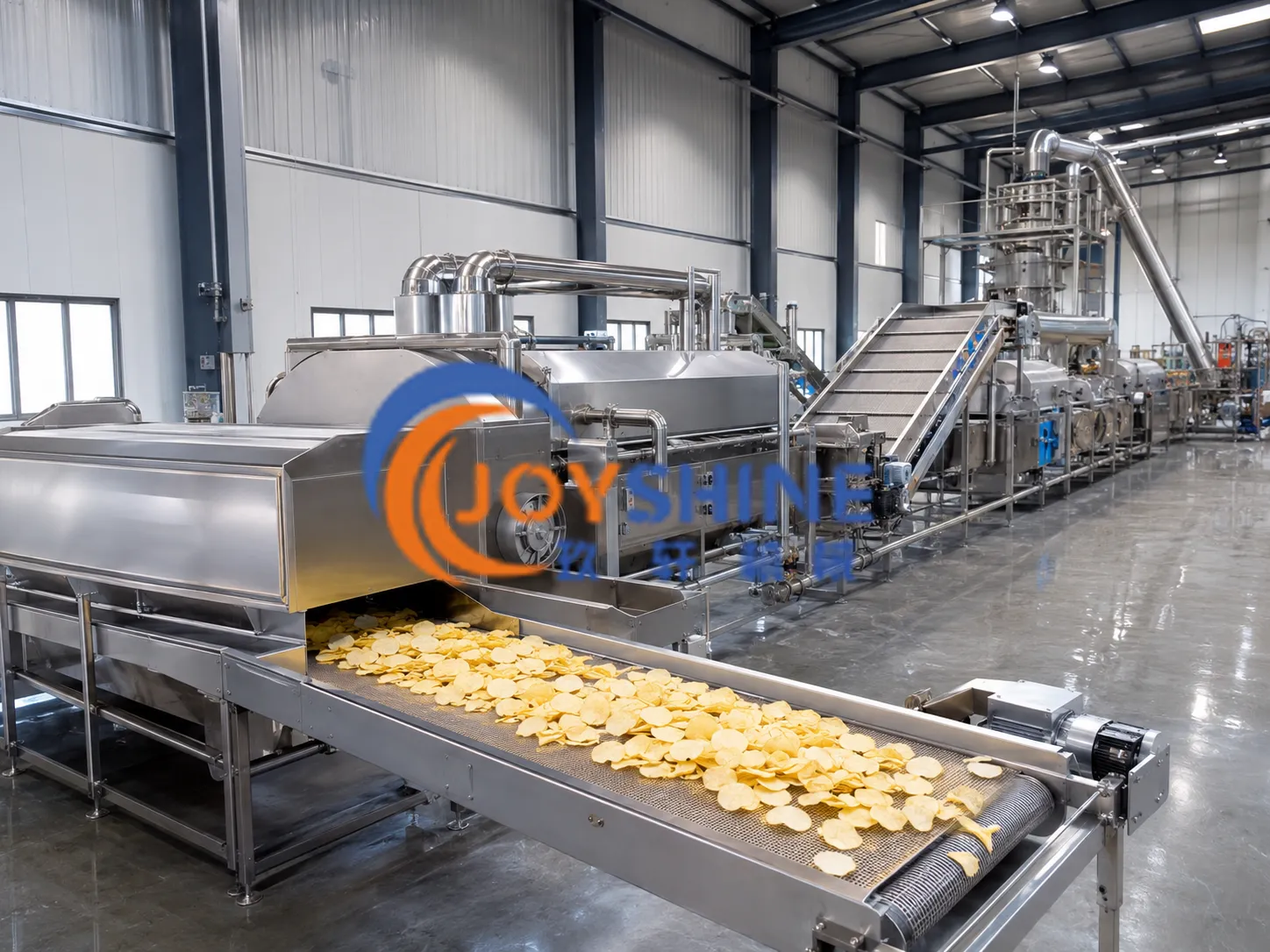
2. Semi-Automatic vs Fully Automatic Potato Chips Line
Automation level is another key factor that affects cost.
A semi-automatic potato chips production line usually requires more manual operation. Workers may need to feed materials, transfer products, inspect quality, and handle packing. This type of line has a lower initial investment and is suitable for small factories or buyers with limited budgets.
A fully automatic potato chips production line connects different machines with conveyors and control systems. It reduces labor, improves production efficiency, and helps maintain more consistent product quality.
Semi-Automatic Line Advantages
- Lower initial investment
- Easier to operate
- More flexible for small batches
- Suitable for startups and local production
- Lower factory space requirement
Fully Automatic Line Advantages
- Higher production efficiency
- More stable product quality
- Lower labor cost in long-term operation
- Suitable for continuous production
- Better for medium and large factories
- Easier to expand production scale
For buyers with limited budget, a semi-automatic line can be a practical starting point. For factories that need stable output, lower labor dependence, and long-term productivity, a fully automatic potato chips line is usually a better investment.
3. Main Machines Included in a Potato Chips Production Line
A complete potato chips processing line usually includes several machines. Each machine plays an important role in product quality and production efficiency.
The typical process includes:
-
Potato washing
Removes soil, sand, and surface impurities from raw potatoes. -
Potato peeling
Removes potato skin by brush or abrasion method while reducing product waste. -
Potato slicing
Cuts potatoes into uniform slices. Slice thickness can be adjusted according to product requirements. -
Rinsing
Removes surface starch from potato slices to reduce sticking and improve frying quality. -
Blanching
Helps improve color, texture, and final chip quality. -
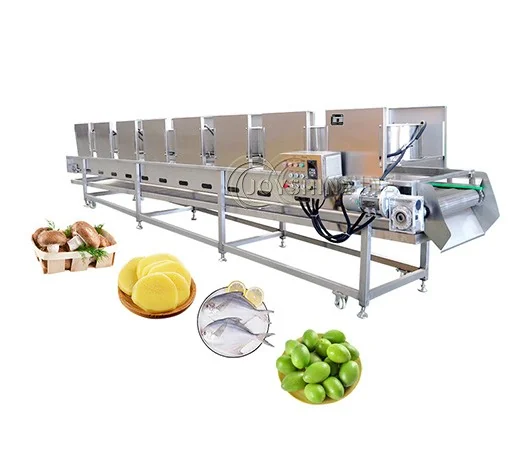
Dewatering
Removes excess surface water before frying to reduce oil splashing and improve frying efficiency. -
Frying
Fries potato slices evenly with controlled temperature and conveyor speed. -
Deoiling
Removes excess oil from the surface of fried chips. -
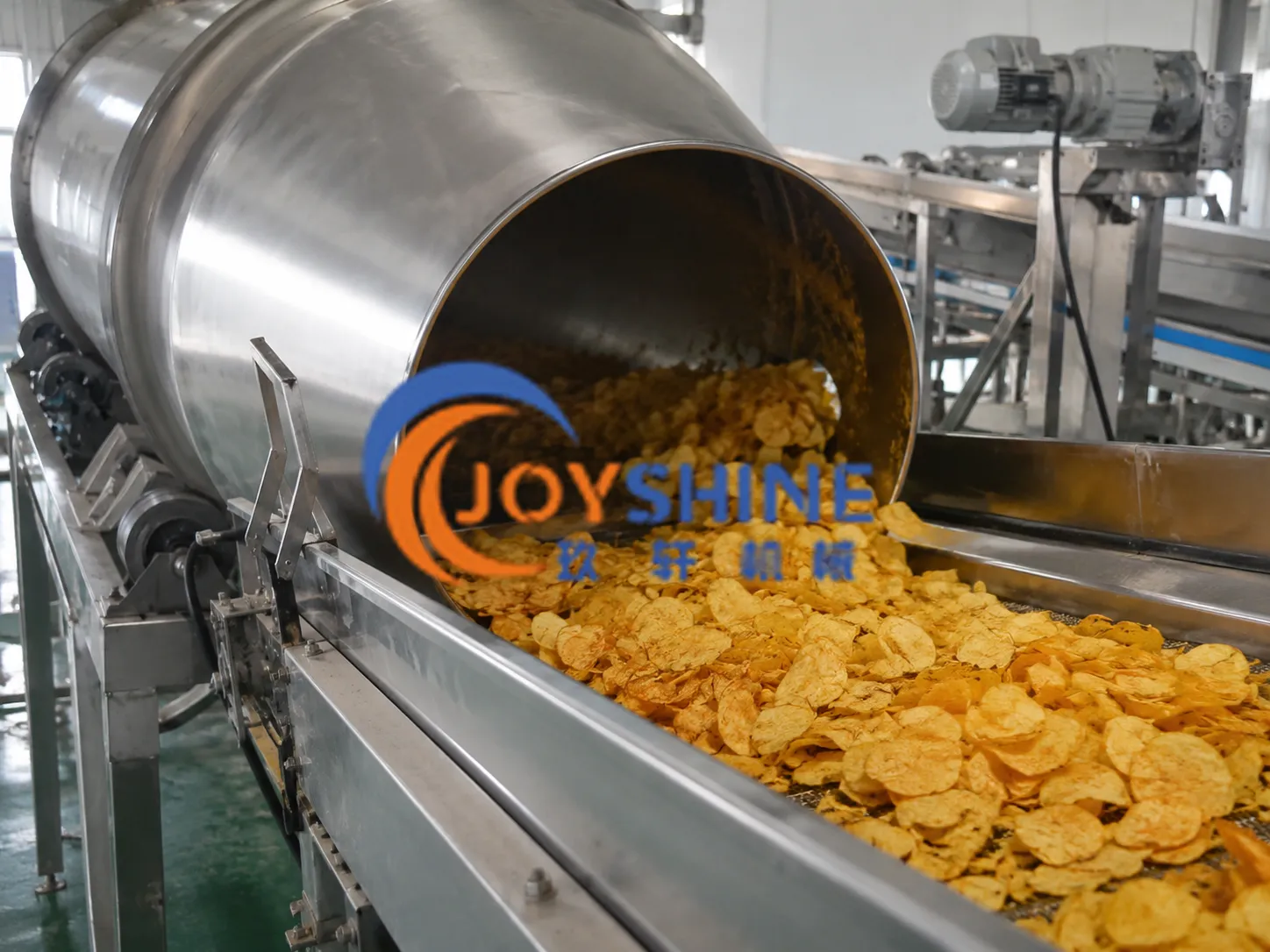
Seasoning
Coats chips with powder seasoning, liquid seasoning, or customized flavor. -
Packing
Weighs and packs potato chips into bags. Nitrogen filling can be added to extend shelf life.
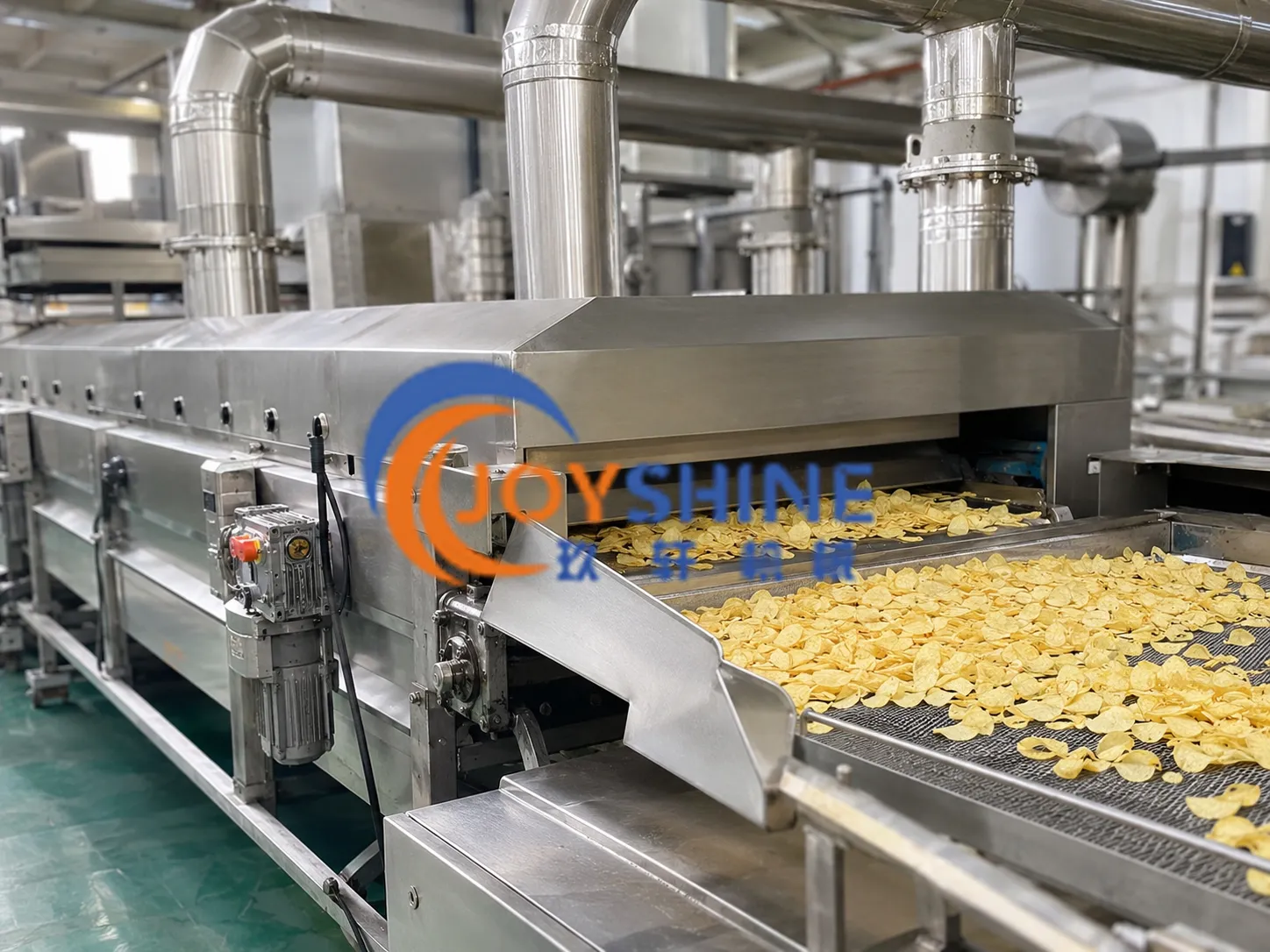
The more complete the configuration, the higher the total equipment cost. But a complete line can reduce manual handling, improve hygiene, and produce more consistent chips.
4. Frying System Has a Big Impact on Cost
The fryer is one of the most important and expensive parts of a potato chips production line.
For small production, a batch fryer may be enough. For medium and large factories, an industrial continuous fryer is usually recommended because it provides stable frying time, accurate temperature control, and consistent product quality.
When choosing a frying system, buyers should consider:
- Heating method: electric, gas, or steam
- Frying capacity
- Conveyor belt width
- Oil temperature control
- Oil circulation system
- Oil filtration system
- Safety protection
- Cleaning and maintenance design
- Stainless steel material
A continuous fryer with automatic temperature control and oil filtration system will cost more than a simple fryer. However, it can help improve frying quality, extend oil life, reduce waste, and make long-term production more stable.
For potato chips production, oil quality directly affects chip color, taste, shelf life, and production cost. Therefore, investing in a reliable frying and oil filtration system is usually worthwhile.
Internal link suggestion:
Learn more about Joyshine’s Industrial Continuous Fryer.
5. Seasoning System and Flavor Requirements
Seasoning is an important part of potato chips production because flavor directly affects market acceptance.
Common potato chips flavors include:
- Original salted
- Barbecue
- Cheese
- Tomato
- Chili
- Sour cream and onion
- Spicy flavor
- Customized local flavors
A basic seasoning machine may only support powder seasoning. More advanced systems can support powder seasoning, liquid seasoning, spray seasoning, or automatic flavor dosing.
If you plan to produce multiple flavors, you may need a more flexible seasoning system. This increases the initial investment but allows you to develop more product SKUs and serve different customer groups.
6. Packaging Requirements Also Affect the Budget
Packaging is another factor that changes the total cost of a potato chips production line.
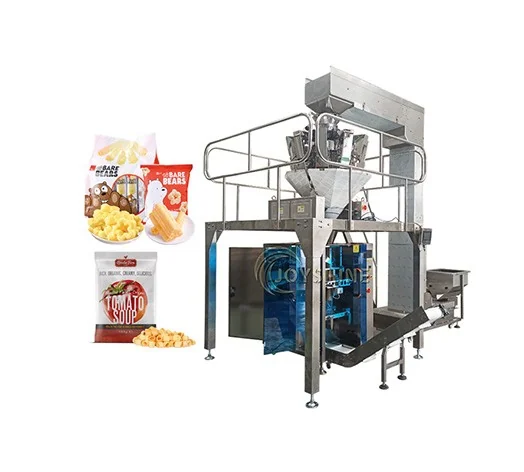
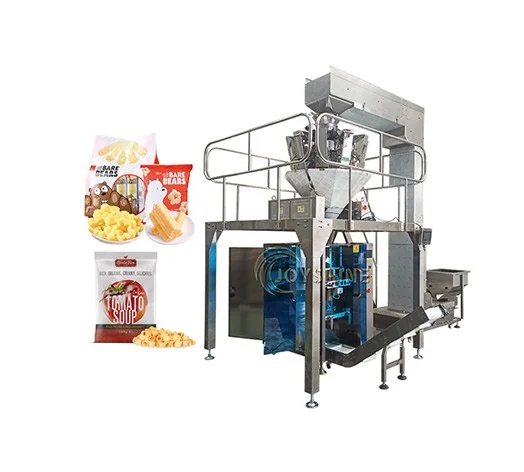
Small factories may start with simple weighing and sealing equipment. Larger factories usually need automatic weighing, bag forming, filling, nitrogen flushing, sealing, date coding, and finished product conveying.
Common packaging options include:
- Manual weighing and sealing
- Semi-automatic weighing and packing
- Automatic vertical packaging machine
- Multi-head weighing system
- Nitrogen filling system
- Date coding machine
- Metal detector
- Checkweigher
- Finished bag conveyor
If you plan to sell potato chips to supermarkets, distributors, or export markets, packaging quality becomes very important. Good packaging protects chips from moisture, oxidation, and crushing during transportation.
Although automatic packaging equipment increases the initial investment, it can improve production speed, reduce labor cost, and create a more professional product appearance.
7. Factory Layout and Customization
A potato chips production line should be designed according to your factory space and workflow.
Before requesting a quotation, it is helpful to prepare the following information:
- Factory length and width
- Ceiling height
- Power supply
- Water supply
- Heating energy source
- Drainage condition
- Raw material storage area
- Finished product storage area
- Packaging area
- Worker operation area
- Cleaning and maintenance space
A professional supplier should not only provide machines, but also help design the production flow. The machines can be arranged in a straight line, L-shape, U-shape, or customized layout depending on your building.
A good layout can reduce material handling, save labor, improve hygiene, and make daily operation easier.
Internal link suggestion:
For customized plant planning, visit Joyshine’s Turnkey Food Processing Solutions.
8. Material Quality and Food Safety
When comparing different quotations, buyers should not only focus on the lowest price.
Food processing equipment must be durable, hygienic, and easy to clean. For potato chips production, food-grade stainless steel is widely used because it is corrosion-resistant and suitable for long-term food contact.
Before choosing a supplier, check the following details:
- Machine material
- Welding quality
- Motor brand
- Electrical components
- Control system
- Conveyor design
- Safety protection
- Cleaning convenience
- Spare parts supply
- Warranty and after-sales service
A low-cost machine may look attractive at first, but unstable performance, difficult cleaning, or poor material can increase maintenance cost later.
For long-term production, stable quality is more important than a very low initial price.
9. What Information Should You Provide to Get an Accurate Price?
To get an accurate quotation, you should provide clear project information to the supplier.
Useful information includes:
- Target product: potato chips, banana chips, cassava chips, or mixed products
- Required capacity: kg/h or kg/day
- Automation level: semi-automatic or fully automatic
- Heating method: electric, gas, or steam
- Potato slice thickness
- Seasoning requirements
- Packaging bag size
- Local voltage and frequency
- Factory size or layout drawing
- Budget range
- Destination country or port
With this information, engineers can recommend the right configuration and provide a more accurate price.
If you only ask “How much is a potato chips production line?” without giving capacity and configuration requirements, the supplier can only provide a rough price range.
10. How to Choose the Right Potato Chips Production Line Supplier
A potato chips production line is a long-term investment. The supplier should be able to support you before, during, and after the purchase.
A reliable supplier should provide:
- Complete processing line design
- Customized equipment configuration
- Factory layout planning
- Food-grade stainless steel machines
- Frying and oil filtration solutions
- Seasoning and packaging solutions
- Installation guidance
- Operator training
- Spare parts support
- Technical support after delivery
For international buyers, after-sales support is especially important. Machines need to be installed correctly, operators need training, and spare parts should be available when needed.
Internal link suggestion:
You can view Joyshine’s real installation cases on the Projects page.
Conclusion
The cost of a potato chips production line depends on many factors, including production capacity, automation level, frying system, seasoning system, packaging requirements, material quality, factory layout, and customization needs.
Instead of only asking for the cheapest price, buyers should focus on choosing the most suitable production solution for their business.
A well-designed potato chips production line can help you:
- Improve production efficiency
- Reduce labor cost
- Maintain stable product quality
- Support multiple flavors
- Improve packaging quality
- Expand production capacity in the future
Joyshine Machinery provides customized potato chips production line solutions for different production capacities and factory layouts.
If you are planning to start or upgrade a potato chips production business, tell us your raw material, required capacity, factory size, and packaging requirements. Our engineers will help you design a suitable solution.