 English
  العربية
 Español
 Русский
The frozen food market is expanding rapidly, with Individual Quick Freezing (IQF) technology leading the charge in preserving the freshness, texture, and nutritional value of vegetables. Unlike traditional slow freezing methods that create massive ice crystals and cause cellular damage, an IQF freezing line freezes each vegetable piece individually in minutes.
However, setting up a successful industrial frozen vegetable factory involves much more than just a freezer. A complete IQF vegetable processing line requires seamless integration across four primary stages: washing, blanching, freezing, and packaging. In this guide, we break down the critical equipment and processes needed to produce high-quality frozen vegetables.
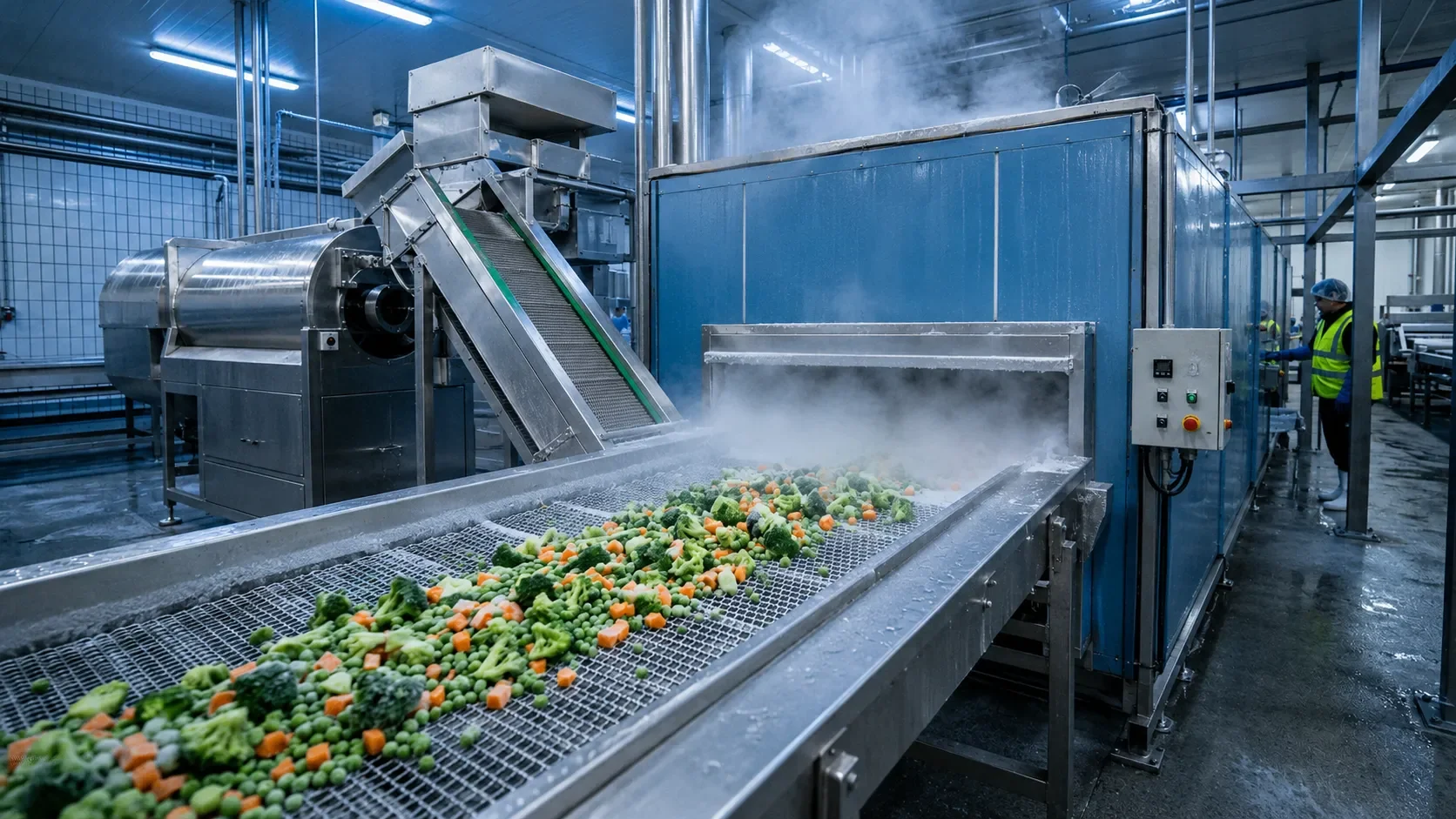
An industrial IQF tunnel freezer utilizes a continuous mesh belt and -42°C blast freezing to lock in vegetable freshness instantly.
1. Washing: The Foundation of Food Safety
Before any freezing occurs, raw vegetables—such as green beans, peas, broccoli, or diced carrots—must be thoroughly cleaned to remove soil, pesticide residues, and surface contaminants.
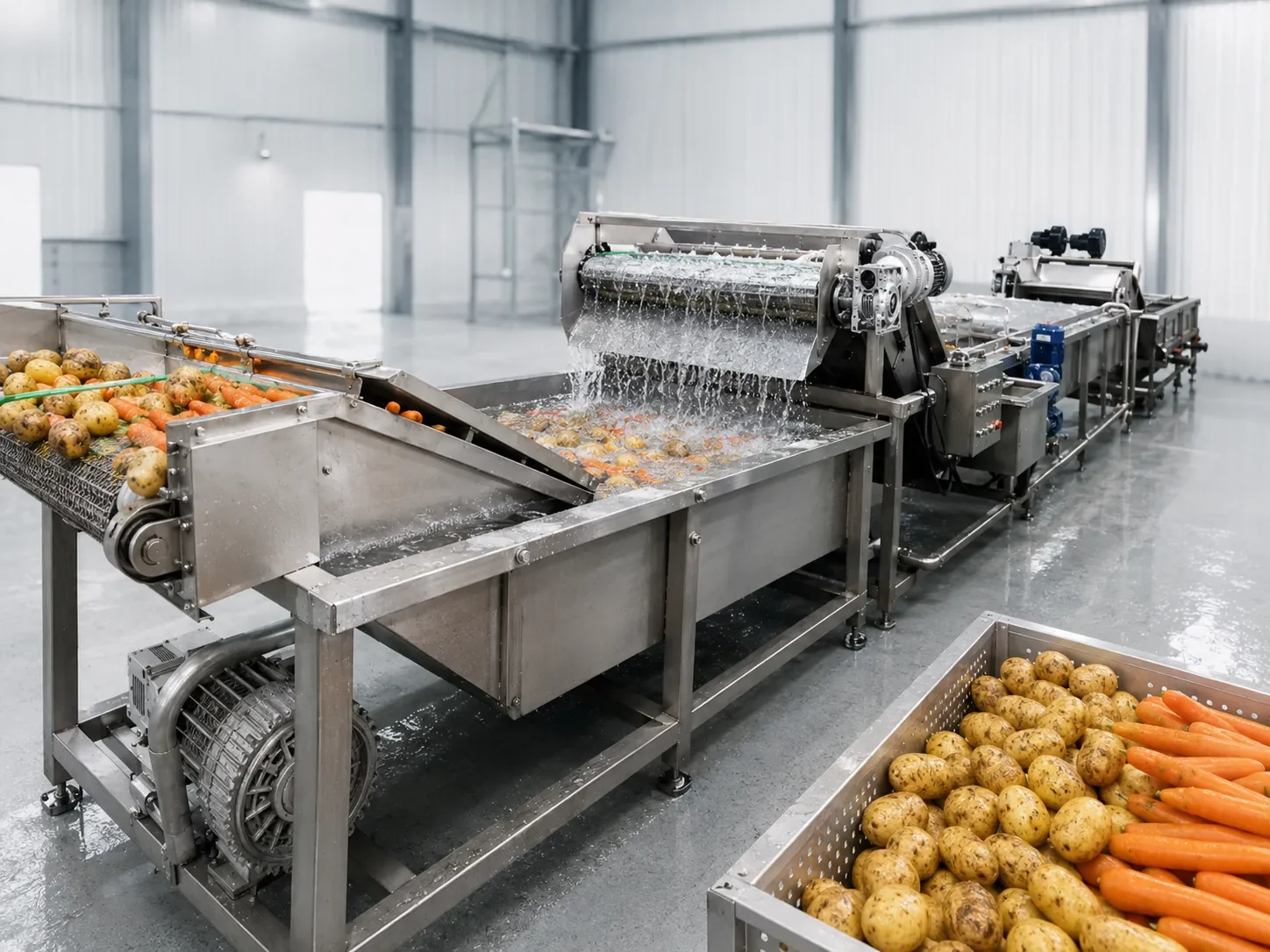
For delicate vegetables, an industrial air bubble washing machine is the standard. High-pressure air blowers create a rolling, tumbling effect in the water tank, gently separating debris from the produce without causing bruising. Floating impurities are skimmed off the top, while heavy sediment like sand drops to the bottom through a filter mesh.
The washed vegetables are then conveyed under a high-pressure fresh water spray to guarantee complete sanitation before moving to the next processing stage.
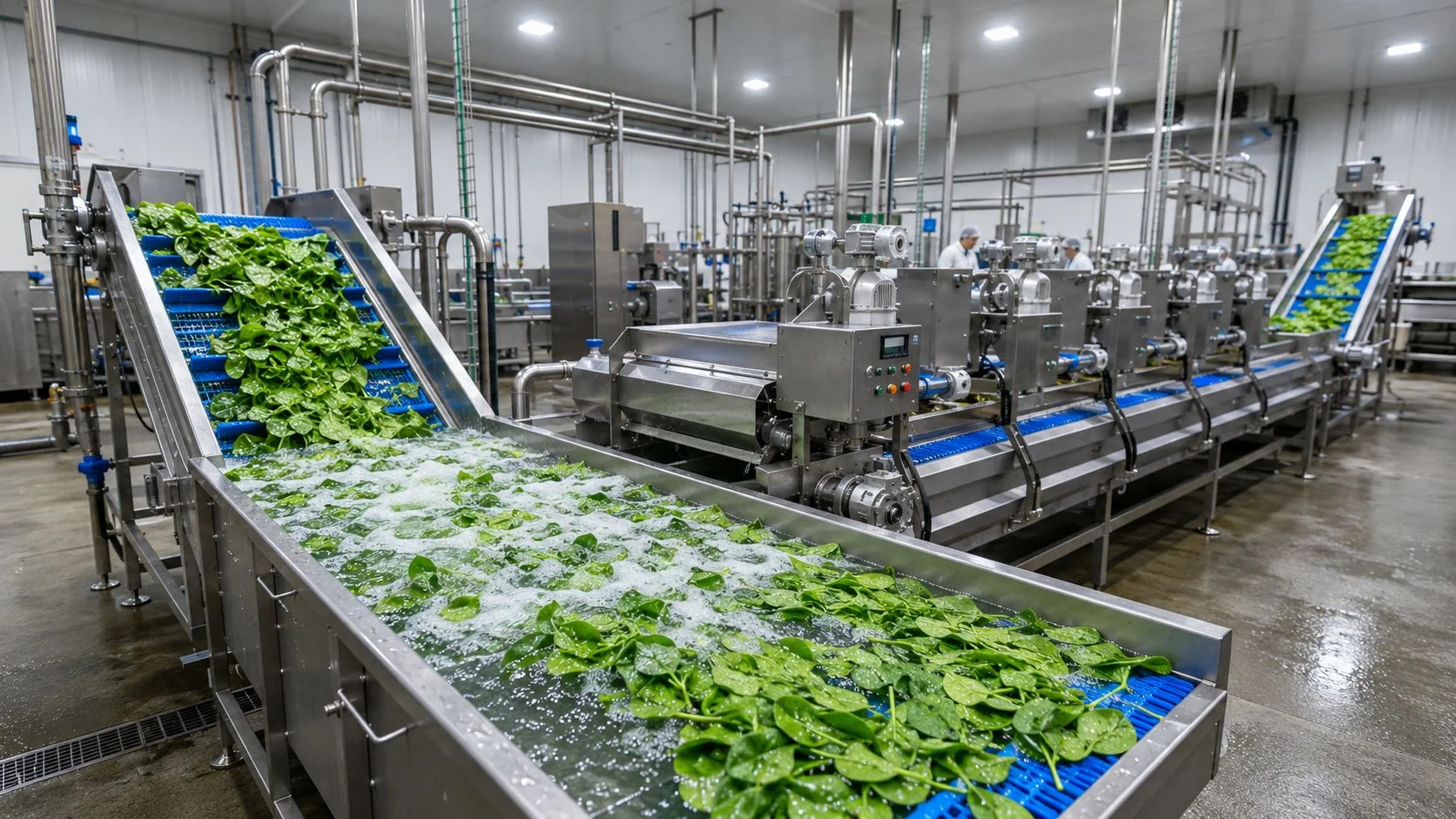
A specialized bubble washing machine removes soil and contaminants gently to prevent bruising prior to blanching.
2. Blanching and Cooling: Color and Texture Preservation
Washing alone is not enough to prepare vegetables for long-term frozen storage. The natural enzymes present in fresh vegetables will continue to degrade their color, flavor, and texture even at sub-zero temperatures.
Blanching is the critical thermal step that deactivates these enzymes. The continuous blanching machine passes the vegetables through hot water (or steam) typically heated to 85°C–95°C for a precise duration (usually 1 to 5 minutes, depending on the vegetable type). This rapid heat treatment:
- Stops enzymatic action and prevents browning.
- Brightens the natural color of the vegetable.
- Slightly softens the cellular structure, making it easier to freeze.
Immediate Cooling: As soon as the vegetables exit the blancher, they must be rapidly cooled to halt the cooking process. A cold water or ice water cooling tank immediately brings the core temperature of the product down to around 5°C–10°C, preparing it perfectly for the freezer.
3. IQF Freezing: Locking in Quality Instantly
Once washed and blanched, the vegetables enter the heart of the line: the Continuous IQF Tunnel Freezer.
Using high-efficiency Bitzer or Fusheng compressor units, the IQF freezer generates an ultra-low temperature environment, blasting cold air between -35°C and -42°C directly onto the product. The key advantages of this process include:
- Individual Separation: As vegetables travel along the stainless-steel mesh belt, high-velocity chilled air fluidizes and lifts the pieces, preventing them from freezing together into a solid block.
- Micro-Crystallization: Because the freezing happens so rapidly, the water inside the vegetable cells forms microscopic ice crystals. This prevents the cell walls from rupturing, ensuring the vegetables retain their original crisp texture and liquid content when thawed by the consumer.
- Continuous Output: Frequency-controlled belt speeds allow the operator to adjust the retention time according to different vegetables, supporting massive production capacities from 500 kg/h up to 2000 kg/h.
4. Packaging: Protecting the Frozen Product
After exiting the IQF freezer at a core temperature of -18°C, the vegetables are ready for packaging. Since IQF vegetables remain loose and individually separated, they are perfect for automated bagging.
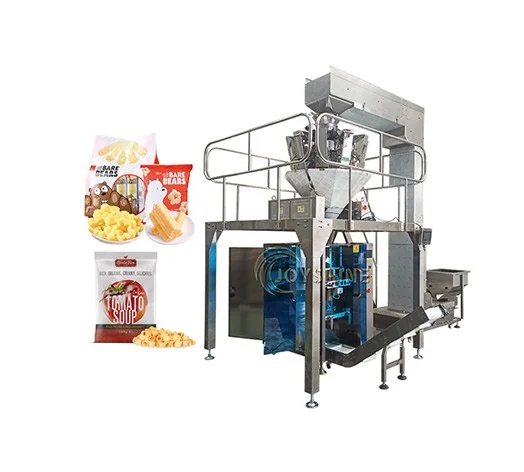
The industry standard is an integrated Vertical Form-Fill-Seal (VFFS) packaging machine equipped with a multi-head combination weigher. The weigher rapidly calculates the exact target weight (e.g., 500g or 1kg bags) and drops the frozen vegetables into the VFFS unit, which forms the bag, fills it, and seals it in one smooth motion.
For frozen vegetables, a robust sealing jaw with strict temperature control is critical to ensure the packaging film can withstand cold chain storage without cracking or leaking.
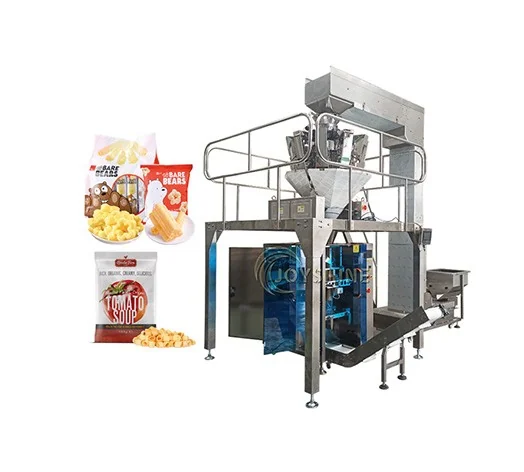
A fully automated VFFS packaging machine with a multi-head weigher accurately bags loose frozen vegetables at high speeds.
Frequently Asked Questions
What types of vegetables can be processed in an IQF line?
An IQF freezing line is incredibly versatile. It is ideal for diced carrots, peas, sweet corn kernels, green beans, broccoli florets, cauliflower, diced onions, and even sliced bell peppers.
Why do some vegetables stick together during freezing?
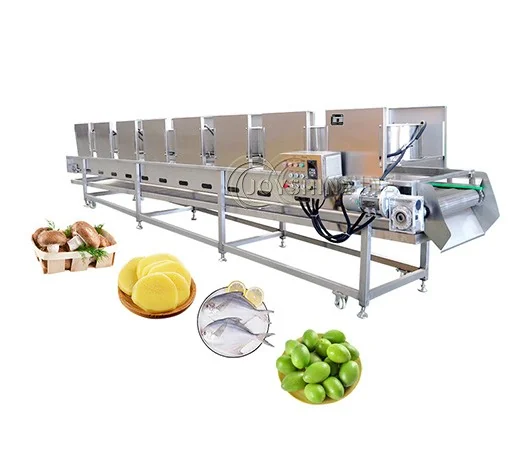
Clumping usually happens if there is too much surface water on the product before freezing, or if the freezer's airflow is insufficient. Adding an air-knife dewatering machine right before the IQF tunnel ensures excess surface moisture is removed, allowing the IQF fluidized bed to perfectly separate the pieces.
Can the same IQF line freeze both fruits and meat?
Yes. By adjusting the variable speed of the conveyor belt and the airflow intensity via the PLC touch screen, a high-quality IQF freezer can easily switch between processing vegetables, delicate fruits (like strawberries and blueberries), and even diced meat or seafood.
What is the power requirement for a 1000 kg/h IQF line?
Industrial IQF freezing and blanching lines require significant electrical and thermal power. A 1000 kg/h line typically requires a 380V/50Hz 3-phase industrial power supply, with the total kilowatt rating depending on the specific refrigeration compressor models and whether the blancher is heated by gas, steam, or electricity.
Start Your Frozen Vegetable Project
Building an efficient frozen vegetable facility requires precision engineering to ensure perfect synchronization between the washing, blanching, freezing, and packaging stages.
At Joyshine Machinery, we manufacture complete, food-grade SUS 304 IQF processing lines tailored to your specific raw materials, factory layout, and capacity requirements (ranging from 100 kg/h to 2000+ kg/h).
Contact us today for a free factory layout design and equipment quotation for your frozen food project!