 English
  العربية
 Español
 Русский
Transitioning from a medium-scale root vegetable processing facility to an industrial 5,000 kg/h (5-ton per hour) production line is not simply about buying larger machines. It requires a fundamental shift in how you handle material flow, water consumption, and automated packaging. At this scale, manual bottlenecks and inefficient washing systems can severely cut into your profit margins.
A recent Dominican Republic 5,000 kg/h potato and carrot washing and packing line case implemented by Joyshine Machinery illustrates the complexities of large-scale root vegetable processing. The customer needed to process heavily soiled potatoes and carrots continuously, outputting 20–30 kg retail and wholesale bags.
In this guide, we break down the core components and engineering strategies needed to successfully scale your root vegetable washing and packing line to industrial levels.
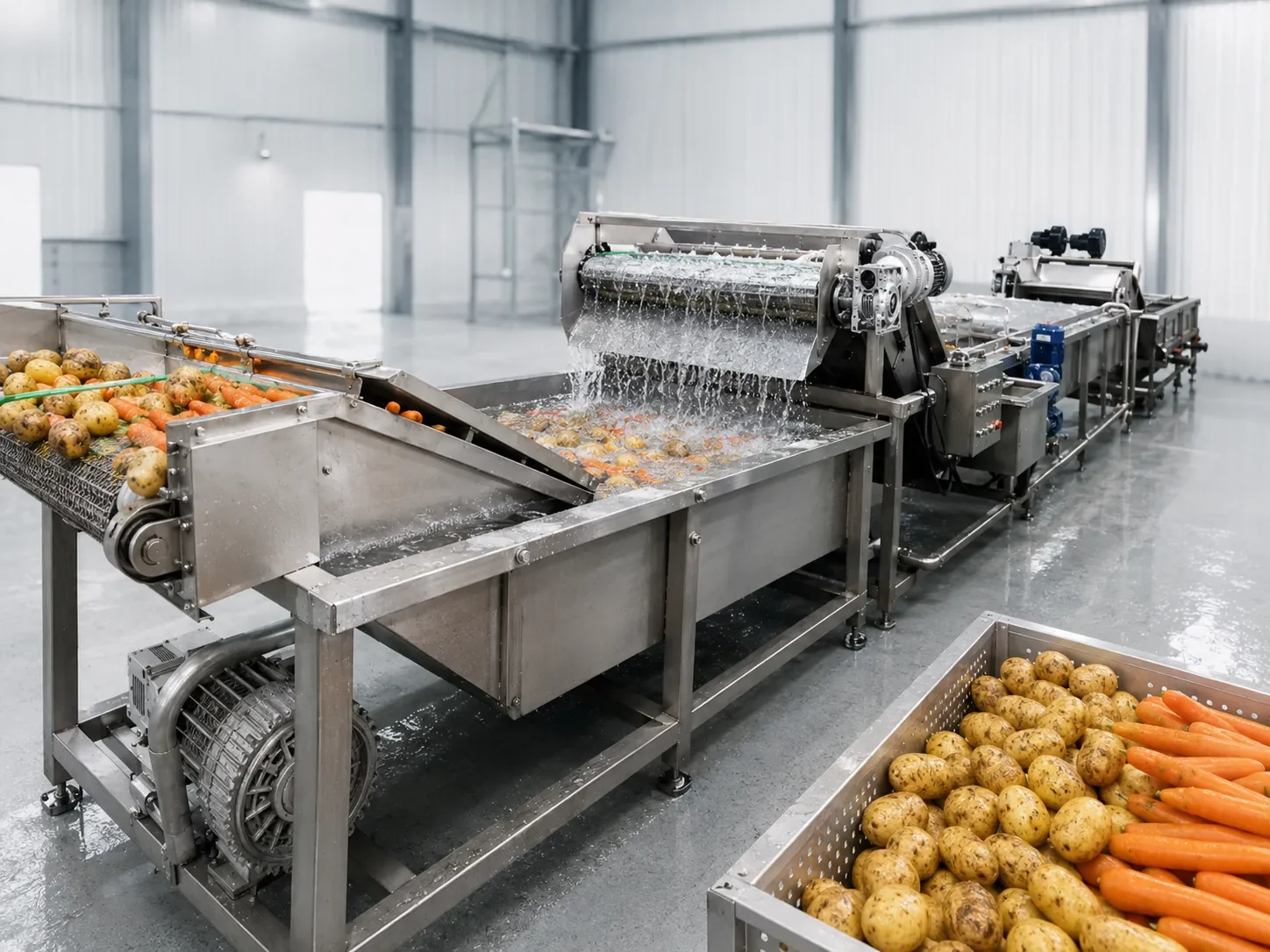
A 5,000 kg/h customized potato and carrot washing line integrating lifting, washing, drying, and packing.
1. Automated Feeding and Continuous Buffering
When dealing with 5 tons of raw potatoes or carrots per hour, manual feeding is impossible. The line must start with a robust lifting and storage hopper system.
Why a Storage Hopper is Critical
A large-capacity storage hopper does more than just feed vegetables into the washer. It acts as a critical buffer zone. If the delivery truck unloads 10 tons of potatoes at once, the hopper stores the excess material and feeds it into the washing line at a strict, continuous rate of 5,000 kg/h. This prevents the washing and peeling machines from being overloaded, which would otherwise result in poor cleaning quality and mechanical strain.
2. Multi-Stage Washing: Bubbles vs. Abrasive Peeling
Root vegetables harvested directly from the soil require intensive cleaning. Depending on whether you are selling unpeeled washed vegetables or peeled products, the washing stage must be configured differently.
High-Capacity Bubble Washing
For carrots, sweet potatoes, and unpeeled potatoes, a heavy-duty fruit and vegetable washing machine is the first line of defense. The machine uses turbulent air bubble agitation combined with high-pressure top spray nozzles. At a 5,000 kg/h scale, these machines are custom-built with widened mesh belts (often 1200 mm) and elongated water tanks (up to 5000 mm).
Water Recycling: Treating 5 tons of dirty vegetables per hour consumes a massive amount of water. Industrial washing machines must feature a multi-layer filtration and recirculating water system, separating sediment from the water so it can be reused, significantly dropping utility costs.
Industrial Abrasive Peeling
If your final product requires skin removal (e.g., for french fries or fresh-cut processing), the line must integrate a potato peeling machine. Using emery abrasive rollers, these machines can achieve a peeling rate of up to 95%. At high capacities, these are configured for continuous flow with pneumatic automatic discharge doors, meaning vegetables enter, are peeled for 3-8 minutes, and are automatically ejected onto the next conveyor without stopping the line.
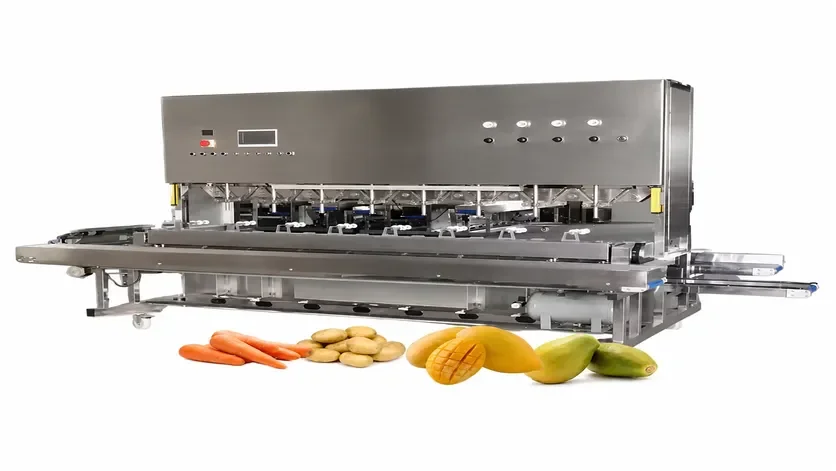
Industrial potato peeling machines use emery or brush rollers to achieve up to 95% peeling rates continuously.
3. High-Volume Air Drying
Once the root vegetables are washed or peeled, they cannot be packed wet. Excess surface moisture leads to rapid rotting, mold growth inside the packaging, and inaccurate weight measurements.
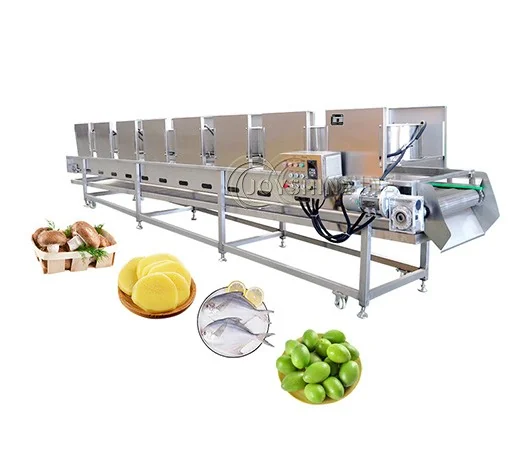
Unlike delicate leafy greens that can be spun in a centrifugal dryer, whole potatoes and carrots are best dried using Air Drying Conveyors. These machines use a series of high-power air knives installed above a mesh belt. As the vegetables travel along the belt, ambient or slightly heated air blasts the water off the irregular surfaces of the roots. The belt itself is often designed with a flipping mechanism to ensure that vegetables roll over, allowing the air knives to hit all sides.
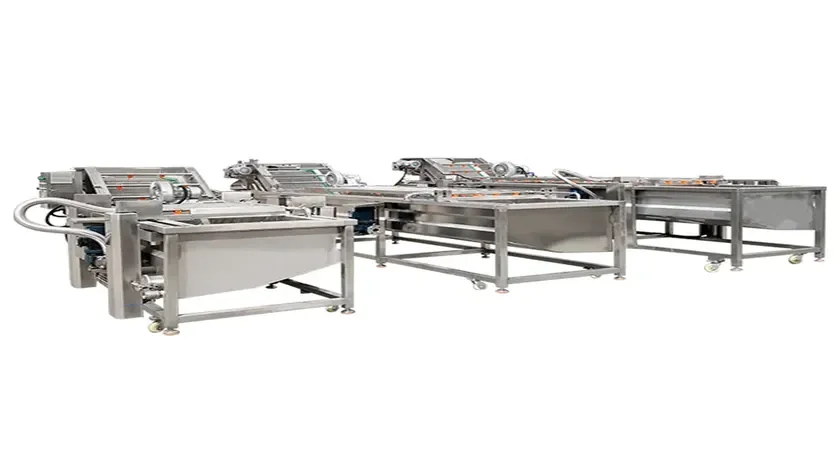
Heavy-duty bubble washers paired with air knife drying conveyors ensure root crops are perfectly clean and dry before packing.
4. Automated Weighing and Packaging
The final bottleneck in a 5,000 kg/h facility is packing. If your packing system cannot keep up with the washing line, the entire factory stalls.
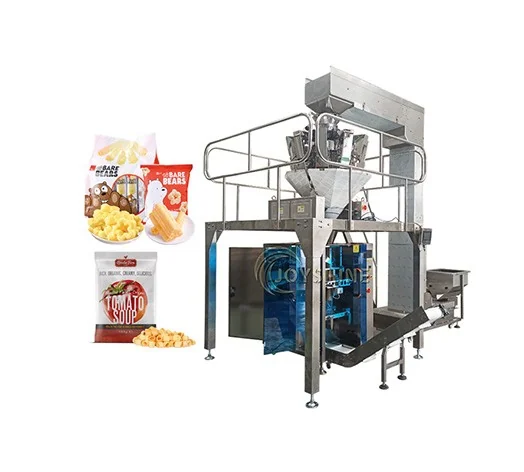
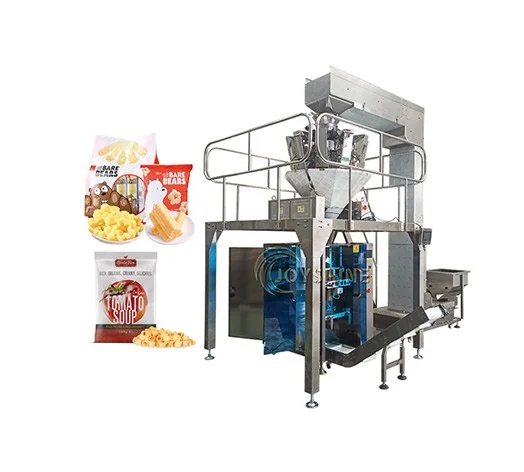
For root vegetables destined for supermarkets or wholesale (typically 5 kg to 30 kg bags), an industrial food packaging machine integrated with a multi-head combination weigher is necessary.
Key Features of Industrial Root Vegetable Packing:
- Heavy-Duty Multi-Head Weighers: These weighers use high-precision load cells and durable hoppers to quickly weigh 20-30 kg batches of heavy items like potatoes.
- Vertical Form-Fill-Seal (VFFS): The machine forms the bag from a continuous roll of film (such as PE or laminated film), drops the weighed carrots or potatoes inside, and seals it automatically.
- Line Synchronization: The packaging machine's PLC control communicates with the upstream air dryer's conveyor. If the packing machine runs out of film or pauses, the feeding conveyors temporarily slow down to prevent spills.
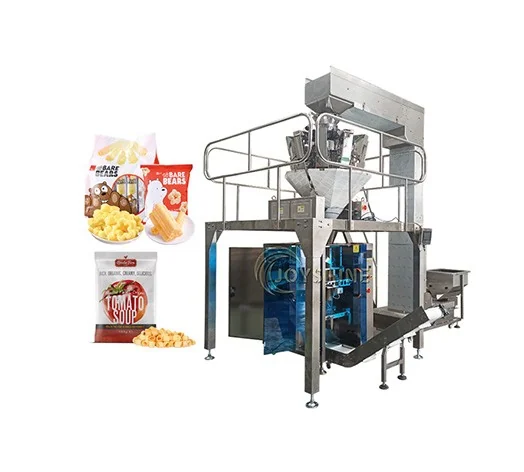
A Vertical Form-Fill-Seal (VFFS) machine paired with a multi-head weigher ensures fast, accurate bagging of heavy root vegetables.
Frequently Asked Questions
How much water does a 5,000 kg/h washing line consume?
Thanks to the integrated water filtration and recirculation system, the primary wash tanks reuse the majority of the water. You only need to continuously replenish a small amount of fresh water (typically 1–2.5 m³/h depending on soil levels) for the final high-pressure spray rinse.
Can I use the same line for both potatoes and carrots?
Yes. Both potatoes and carrots are robust root vegetables. The bubble washing machine and air dryer can handle both with simple adjustments to the mesh belt speed and water pressure.
Does the peeling machine damage the vegetables?
No. The abrasive emery rollers are designed to rub off the outer skin with minimal flesh loss. For softer root vegetables, you can easily swap the emery rollers for softer brush rollers.
What bag sizes can the automatic packaging machine handle?
Industrial VFFS machines for root vegetables are highly customizable. They can be configured to produce smaller 1–5 kg retail pillow bags, or larger 20–30 kg gusseted bags for wholesale distribution.
Scale Your Production with Joyshine
Upgrading to a 5,000 kg/h root vegetable washing and packing line requires careful engineering to balance material flow, water usage, and packing speeds. From robust storage hoppers to high-efficiency bubble washers and VFFS packaging systems, Joyshine Machinery provides complete, customized turnkey solutions.
Whether you are processing potatoes, carrots, taro, or cassava, our engineers will design a factory layout tailored to your exact raw material conditions and packaging targets.
Contact Joyshine for a Free Quote today to discuss your next industrial food processing project.