 English
 العربية
 Español
 Русский
Leafy vegetables
Assess whole or cut leaves, the load per cycle and acceptable product handling through trials.
SINGLE MACHINES / PRODUCT SELECTION
Centrifugal dewatering for washed vegetables. Select the load, cycle and handling around your product and the surface water level required before the next step.
Select the configuration around your raw material, required result and production process.
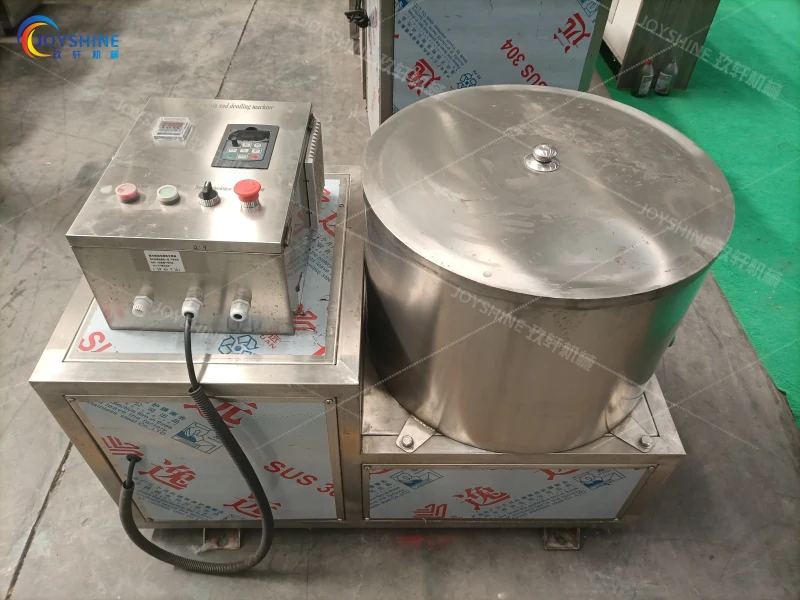
Examples of equipment configurations and operation. Confirm the model, product and supply scope for your project.
01 / Application fit
Use this stage to remove surface water after washing. Define the finished condition you need before packing or further processing. Centrifugal dewatering should not be specified as a substitute for hot-air dehydration of the product.
Assess whole or cut leaves, the load per cycle and acceptable product handling through trials.
State the cut shape and size, incoming water load and the next process. Confirm basket suitability and product retention.
For fruit or easily damaged products, confirm suitability before selecting the spinning method or assuming the same settings.
02 / Process
Define how the product arrives and how free water drains before loading.
Match the load and distribution to the selected machine’s operating instructions.
Confirm the speed and cycle for the material and required result through trials.
Include unloading and transfer time when matching the next process.
Process planning guide. Actual equipment scope and operating settings are confirmed for your application.
A nominal hourly range is only a starting point. Compare the proposed machine using your product and the full operating cycle, including handling between batches.
Request both usable basket volume and accepted product weight per batch. Whole leaves and dense cut vegetables cannot be assumed to give the same kg per basket. Confirm basket openings and product retention.
Include every step when estimating completed batches per hour. Allow for transfer, cleaning and other downtime when matching a continuous washing line to a batch dewatering stage.
Agree the required surface-water condition and acceptable damage in a trial. Confirm speed and cycle settings for the selected model, plus basket access, lid protection and the unloading arrangement.
Planning relationship: accepted kg per batch × completed batches per hour = hourly throughput under those trial conditions. This is a calculation method, not a new rated capacity.
No. The purpose here is removal of water remaining on the product after washing. Producing a dehydrated shelf-stable food requires a different process and its own specification.
Select the basket and working load for your vegetables. Calculate hourly output from the complete loading, spinning and unloading cycle, then check the result with the surrounding line.
Suitability depends on the product and required quality. Send samples or product details and agree a trial before confirming the configuration.
Send the material, cut size, incoming water condition, target kg/h and next process. Photos or samples help define a trial. Ask for usable basket dimensions, load per batch and full cycle time for the proposed model.
Vegetable Dewatering Machine
Tell us what goes in and what you need at the outlet. Include the target rate, current process and any workshop constraints.
Images and model configuration can be confirmed with the equipment proposal.