 English
  العربية
 Español
 Русский
The commercial market for packaged, fresh-cut salads continues to expand as consumer demand shifts toward healthy, convenient, ready-to-eat products. For food factories, agricultural cooperatives, and central kitchens, supplying high-quality packaged salad mixes is a highly profitable opportunity. However, processing delicate leafy greens presents significant challenges, including bacterial contamination, rapid browning, leaf damage, and short shelf life.
A professional leafy vegetable salad processing line automates the entire processing sequence, from raw-material receiving through cutting, gentle washing, surface-water removal, and automated packaging. Sizing, configuring, and managing these stages properly is essential to maximize raw-material yield, keep greens crispy, and extend commercial shelf life to 7–14 days.
This guide explains how a modern salad processing line operates, how specific processing choices affect finished-product quality, and which equipment criteria matter most for your facility.
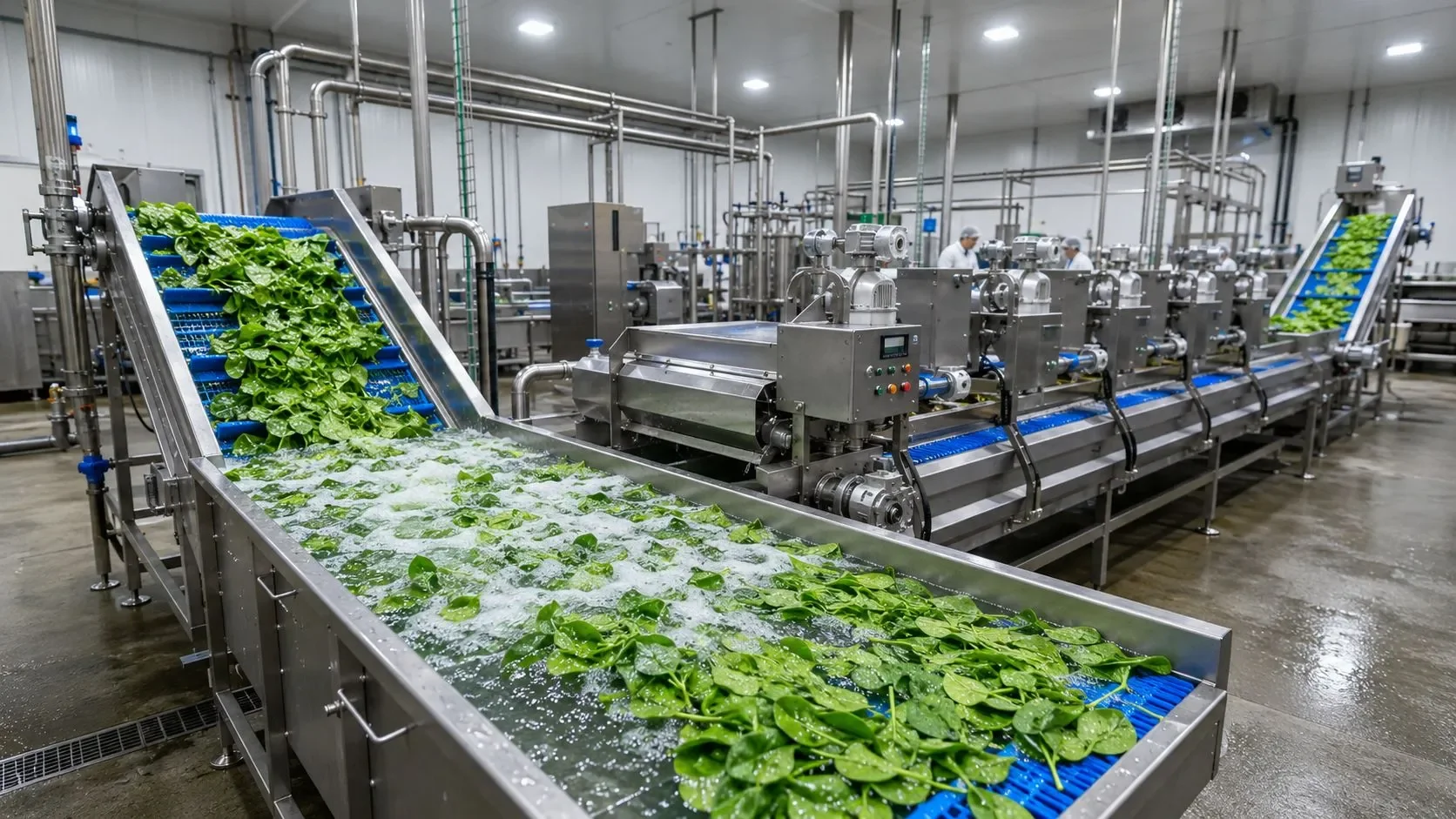
A complete leafy vegetable washing and processing line combines automatic conveyors, cutting systems, washing tanks, and dewatering equipment.
1. Core Process flow of a Fresh-Cut Salad Line
An industrial salad line must operate continuously while handling delicate leaves with extreme care. The typical process sequence includes five main stages:
- Receiving and Pre-sorting: Removing core stalks, damaged outer leaves, and foreign materials from raw crops.
- Cutting and Slicing: Shredding or cutting whole lettuce, cabbage, or greens into uniform, bite-sized pieces.
- Gentle Multi-Stage Washing: Removing field dirt, sand, insects, and surface bacteria using water agitation and sanitation.
- Efficient Dewatering: Removing free surface moisture from washed leaves without bruising or crushing.
- Portion Weighing and Packaging: Automatically weighing portions and sealing them in protective plastic bags with Modified Atmosphere Packaging (MAP).
2. Core Stages of the Leafy Vegetable Salad Processing Line
Precision Cutting to Protect Leaf Cells
Consistent cutting determines the visual quality and browning rate of fresh-cut salads. Cutting lettuce or spinach with dull blades crushes cell walls, releasing cellular fluids and enzymes that trigger oxidation, browning, and off-flavors.
To maintain salad crispness and visual appeal, a commercial vegetable cutting machine must use high-speed, precision-sharpened blades to make clean, decisive cuts. Clean cuts keep cell structures stable and reduce respiration rates, keeping cut edges green and fresh for days longer.
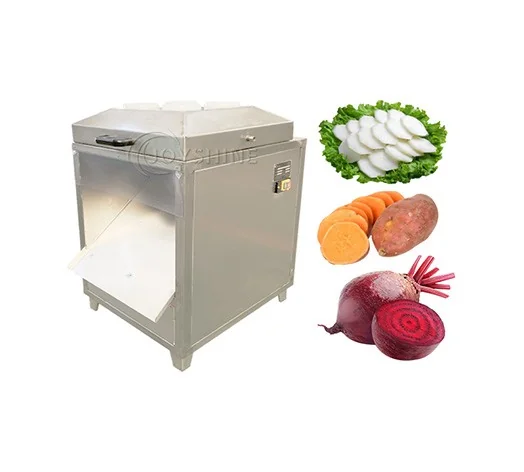
An industrial cutting machine with adjustable speed and sharp blade sets can cut leafy greens into consistent slices, shreds, or cubes.
Thorough Washing and Pathogen Control
Washing leafy greens differs from washing root vegetables. Leafy greens have delicate surfaces that cannot handle abrasive scrubbing or high-impact physical force. Instead, they require a gentle, thorough tumbling action.
A specialized salad vegetable washing machine utilizes air bubble agitation and high-pressure water spray nozzles. Bubbles create a rolling water flow that continuously separates overlapping leaves, releasing trapped soil, sand, and insects without bruising the product.
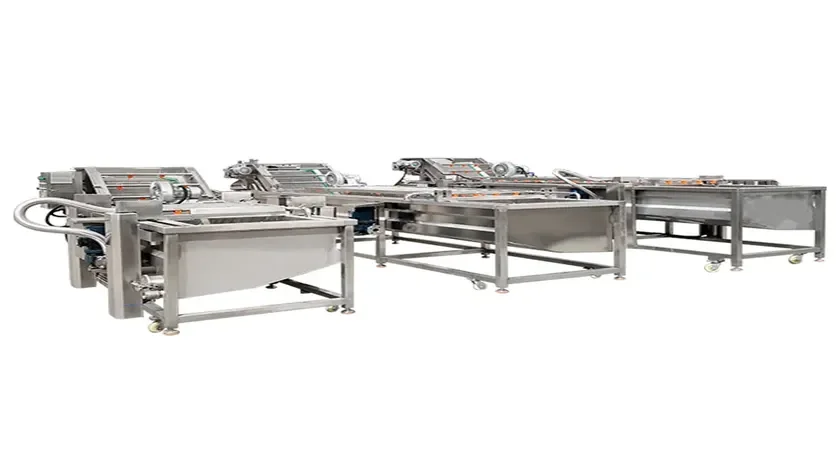
A specialized bubble washing machine uses high-pressure air and water spray to clean delicate greens without bruising.
For safety, fresh-cut salads typically undergo multi-stage washing:
- First wash (Pre-wash): Bubble cleaning to remove heavy field debris and loose dirt.
- Second wash (Sanitizing): Water mixed with monitored levels of sanitizer (such as chlorine, chlorine dioxide, or peracetic acid) to reduce bacteria.
- Third wash (Rinsing): Fresh chilled water spray to rinse off sanitizer residue and cool the leaves, slowing enzyme activity.
Dewatering: Why Spin Drying is Critical
Excess moisture on leaf surfaces is the primary cause of rapid browning, mold growth, and leaf decay inside packaged salads. Therefore, thorough dewatering is the most critical stage for shelf-life extension.
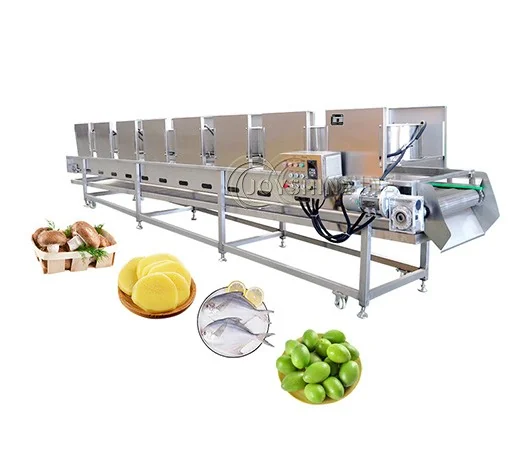
For leafy salads, a centrifugal dewatering spin dryer is the industry standard. It uses controlled centrifugal force to spin water off the leaves. The spinner must use frequency-controlled speed to prevent delicate leaves from being pressed too tightly against the basket wall, which can cause leaf bruising.
For certain robust leaves, an air drying machine can follow or supplement centrifugal dewatering. High-pressure, room-temperature air blowers remove remaining droplets from the product surface as it travels along a vibrating mesh belt.
A centrifugal dewatering machine uses controlled spin speeds to remove surface moisture from delicate salad leaves without bruising them.
Automated Weighing and MAP Packaging
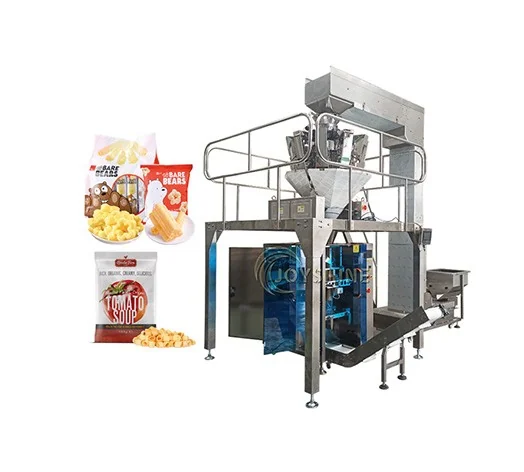
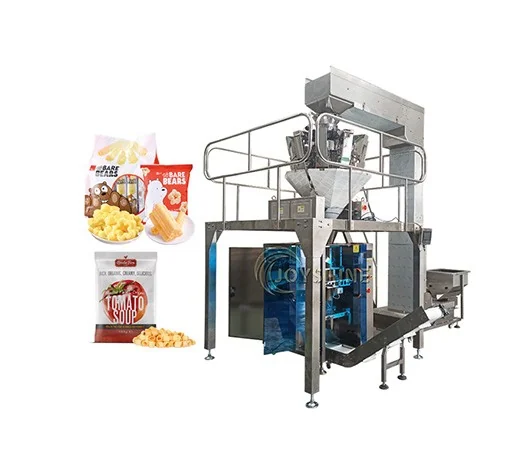
Once dried, the salad mix is ready for portioning. Because salad leaves are light and irregular, manual portioning is slow and inconsistent. An automatic vertical form-fill-seal (VFFS) packing system combined with a multi-head combination weigher provides rapid, accurate portion control.
The food packaging machine forms plastic bags, drops measured salad portions, flushes the bag with a nitrogen gas mix (MAP), and creates airtight seals. Flushing the bag with nitrogen replaces oxygen, lowering leaf respiration and preventing oxidation to keep salads green and fresh.
3. Comparing Processing Requirements for Different Salad Greens
Different leaf geometries, textures, and shelf-life behaviors require customized adjustments to cutting, washing, and drying parameters.
| Greens Category | Cutting Type | Washing Agitation | Dewatering Method | Key Quality Concern |
|---|---|---|---|---|
| Iceberg & Romaine Lettuce | Shreds or square cuts | Medium bubble tumbling + chilled water | High-speed centrifugal spin | Browning at cut edges, bruising from excessive force |
| Baby Spinach & Baby Kale | Whole leaf (no cut) | Gentle bubble wash + fine spray | Low-to-medium centrifugal spin | Leaves sticking together, high moisture retention |
| Cabbage & Radicchio | Fine shredding | Strong bubble tumbling | High-speed spin + air blowing | Heavy dirt retention, thick ribs requiring deeper washing |
| Delicate Herbs (Parsley, Cilantro) | Fine chopping | Very gentle water flow | Low-speed spin dryer | High bruising risk, rapid wilting if over-processed |
4. Key Factors to Consider When Selecting a Salad Line
1. Daily Throughput and Line Balance
Choose equipment sizes that match your target daily output. An industrial salad line is a balanced system; choosing an oversized cutter or an undersized spin dryer can cause product bottlenecks, leaving wet leaves waiting on conveyors and accelerating decay. Standard Joyshine washing lines are configurable from 200 kg/h to 5,000 kg/h.
2. Water Recycling and Sanitation System
Washing fresh produce requires substantial water. Selecting a washing line with an integrated water filtration and recycling system can reduce water consumption by up to 60%. The line should also include automatic dosing systems for sanitizers and continuous filtration to remove floating leaves and debris from the water tank.
3. Food-Grade SUS304 Stainless Steel Construction
Every machine on a fresh-cut salad line must handle acidic produce juices and sanitizing chemicals. Ensure all food-contact surfaces are constructed from food-grade SUS304 stainless steel. The machine frames should have open, sloped surfaces to allow complete drainage and avoid bacterial buildup.
Frequently Asked Questions
Why do salad leaves turn brown after cutting, and how can a machine prevent it?
Salad leaves turn brown due to enzymatic browning, which occurs when leaf cells are crushed and exposed to oxygen. A commercial cutting machine with precision-sharpened blades cuts cleanly instead of tearing or crushing, keeping cell structures intact. Combining clean cutting with chilled-water rinsing and nitrogen-flush packaging minimizes browning.
Is spin drying better than air blow drying for leafy salads?
Centrifugal spin drying is the most efficient way to remove water from delicate leafy greens because it extracts moisture trapped in folds and crevices. High-pressure air drying is highly effective for flat surfaces but less efficient for dense, curled leaves like spinach. A combination of centrifugal spin drying and air blow drying is often used for premium salad lines.
What sanitizer should be used in a commercial salad washer?
The most common sanitizers used in industrial vegetable washers are sodium hypochlorite (chlorine), chlorine dioxide, and peracetic acid (PAA). The sanitizer level, pH, and water temperature must be monitored and adjusted continuously to ensure effective sanitization without altering the taste or texture of the greens.
Can the same line process both root vegetables and leafy greens?
Yes, but the line requires flexible settings. Bubble washing is suitable for both, but brush washing machines (which scrub potatoes or carrots) must be bypassed or removed when processing delicate leafy greens to avoid tearing them. The cutting blades and spin-dryer speeds must also be adjusted for different produce types.
Consult a Salad Processing Expert
Selecting, organizing, and balancing equipment is critical to building a profitable, food-safe salad factory. Joyshine Machinery manufactures complete vegetable washing and processing systems, with configurable bubble washers, cutting equipment, centrifugal spin dryers, and automated packaging systems.
Contact Joyshine with your leaf types, expected capacity, package weights, and available factory dimensions to receive a tailored configuration, quotation, and layout proposal.