 English
 العربية
 Español
 Русский
 0:21
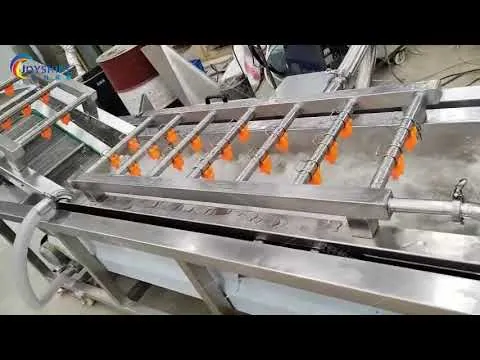
Bubble washer: water-running factory test
See the bubbling, spray and conveyor arrangement during a factory water test. This clip does not demonstrate the cleaning result with produce.
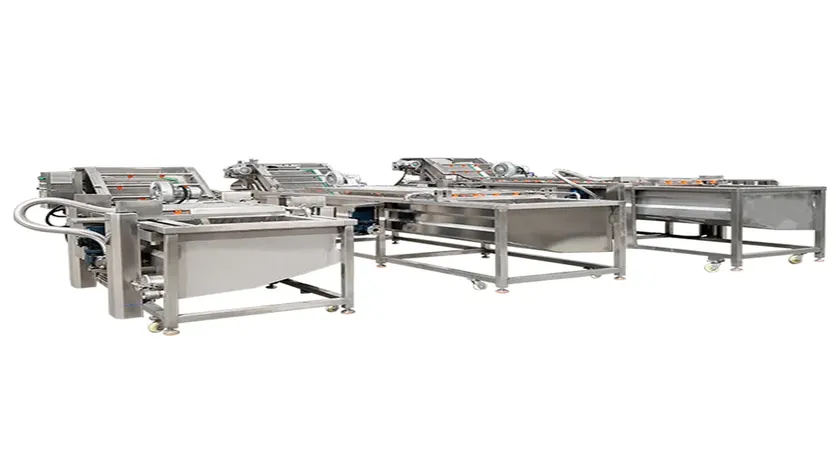
Watch videoJS-QP series bubble washing machines combine water circulation and spray rinsing in a configuration selected for your produce. Match the product handling, soil removal and water management to the processing line.
Your equipment is already included below. Add your raw material and the result you need.
These videos show example equipment configurations. We confirm the specification for your product, process and capacity when preparing your proposal.
A washing machine is one stage in the line. Start with the incoming product, the dirt to remove and the condition required by the next stage. The same settings and handling method should not be assumed for every fruit or vegetable.
For lettuce, cabbage or cut vegetables, describe the cut size, floating behaviour and acceptable leaf damage. Check product retention, discharge handling and the intended dewatering step with a sample trial.
For potatoes, carrots or ginger, explain the soil load and whether the skin must remain intact. Compare bubble washing with a brush-based stage for the actual material; the washing stage should not be assumed to provide peeling.
State ripeness, size and sensitivity to bruising. Agree how the product enters, travels through and leaves the tank. A water-circulation demonstration alone does not establish suitability for delicate fruit.
Use this sequence to discuss the configuration. Feeders, rinsing sections and discharge arrangements are confirmed in the equipment proposal.
Specify filtration, sediment removal, drain access and water-change arrangements. Recirculation does not mean zero fresh-water use; agree water demand for the proposed operating conditions.
Request the contact-material specification, tank and belt access for cleaning, electrical supply, installed power and service clearances. Include any optional equipment in the scope.
Provide the target kg/h, product size, incoming condition and available layout. Agree a trial that checks cleaning result, product damage and discharge flow together.
JS-QP series washers are selected around the raw material and washing task. Confirm usable washing area, conveyor arrangement, dimensions and installed power in the proposal.
Specify whole or cut produce, product fragility and soil condition. Confirm suitable feeding, immersion and discharge arrangements.
Agree the product, loading, washing time and required result used for the proposed kg/h. A series description does not establish one output for every material.
Define recirculation, filtration, rinse-water demand, drainage and cleaning access. Treatment accessories and controls are separate scope items.
Match transfer heights and space to the surrounding line. Use a loaded-product trial to agree cleaning result, damage and discharge flow.
The final configuration, throughput, dimensions, utilities and supply scope are specified in your equipment proposal.
Discuss this seriesStart with the product, soil and whether the skin should be preserved. Request a comparison for your material and a sample trial. A brush stage is not automatically appropriate for leaves or delicate fruit.
The linked factory water test shows circulation and equipment operation. It does not demonstrate cleaning effectiveness or throughput with your material. Request a relevant loaded-product trial before agreeing acceptance criteria.
No. Specify filtration, solids removal, rinse-water supply and a water-management procedure for your process. Confirm fresh-water demand and water-change conditions in the proposal.
Ozone is an optional configuration. Any treatment objective, monitoring method and acceptance test must be agreed for the actual process. The catalogue concentration alone does not establish sterilization or pesticide-removal performance.
Send the material and cut size, target kg/h, soil condition, next process, country, electrical supply and available layout. Confirm model scope, delivery schedule and warranty in the written proposal.