 English
  العربية
 Español
 Русский
Bubble Washing Machine vs Brush Washing Machine: What Is the Difference?
In fruit and vegetable processing, washing is an important step before cutting, drying, packing, frying, or freezing. Clean raw materials can improve product quality, reduce contamination risk, and make the final product more attractive.
Two common types of washing equipment are the bubble washing machine and the brush washing machine. Both are widely used in food processing factories, but they are designed for different materials and different cleaning purposes.
So, what is the difference between a bubble washing machine and a brush washing machine? Which one should you choose for your processing line? This article will help you understand their working principles, applications, and advantages.
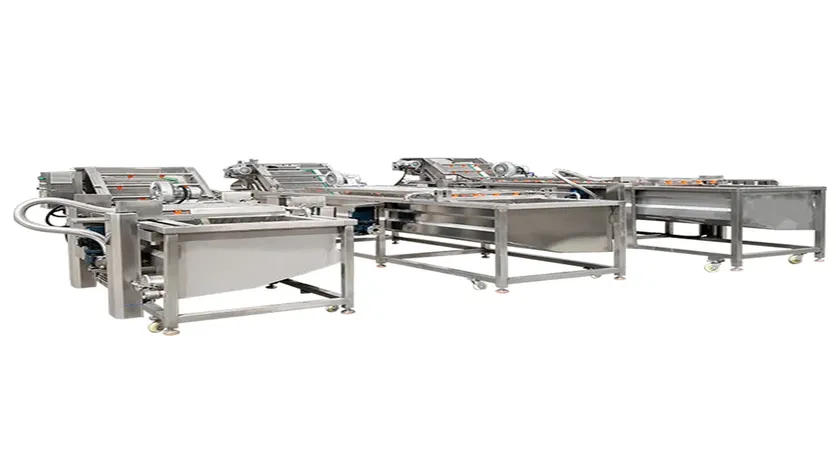
What Is a Bubble Washing Machine?
A bubble washing machine uses air bubbles to clean vegetables and fruits in a water tank. During operation, an air pump generates bubbles from the bottom of the tank. The bubbles roll through the water and gently turn the materials.
This movement helps remove dust, light soil, leaves, insects, and surface impurities from the products. Because the cleaning action is gentle, the bubble washing machine is especially suitable for delicate vegetables and fruits.
Common applications include:
- Lettuce
- Spinach
- Cabbage
- Coriander
- Celery
- Tomato
- Pepper
- Apple
- Strawberry
- Grape
- Cucumber
For leafy vegetables and soft fruits, bubble washing can reduce product damage while still achieving a good cleaning effect.
What Is a Brush Washing Machine?
A brush washing machine uses rotating brushes to scrub the surface of vegetables and fruits. The brushes are usually made of food-grade nylon or other suitable materials. As the products move forward, the brushes rotate and remove mud, soil, and dirt from the surface.
Brush washing machines are mainly used for products with harder surfaces, especially root vegetables.
Common applications include:
- Potato
- Carrot
- Sweet potato
- Ginger
- Radish
- Taro
- Beetroot
- Cassava
For root vegetables harvested from soil, brush washing is usually more effective than bubble washing because the rotating brushes can remove stubborn mud attached to the surface.
Main Difference 1: Washing Method
The biggest difference between the two machines is the washing method.
A bubble washing machine uses water movement and air bubbles. It is a non-contact or low-contact washing method, which is gentle and suitable for fragile products.
A brush washing machine uses physical friction from rotating brushes. It has stronger cleaning power and is more suitable for hard products with soil or mud.
If your product is easy to break, choose bubble washing. If your product has heavy soil and a firm surface, choose brush washing.
Main Difference 2: Suitable Raw Materials
Bubble washing is better for leafy vegetables, fruits, and products that need gentle handling.
Brush washing is better for root vegetables and products with hard skins.
For example, lettuce should not be washed by strong brushes because the leaves may be damaged. Potatoes, however, can be cleaned effectively by rotating brushes because their surface is firm and often covered with soil.
Main Difference 3: Cleaning Strength
Bubble washing provides moderate and gentle cleaning. It is suitable for removing floating impurities, dust, and light dirt.
Brush washing provides stronger cleaning. It can remove mud, sand, and soil attached to the surface of root vegetables.
If the raw material is only slightly dirty, a bubble washer may be enough. If the raw material comes directly from farms with a lot of mud, a brush washer is more suitable.
Main Difference 4: Product Damage Rate
For fresh produce processing, product appearance is very important. Damaged vegetables and bruised fruits may reduce selling value.
Bubble washing has a lower damage rate because the materials are mainly cleaned by water flow and bubbles. It is suitable for products that need gentle handling.
Brush washing may cause damage if used for soft or delicate products. However, for potatoes, carrots, ginger, and similar materials, brush washing is effective and safe when the brush speed and material are properly selected.
Can Bubble Washing and Brush Washing Be Used Together?
Yes. In many fruit and vegetable processing lines, bubble washing and brush washing can be combined.
For example, a complete vegetable washing line may include:
- Feeding conveyor
- Bubble washing machine
- Brush washing machine
- Spray rinsing machine
- Vibrating dewatering machine
- Air drying machine
- Sorting conveyor
- Packing machine
For products with different cleaning needs, the washing line can be customized. Some customers only need bubble washing and spray rinsing. Others may need brush washing before or after bubble washing, depending on the raw material.
How to Choose the Right Machine
Before choosing a vegetable washing machine, you should confirm the following information:
- What product do you need to wash?
- Is the product soft or hard?
- Does the product have heavy soil?
- What capacity do you need per hour?
- Do you need only washing or a complete washing and drying line?
- Do you need water recycling?
- Do you need spray rinsing at the discharge section?
If you process leafy vegetables, fruits, or fresh-cut vegetables, a bubble washing machine is usually recommended. If you process potatoes, carrots, ginger, or other root vegetables, a brush washing machine may be more suitable.
Conclusion
Both bubble washing machines and brush washing machines are important equipment in fruit and vegetable processing. The bubble washing machine is suitable for gentle cleaning of leafy vegetables and fruits, while the brush washing machine is suitable for strong cleaning of root vegetables with soil.
The right choice depends on your raw materials, capacity, cleaning requirement, and final product standard.
Joyshine can provide bubble washing machines, brush washing machines, spray washing machines, and complete fruit and vegetable washing processing lines. Tell us your product and capacity, and we can recommend a suitable washing solution for your factory.