 English
 العربية
 Español
 Русский
Whether you are preparing lettuce for a fresh-cut salad mix or washing carrots before IQF freezing, removing surface water is a critical step in industrial food processing. Excess moisture shortens shelf life, causes severe clumping during freezing, and introduces dangerous splatter in deep fryers.
Choose the drying or dewatering stage around the actual product and the next process. Compare surface condition, allowable damage, handling method and usable line throughput, rather than assuming one capacity range suits every application.
In this guide, we compare these two systems—how they work, their ideal applications, and how to choose the right surface water removal equipment for your facility.
1. Centrifugal Vegetable Dewatering Machines
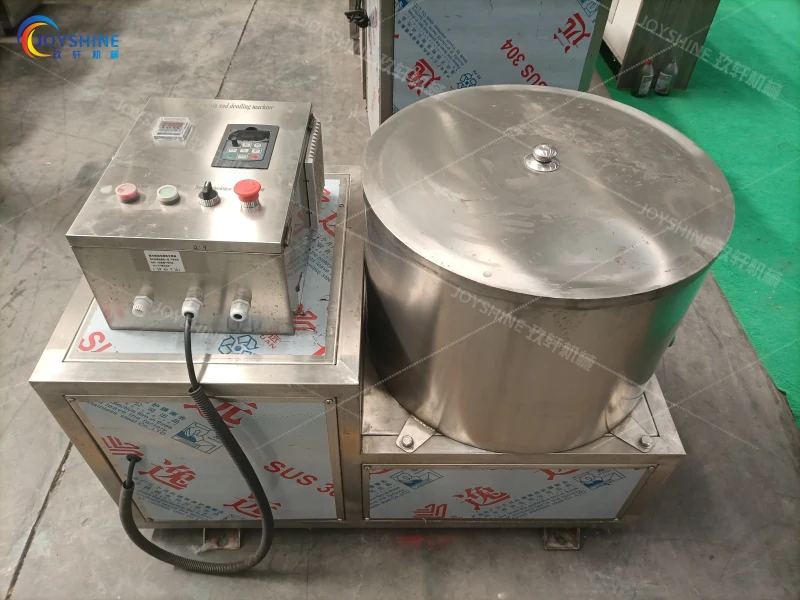
Centrifugal spin dryers use the physical force of high-speed rotation to forcefully separate water from the vegetable surface.
How It Works
A centrifugal dewaterer processes product in a rotating basket. Confirm the permitted load, cycle, speed controls and discharge arrangement for the supplied configuration; follow its operating instructions when establishing a product trial.
The Advantages
- Surface-water result: agree the target condition and measurement method for the actual product and load; a universal removal percentage is not specified.
- Space Efficient: Vertical centrifugal machines occupy very little floor space compared to long drying tunnels.
- Product settings: for vegetable dewatering machines, establish speed and cycle through trials within the machine instructions, checking both water removal and product damage.
Best Used For
Centrifugal dewatering is the absolute best choice for leafy greens (spinach, cabbage, lettuce). It is also highly effective for sliced, diced, or shredded root vegetables (like cut carrots or potatoes) that trap water easily.
2. Industrial Air Drying Machines
Instead of spinning the product, an air drying machine moves the product along a continuous mesh belt while blasting it with high-pressure air.
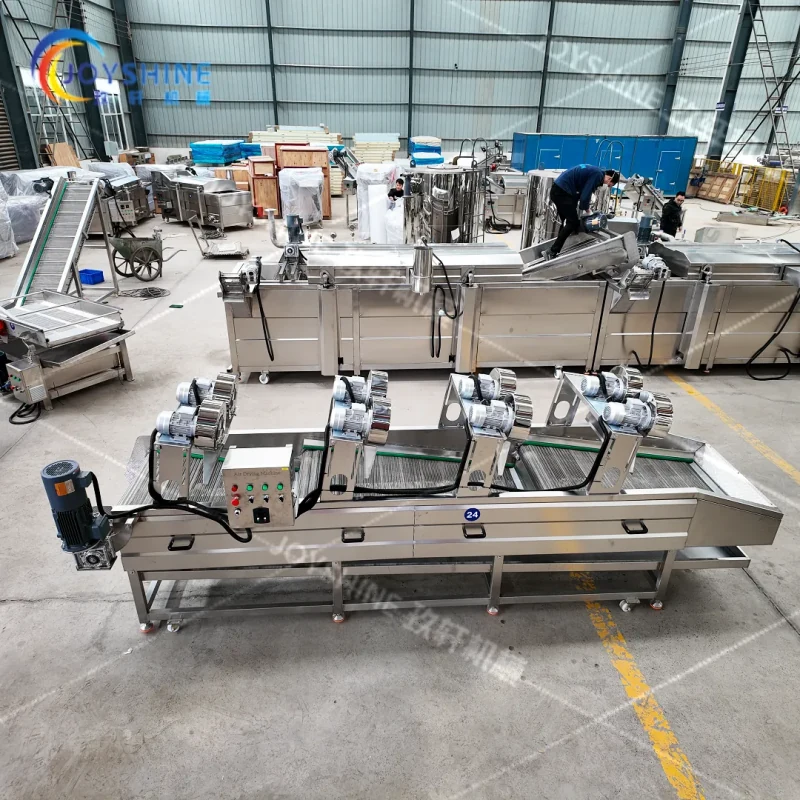
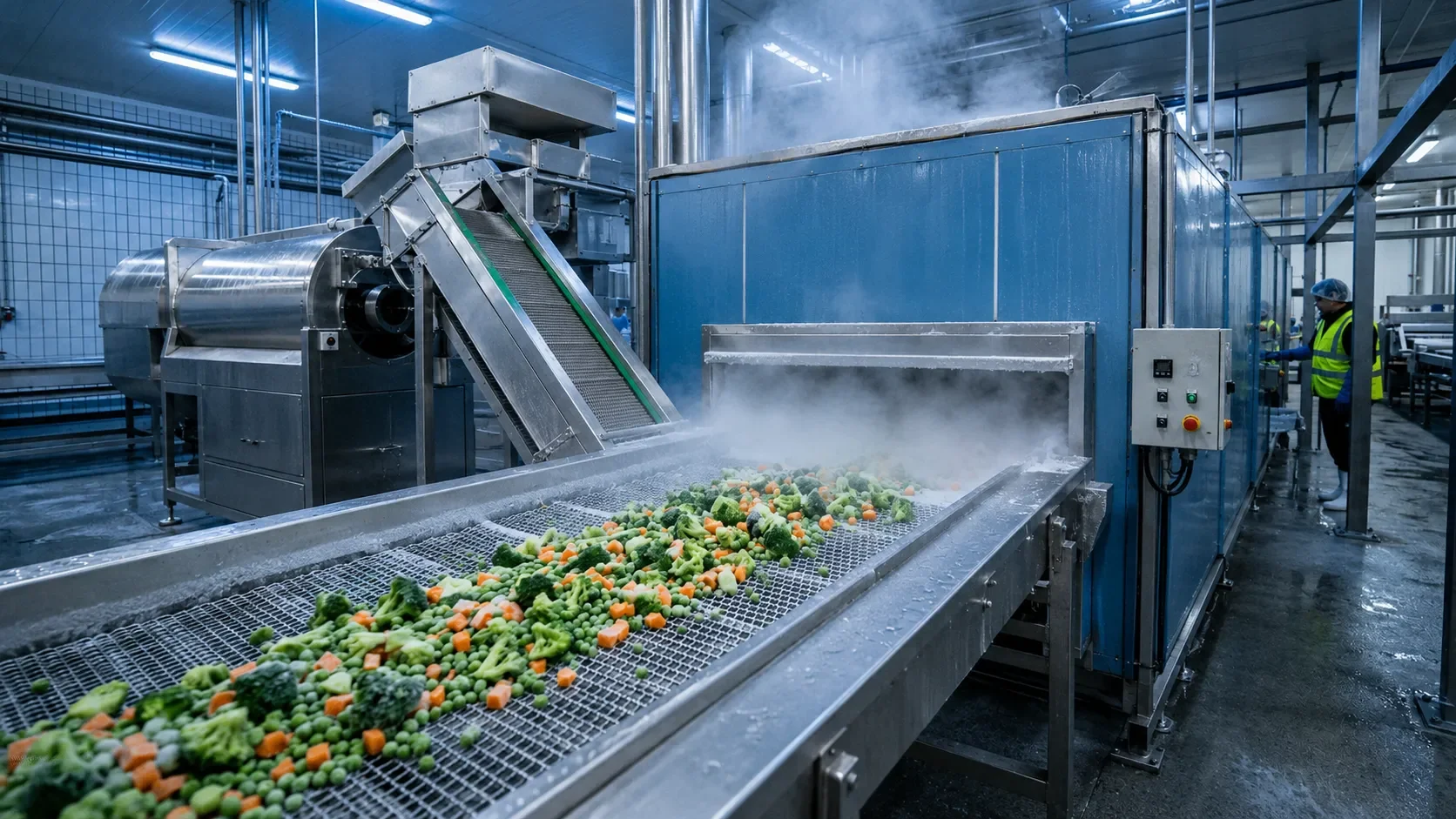
An air drying tunnel featuring multi-stage air knives positioned above and below the conveyor belt.
How It Works
An air-drying conveyor exposes the product surface to airflow as it travels through the machine. Confirm the fan or air-knife arrangement, loading depth and exposure time for the proposed configuration.
The Advantages
- Continuous Production: Air dryers integrate seamlessly into continuous processing lines, eliminating the batch-loading bottlenecks associated with spin dryers.
- Zero Mechanical Damage: Because it relies entirely on non-contact airflow, there is no crushing, bruising, or friction.
- Air conditions: for air drying machines, confirm whether ambient or separately specified heated air is appropriate for the product and included in the proposal.
Best Used For
Air drying is the preferred method for delicate fruits (strawberries, berries, grapes, tomatoes) that would be destroyed in a centrifuge. It is also the standard choice for packaged items (e.g., removing water from vacuum pouches after pasteurization cooling).
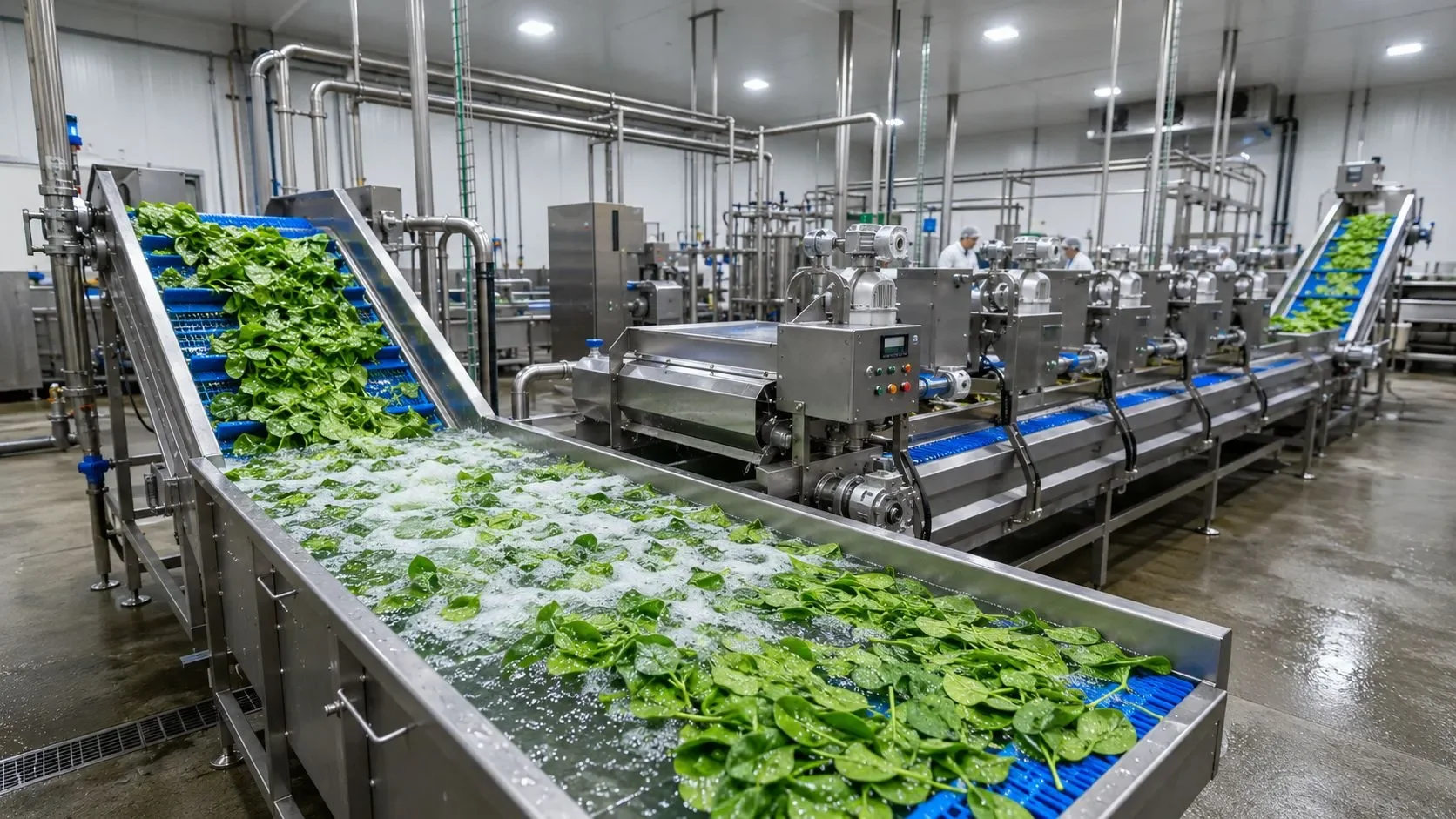
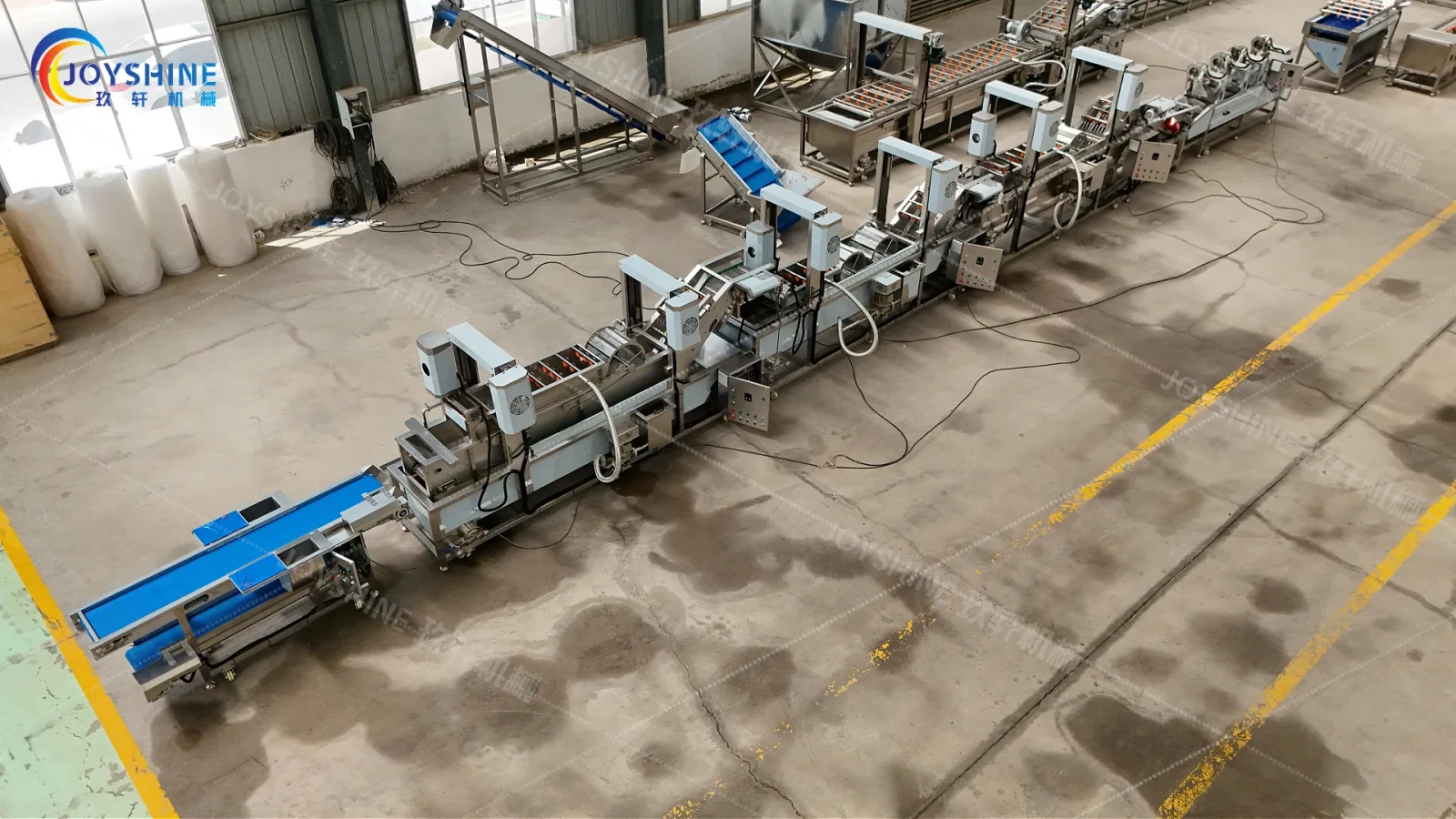
In a continuous vegetable washing line, the air dryer is positioned immediately after the washer to ensure uninterrupted workflow.
Comparison Summary: Which Should You Choose?
| Feature | Centrifugal Dewatering | Air Drying Machine |
|---|---|---|
| Operation Type | Batch processing (auto-tilt available) | Continuous processing |
| Water Removal | Depends on product, basket loading and cycle; verify by trial | Depends on product, airflow, bed depth and exposure; verify by trial |
| Best Products | Leafy greens, cut vegetables | Delicate fruits, whole vegetables, packaged foods |
| Product Damage Risk | Low to Moderate (depends on RPM) | Zero (non-contact) |
| Footprint | Compact / Vertical | Large / Horizontal tunnel |
| Energy Consumption | Moderate (Motor drive) | High (Multiple blower fans) |
Can They Be Combined?
Yes. In demanding applications, combining both methods yields superior results. A processing line might use a short vibratory screen or low-speed centrifuge to shake off the heavy bulk water, followed by a warm air tunnel to ensure the surface is completely dry before IQF freezing.
Frequently Asked Questions
Will centrifugal drying crush my lettuce?
Leaf damage must be checked with representative material. Agree acceptable bruising and breakage, then establish the load and cycle within the equipment instructions; no universal speed guarantees undamaged leaves.
Can air drying machines dry the inside of hollow vegetables?
Compare the two methods on the actual leaf shape, loading and target surface condition. Include usable yield and the complete handling cycle in the assessment; the best arrangement is product-specific.
Does the air dryer use hot air?
Confirm the air-temperature arrangement in the quotation. Ambient-air drying and a heated-air process have different requirements; any heating option must be specified and assessed for the intended product.
How do I integrate these machines into my existing line?
Assess automatic loading and discharge as part of the proposed configuration. Include transfer, treatment, unloading and any buffer storage when matching a batch dewaterer to a continuous line.
Build Your Efficient Drying System
Select air drying, centrifugal dewatering or a combined arrangement from product trials and line requirements. Confirm surface-water targets, acceptable damage, utilities and usable throughput in the proposal.
Contact us today to discuss your raw materials and factory layout. Our engineers will help you select the exact surface water removal equipment to optimize your production line.
Equipment examples