 English
 العربية
 Español
 Русский
Two quotations for an industrial vegetable washing machine can look similar at first glance and still cover very different equipment. One may include a washing tank and discharge conveyor; another may add controlled feeding, filtration, a separate rinse and surface-water removal. Comparing the totals before comparing that scope can lead to an incomplete budget.
The cost depends on the produce, the washing result, the capacity under agreed operating conditions and the equipment included. This guide explains how to build a clear specification and compare offers. A meaningful price requires a defined configuration; there is no single price that represents every industrial vegetable washer.
1. Define what the quotation covers
Start by separating the fruit and vegetable washing machine from the equipment around it. A washer does not automatically include feeding, sorting, drying, weighing or packaging. Ask for an itemized equipment list and a layout showing where the supplier's scope starts and ends.
| Scope | Equipment to define | Main quotation question |
|---|---|---|
| Washing machine | Washing section, product movement, rinse arrangement and discharge | Which functions are included in the base machine, and which are options? |
| Washing plus surface-water removal | Washer, transfer sections and a suitable draining, air-drying or centrifugal stage | Is the product ready for the next operation after this package? |
| Integrated processing line | Agreed feeding, washing, inspection and downstream modules, with compatible transfers and controls | Who supplies and connects each stage, including the interfaces to existing machines? |
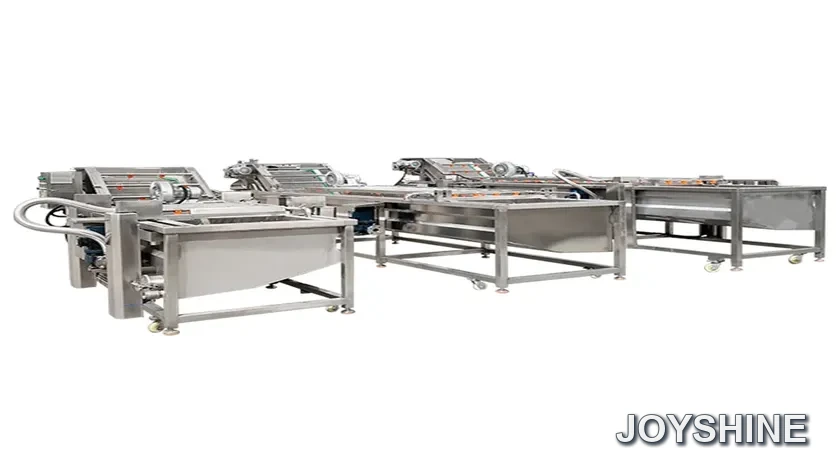
These are comparison scopes, not fixed packages with standard prices. For a wider project, use the vegetable and fruit washing processing line as a starting point for defining the sequence.
2. Match the washing method to the actual produce
Raw material affects the machine design and the work required around it. Record whether the product is whole or cut, its size range, the amount of soil and the damage that is acceptable after washing.
- Leafy vegetables: discuss floating behaviour, leaf retention, discharge handling and the condition needed before dewatering.
- Root vegetables: explain soil load and whether the skin must remain intact. A brush stage may need a different specification from a bubble-washing stage.
- Soft fruit: define ripeness and sensitivity to bruising, including every transfer into and out of the water.
The comparison of bubble and brush washing machines can help narrow the method. Final suitability should be checked with the actual material rather than inferred from a generic equipment name.
3. Agree how capacity will be measured
A kg/h figure only becomes useful when both sides define the product and the test conditions. Clarify whether it refers to incoming produce, washed product or finished packed output. Soil removal, trimming and sorting can make those quantities different.
Provide the desired hourly input, daily operating hours, seasonal peak and expected variation in feed. Ask which loading, washing time and quality criteria apply to the proposed capacity. A larger tank alone does not establish better performance, and the slowest downstream stage can limit the output of the complete line.
4. Specify water handling, cleaning access and controls
Quotations should identify the circulation and filtration equipment, sediment-removal arrangements, spray supply, drains and water-change procedure. Recirculation does not eliminate the need for fresh water or cleaning. Ask for water demand under the intended conditions instead of applying a general saving percentage.
Also compare the stated product-contact materials, access to belts and tanks, removable parts, electrical supply, speed control, sensors and agreed safety provisions. Ask which functions are manual, individually controlled or integrated into a shared control system. These details help explain a price difference that is not visible in a small product photograph.
5. Include the right surface-water removal stage
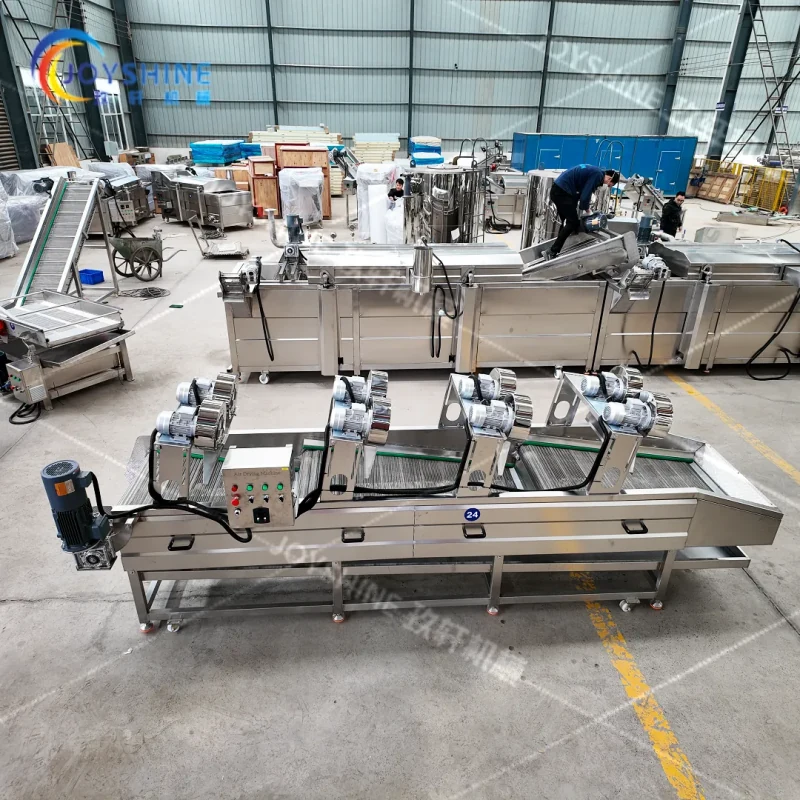
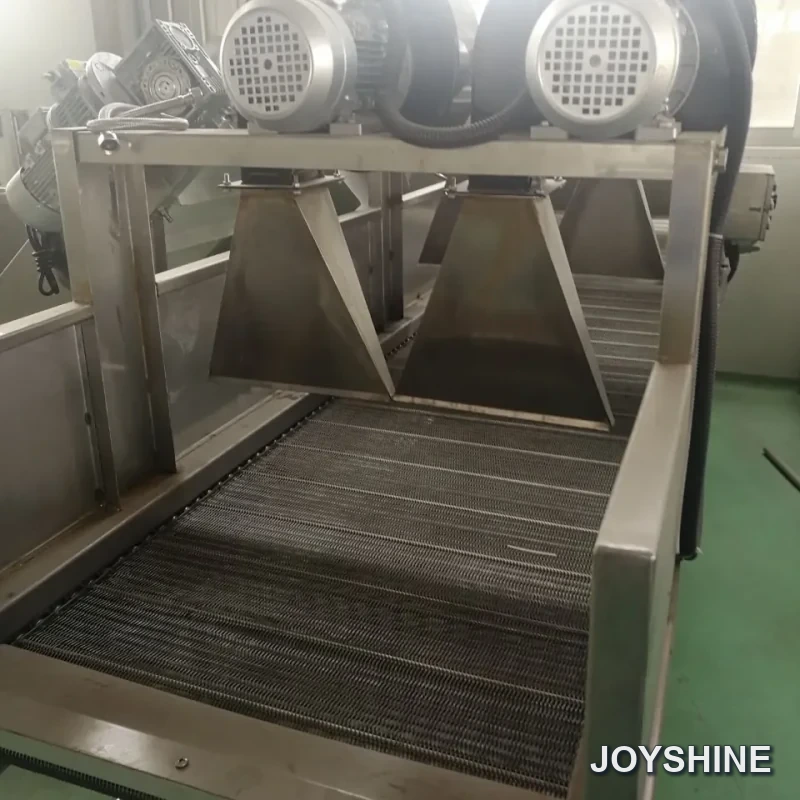
Removing water after washing is a separate process requirement. Confirm whether the next stage needs draining, air knives, centrifugal dewatering or another agreed method. Product shape, fragility and the required surface condition should drive this choice.
Our air drying and centrifugal dewatering comparison explains the distinction. An air-drying conveyor removes surface water; it should not be treated as a hot-air dehydrator for producing dried food. Include transfer heights, handling and capacity matching in the quotation.
6. Compare the installed project, not just the equipment subtotal
Alongside the machine price, request a clear list of included and excluded services. Factory space, utility connections and installation responsibilities can change the total project budget.
- Electrical supply, connected power and control-panel scope
- Water supply, drainage and any treatment equipment
- Conveyors, transfer heights and connections to existing machines
- Packing, transport arrangements and delivery destination
- Installation, commissioning, training and their responsibilities
- Recommended spare parts, warranty scope and after-sales arrangements
For operating costs, use the proposed equipment loads, expected running hours, local utility rates and the agreed cleaning routine. Include labour, maintenance and consumable parts where relevant. Avoid assuming the lowest equipment subtotal will also give the lowest cost per batch.
7. Agree a product trial and acceptance checklist
Before committing to a configuration, agree how the cleaning result, product damage, discharge flow and target throughput will be evaluated. Use representative produce and document the incoming condition. A trial with lightly soiled material may not answer the same questions as a seasonal batch with heavy soil.
Watch the bubble washer water-running test
This video shows the bubbling, spray and conveyor arrangement during a factory water test. It does not demonstrate cleaning performance with produce or confirm a particular production capacity. Use it to discuss the equipment arrangement, then agree a loaded-product trial for your application.
8. Prepare a complete request for quotation
Copy this checklist into your enquiry. Where a requirement is undecided, mark it as a point to discuss instead of entering a guessed figure.
- Product: name, whole or cut form, size range and photos of the incoming material.
- Cleaning task: soil or debris to remove, skin-retention needs and acceptable product damage.
- Output: target kg/h, whether it is input or finished output, and hours per shift.
- Next process: cutting, fresh packing, cooking, freezing or another operation.
- Site: available floor plan, transfer heights, water and drainage, voltage, phase and frequency.
- Supply scope: required machines, existing equipment, delivery destination and installation expectations.
- Acceptance: trial material, agreed result and how throughput will be checked.
Send these details to Joyshine for a washing-equipment configuration and quotation. A defined process and itemized scope make the proposal easier to assess and help identify missing equipment before an order is placed.
Frequently asked questions
Why can two washers with the same stated kg/h have different prices?
The rating may use different products or operating conditions, and the machines may include different filtration, controls, rinse stages and discharge arrangements. Compare the specification and supply scope before comparing the totals.
Can I start with one washer and add equipment later?
That can be a planning option. Discuss future capacity, conveyor heights, available space and control connections before choosing the first machine. Later equipment must still be compatible with the original washing stage.
Can I obtain a useful quotation without a sample trial?
A preliminary proposal can be based on a clear product description, photographs and operating requirements. If product handling or cleaning performance is uncertain, agree what must be tested before confirming the final configuration and acceptance criteria.