 English
  العربية
 Español
 Русский
When planning a new food processing factory, one of the most important decisions is whether to choose an automatic or semi-automatic production line. This decision affects your investment cost, labor requirement, production capacity, product consistency, factory layout and long-term operation efficiency.
For many buyers, the first question is usually: “How much does the production line cost?” But before asking for a price, it is better to understand what level of automation your business really needs.
A small factory may not need a fully automatic line at the beginning. A growing food manufacturer may need a semi-automatic line with room for future upgrade. A large industrial plant, however, usually requires a complete automatic production line to reduce labor dependency and keep stable output.
In this article, we will explain the difference between automatic and semi-automatic food processing lines, and help you choose the right solution for your factory.
## What Is a Semi-Automatic Food Processing Line?
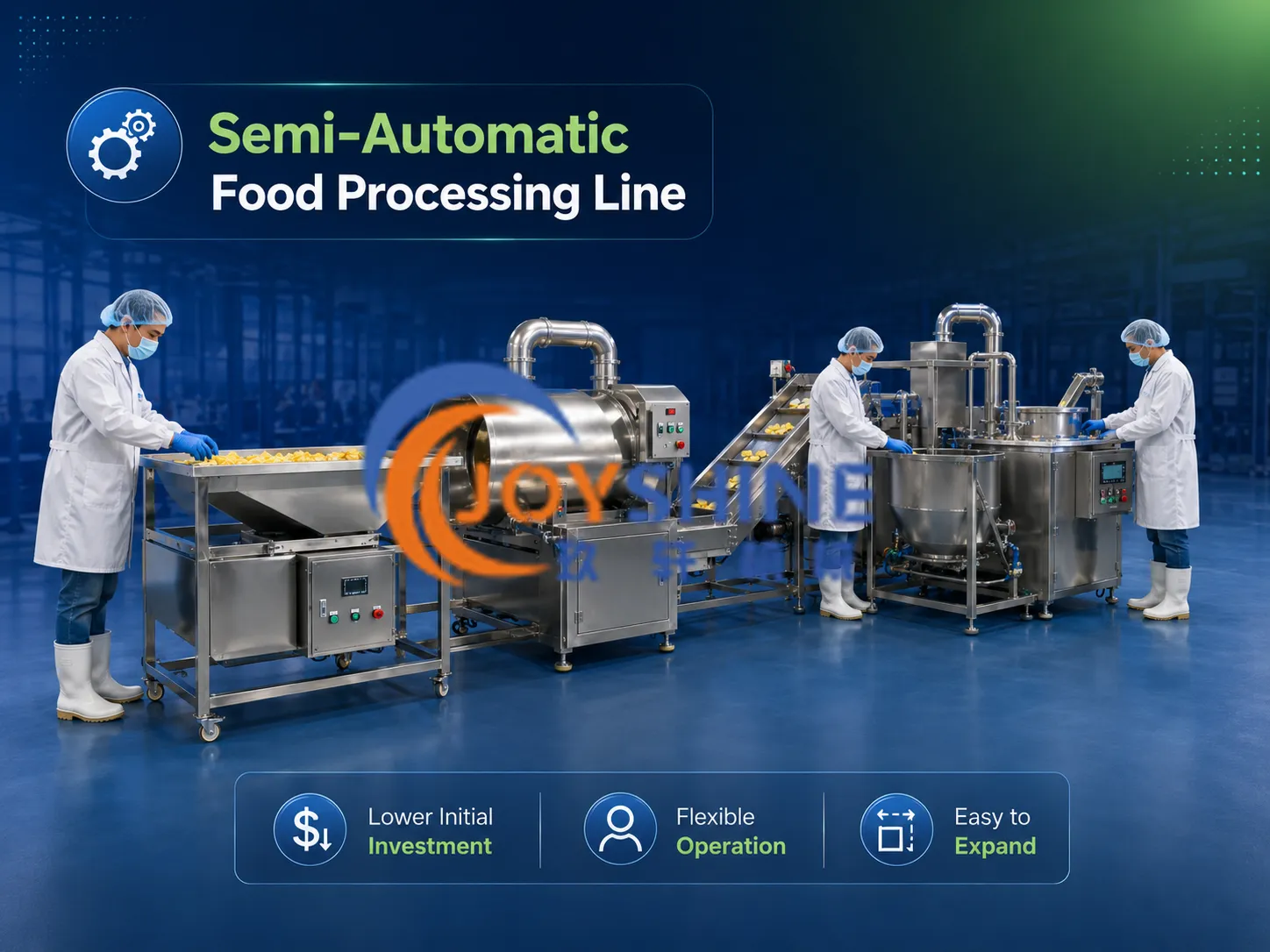
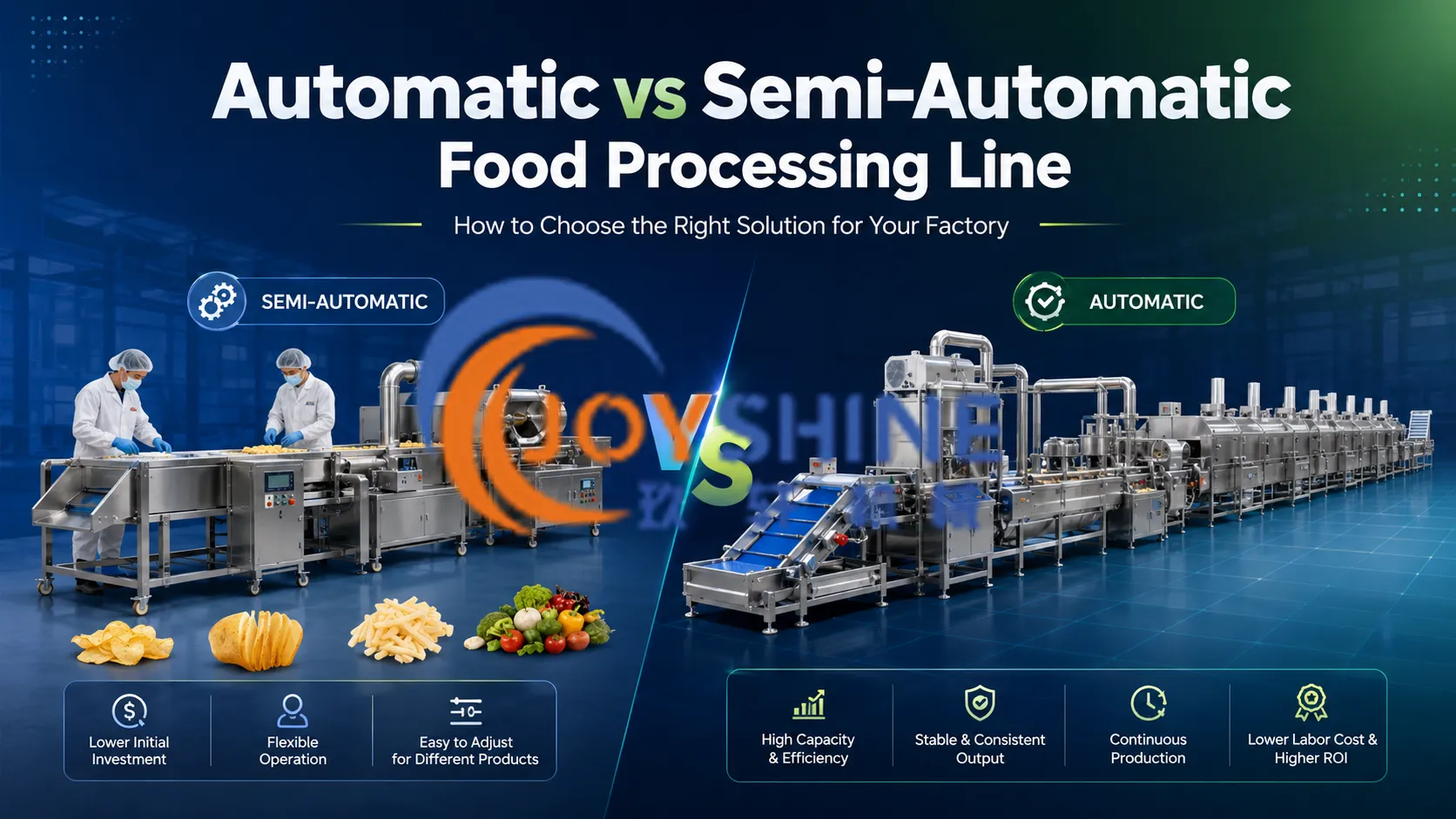
A semi-automatic food processing line combines machines with manual operation. Some steps are completed by equipment, while other steps still require workers for feeding, sorting, loading, unloading, inspection or packing.
For example, a semi-automatic potato processing line may include washing, peeling, cutting, blanching, frying and dewatering machines, but workers may still help with material feeding, product inspection or final packing.
Semi-automatic lines are often suitable for:
* Start-up food factories
* Small and medium production plants
* Restaurants or central kitchens
* Local snack producers
* Businesses with limited budget
* Factories with flexible product types
* Projects that may expand step by step
The biggest advantage of a semi-automatic line is lower initial investment. It allows the factory to start production with essential machines first, then add more automation later as sales volume increases.
If you are still testing the market, a semi-automatic line can be a practical way to reduce risk.
## What Is an Automatic Food Processing Line?
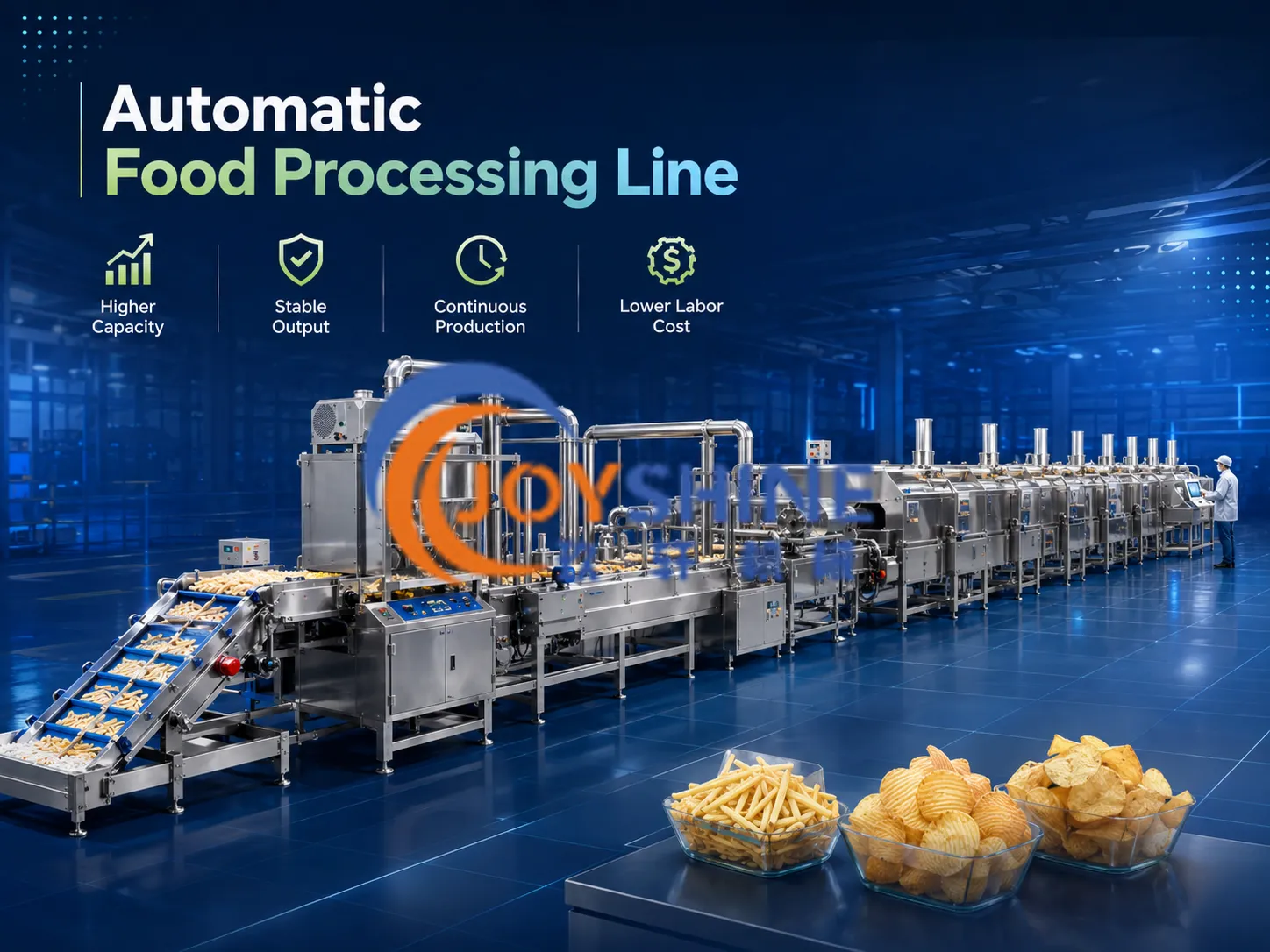
An automatic food processing line uses conveyors, continuous machines, PLC control systems and integrated process design to connect most production steps together.
Compared with a semi-automatic line, an automatic line requires less manual handling between machines. Raw materials can move continuously from washing to cutting, frying, freezing, seasoning or packing depending on the final product.
A complete automatic production line may include:
* Automatic feeding system
* Washing and cleaning section
* Peeling or trimming section
* Cutting or slicing section
* Blanching section
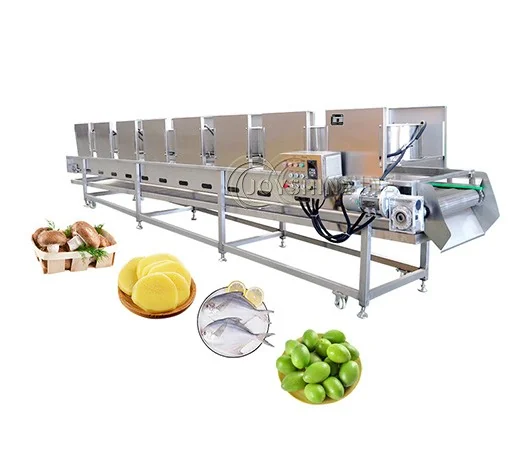
* Dewatering or air drying section
* Frying, freezing or further processing section
* Seasoning or cooling section
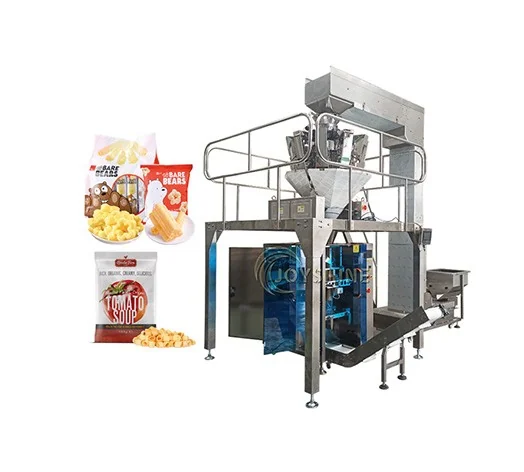
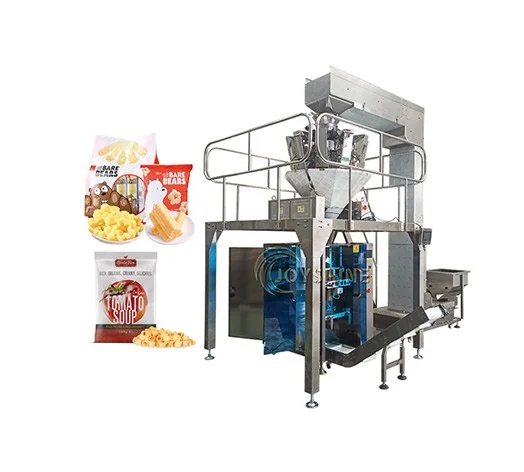
* Weighing and packaging section
* Conveyor connection between machines
* PLC control and customized factory layout
Automatic lines are usually suitable for medium and large factories that need stable production, consistent product quality and lower long-term labor cost.
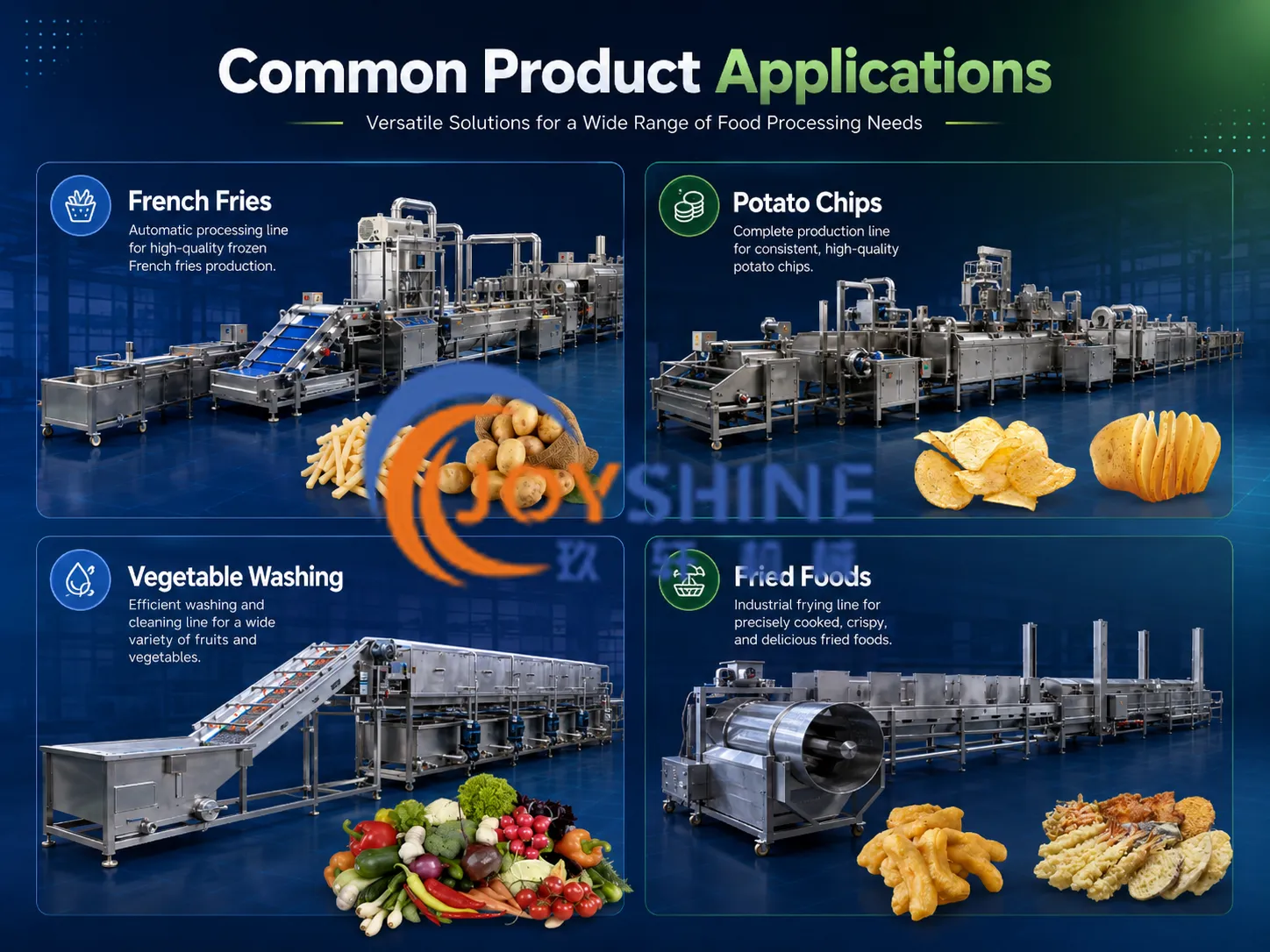
For example, a French Fries Production Line may include potato washing, peeling, cutting, blanching, frying, IQF freezing and packing. A Potato Chips Production Line may include slicing, washing, blanching, dewatering, continuous frying, seasoning and packing.
## Automatic vs Semi-Automatic: Main Differences
| Factor | Semi-Automatic Line | Automatic Line |
| -------------------- | --------------------------- | -------------------------------- |
| Initial investment | Lower | Higher |
| Labor requirement | More workers needed | Less manual operation |
| Capacity | Small to medium | Medium to large |
| Product consistency | Depends partly on operators | More stable and controllable |
| Factory layout | More flexible | Needs more detailed planning |
| Operation difficulty | Easier to start | Requires more training |
| Long-term labor cost | Higher | Lower |
| Upgrade potential | Can expand step by step | Better for industrial production |
| Suitable users | Startups, small factories | Growing or large food factories |
The right choice is not always the most expensive solution. The best production line should match your current business stage, market demand and future growth plan.
## How to Choose Based on Product Type
Different food products require different automation levels. Before choosing a production line, you should first confirm your raw material and final product.
### 1. Frozen French Fries
Frozen French fries production usually needs a more complete process, including washing, peeling, cutting, blanching, dewatering, frying, cooling, IQF freezing and packing.
For small production, a semi-automatic line may be enough. But if you want to supply supermarkets, restaurants or frozen food distributors, an automatic French Fries Production Line with IQF Freezing Line is usually more suitable.
### 2. Potato Chips and Fried Snacks
Potato chips require stable slicing thickness, controlled frying temperature and uniform seasoning. If the production volume is low, a semi-automatic line can work well.
For larger snack factories, an automatic Potato Chips Production Line with continuous frying, oil filtration, seasoning and packing can improve product consistency and reduce manual handling.
### 3. Fresh-Cut Vegetables and Salad Processing
Vegetable washing and salad processing usually requires gentle handling. Leafy vegetables such as lettuce, spinach and arugula are easy to damage, so the washing method and air drying section must be carefully designed.
A semi-automatic vegetable washing line is suitable for central kitchens or small fresh-cut vegetable suppliers. For higher capacity projects, a complete Vegetable & Fruit Washing Processing Line can connect feeding, washing, rinsing, air drying, sorting and packing preparation.
You can also check real project experience from the Argentina 300 kg/h Vegetable Salad Washing Line.
### 4. Fried Pastry, Meat, Seafood and Other Fried Foods
For products such as chebureki, spring rolls, meat pies, fish, chicken products and fried snacks, stable oil temperature and accurate frying time are very important.
Small producers can start with a single fryer or semi-automatic frying section. For continuous production, an Industrial Continuous Fryer can help reduce manual frying work and keep product color more consistent.
A real example is Joyshine’s 350 kg/h Continuous Fryer for Chebureki Production in Russia, where the fryer was customized according to product size, frying time and heating method.
## How to Choose Based on Capacity
Capacity is another key factor when deciding automation level.
### Small Capacity: 100–300 kg/h
This range is suitable for startups, small workshops, restaurants, local food suppliers and test production projects.
Recommended option:
* Semi-automatic line
* Key single machines first
* Manual feeding and packing
* Flexible layout
* Lower investment risk
You can start with machines from the Single Machines for Food Processing page, then upgrade to a complete line later.
### Medium Capacity: 300–1000 kg/h
This range is suitable for growing food factories, regional suppliers and businesses that already have stable orders.
Recommended option:
* Semi-automatic or partially automatic line
* Conveyor connection between key machines
* Higher degree of standardization
* Space reserved for future expansion
* Optional automatic packing system
At this stage, factory layout becomes more important. You should not only consider today’s output, but also future product categories and expansion needs.
### Large Capacity: 1000 kg/h and Above
This range is suitable for industrial food factories, frozen food producers, snack manufacturers and export-oriented production plants.
Recommended option:
* Fully automatic production line
* Continuous processing equipment
* PLC control system
* Integrated conveyor layout
* Automatic weighing and packing
* Stronger hygiene and maintenance design
Although the initial investment is higher, a fully automatic line can reduce labor cost, improve efficiency and support more stable long-term operation.
## When Should You Choose a Semi-Automatic Line?
A semi-automatic line is a good choice if:
* Your budget is limited
* Your production volume is not very high
* You are entering a new market
* You need flexible product changeover
* Labor cost in your area is acceptable
* You want to expand step by step
* You are not ready for a large factory layout
For example, if you are starting a potato chips business and your daily orders are still growing, you may first choose semi-automatic washing, slicing, frying and seasoning machines. Later, you can add continuous frying, automatic seasoning or packing equipment.
## When Should You Choose an Automatic Line?
An automatic line is a better choice if:
* You need stable daily production
* You want to reduce labor dependency
* Your product standard must be consistent
* You already have strong market demand
* Your factory supplies supermarkets or distributors
* You need better hygiene control
* You plan long-term industrial production
For products such as frozen French fries, potato chips, IQF vegetables and continuous fried snacks, automatic production can help control processing time, temperature, product movement and final quality more precisely.
## Do Not Choose by Price Alone
Many buyers compare suppliers only by machine price. This is risky.
A food processing line is not just a group of machines. A good solution should consider:
* Raw material characteristics
* Final product type
* Required capacity
* Factory space
* Labor arrangement
* Power, water, gas or steam conditions
* Cleaning and drainage requirements
* Packaging method
* Future expansion plan
* Local installation and operator training
A cheaper line may cost more in the long run if it has poor layout, low efficiency, high product loss or difficult cleaning.
Before confirming an order, it is better to ask the supplier for a complete process proposal and layout suggestion.
## Questions to Ask Before Buying
Before choosing between automatic and semi-automatic production lines, prepare the following information:
- What raw material will you process?
- What final product do you want to make?
- What capacity do you need per hour?
- How many working hours per day?
- Do you need fresh, fried, frozen or packed products?
- What is your available factory size?
- What is your budget range?
- Do you prefer lower investment or lower labor cost?
- Do you need future expansion?
- Do you need installation and operator training?
With these details, the supplier can recommend a more accurate solution instead of only giving a general machine price.
## Joyshine Can Customize Both Automatic and Semi-Automatic Lines
Joyshine provides customized food processing production line solutions for different products and factory sizes. Whether you need a single machine, a semi-automatic line or a fully automatic turnkey project, the equipment can be configured according to your product, capacity, workshop layout and budget.
Main solutions include:
* French Fries Production Line
* Potato Chips Production Line
* Vegetable & Fruit Washing Processing Line
* Single Machines for Food Processing
You can also visit the Food Processing Equipment Projects page to see more customized cases for different countries and applications.
## Conclusion
Choosing between an automatic and semi-automatic food processing line depends on your product type, production capacity, budget, labor cost, factory space and long-term business plan.
A semi-automatic line is suitable for startups and small to medium factories that want to control investment and keep flexibility. An automatic production line is better for industrial factories that need higher capacity, stable quality and lower labor dependence.
The best solution is not always the most automated one. The right solution is the one that matches your current needs and supports your future growth.
If you are planning to build or upgrade a food processing factory, please send Joyshine your raw material, target capacity, factory size and final product requirements. Our engineers can help design a suitable automatic or semi-automatic production line for your project.
Contact Joyshine for a Customized Food Processing Line Solution