 English
  العربية
 Español
 Русский
Ginger and garlic are essential spice ingredients worldwide. Processing fresh ginger and whole garlic bulbs into stable, uniform powder requires a complete, well-designed ginger garlic powder production line.
Unlike simple washing and packing operations, powder processing involves both a wet section (cleaning and preparation) and a dry section (dehydration, grinding, and packing). Furthermore, while ginger and garlic share some equipment similarities, their structural differences require specific handling during the early stages of production.
This guide explains the complete production process, highlights the key differences between ginger and garlic preparation, outlines the necessary equipment, and discusses capacity planning.
The Ginger Powder Production Process
Ginger has an irregular shape that easily traps soil and sand. The main objective before drying is to clean the root thoroughly and slice it evenly.
The standard industrial flow for ginger powder is:
Fresh Ginger Receiving → Washing and Peeling → Inspection → Slicing → Blanching → Cooling → Surface-Water Removal → Dehydration → Grinding → Sieving → Weighing and Packing
1. Washing and Peeling
Fresh ginger is fed into a potato peeling machine equipped with abrasive brush rollers. The rotating brushes remove heavy soil and part of the ginger skin, while continuous water spray rinses the impurities away.
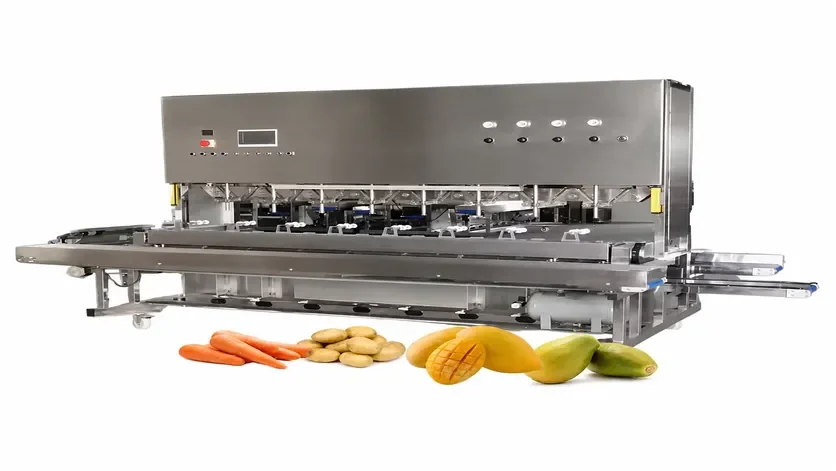
An abrasive peeling machine effectively removes soil and outer skin from irregular root vegetables.
2. Slicing
After inspection, the ginger must be sliced. Uniform slicing is crucial because slices of different thicknesses will dry at different speeds, leading to uneven moisture content before grinding. A high-speed vegetable cutting machine produces clean, consistent slices.
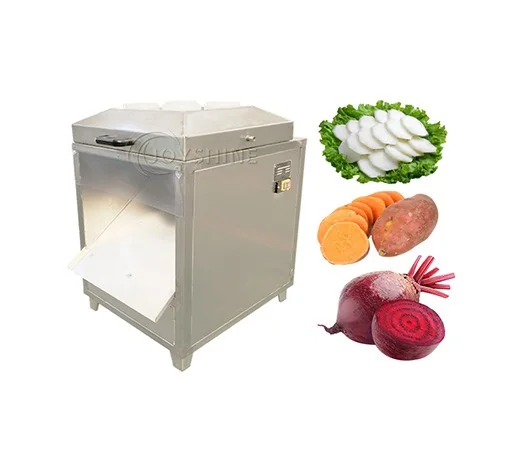
An industrial vegetable cutter produces uniform slices to ensure consistent dehydration.
3. Blanching (Optional but Recommended)
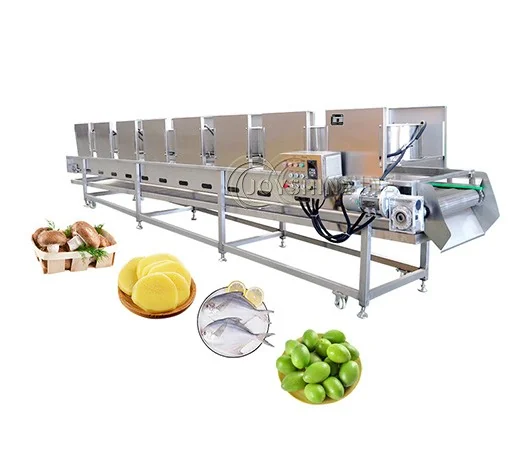
Blanching ginger slices in a vegetable blanching machine helps stabilize product quality, inactivate enzymes, and protect the color before drying. After a brief hot-water bath, the slices are rapidly cooled.
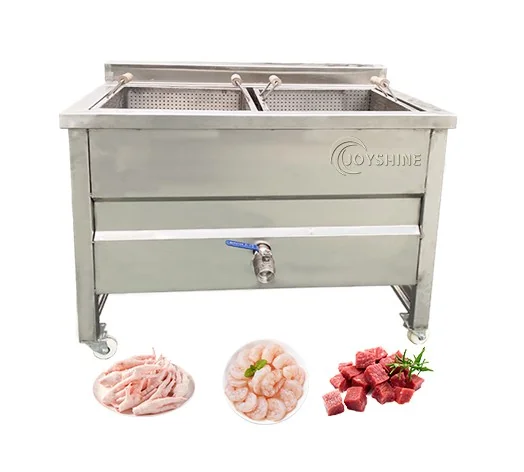
A continuous blanching machine stabilizes the product before it enters the drying phase.
4. Dehydration and Grinding
Surface water is first removed by an air dryer. The slices then enter the main dehydration dryer to reduce internal moisture to a level suitable for milling. Finally, the dried slices are ground into fine powder and sieved for uniformity.
The Garlic Powder Production Process
While garlic powder uses the same drying and grinding principles as ginger, its initial preparation is entirely different. Garlic arrives as whole bulbs that must be separated and peeled without water to prevent premature spoilage or sticking.
The standard industrial flow for garlic powder is:
Whole Garlic Receiving → Garlic Clove Separation → Peeling → Inspection → Washing → Slicing → Dehydration → Grinding → Sieving → Weighing and Packing
1. Clove Separation and Dry Peeling
Whole garlic bulbs are fed into a clove separator. The individual cloves then enter a specialized garlic peeling machine (often utilizing pneumatic air-peeling technology) to remove the dry papery skins without damaging the clove surface.
2. Washing and Slicing
The peeled cloves are inspected and then washed to remove any remaining skin fragments or dust. After draining, the cloves are sliced. Because garlic cloves are smaller and more uniform than ginger, a specialized slicer ensures they are cut thinly enough for efficient drying.
3. Dehydration and Grinding
Garlic slices are distributed into the dryer. Temperature and air velocity must be controlled carefully to prevent overheating, which can degrade the garlic's pungent flavor. Once dried, the flakes are ground and sieved into powder.
Main Equipment Configuration
For a combined spice facility processing both materials, the equipment list includes:
| Processing Section | Main Equipment | Main Function |
|---|---|---|
| Preparation (Ginger) | Brush washing & peeling machine | Removes soil and ginger skin |
| Preparation (Garlic) | Clove separator & pneumatic peeler | Separates bulbs and removes dry skins |
| Slicing (Both) | Industrial vegetable cutter | Cuts clean products into uniform slices |
| Pre-treatment (Ginger) | Blanching & cooling machine | Inactivates enzymes and protects color |
| Drying (Both) | Continuous hot-air dryer | Reduces internal moisture for grinding |
| Grinding (Both) | Mill and sieving system | Pulverizes dried slices into fine powder |
| Packaging (Both) | Auger powder packing machine | Accurately weighs and seals the powder |
Essential Factory Design Considerations
1. Separation of Wet and Dry Zones
The production of ginger and garlic powder involves both wet processes (washing, peeling, blanching) and highly sensitive dry processes (milling, sieving, packing).
These zones must be physically separated in the factory layout to prevent humidity from the washing area from causing the dry powder to clump or block the grinder screens.
2. Capacity and Yield Calculation
When planning a 100 kg/h ginger and garlic powder project, it is vital to distinguish between fresh input capacity and powder output capacity. Fresh ginger and garlic have high water content (often 70–80%). To produce 100 kg/h of finished powder, the washing and slicing equipment must handle 400 to 500 kg/h of fresh raw material.
3. Cross-Contamination and Cleaning
Garlic and ginger have strong, distinct flavors. If both are processed on the same line, the equipment—especially the grinder and packaging machine—must be designed for easy disassembly and thorough sanitation to prevent flavor carryover between batches.
4. Powder Packaging
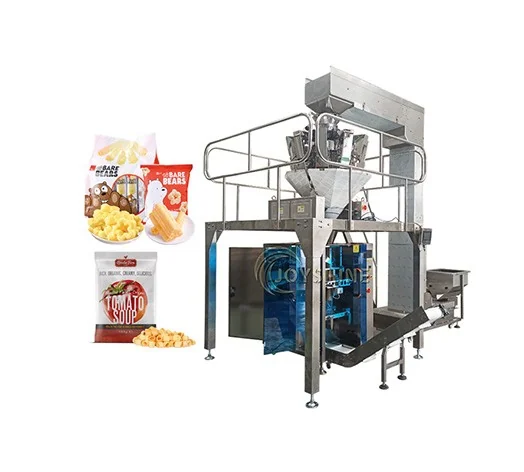
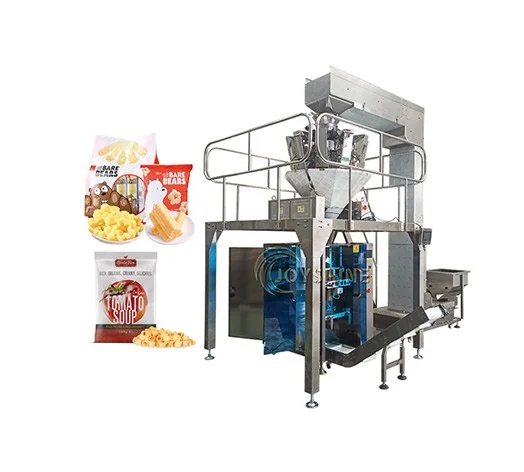
Powders require different filling mechanisms than granules or liquids. An auger-type food packaging machine is essential to accurately dose fine spices into pouches, jars, or bottles without excessive dust generation.
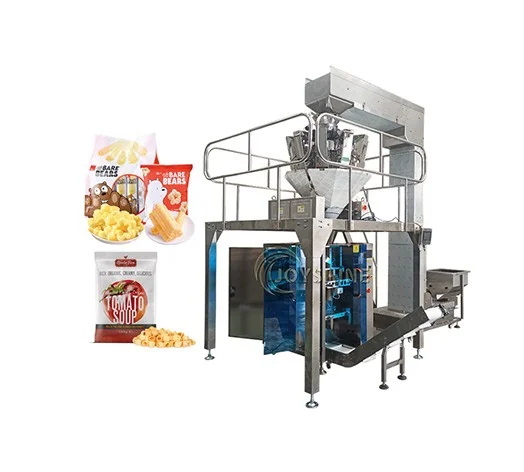
An automatic vertical form-fill-seal packing machine equipped with an auger filler is ideal for spice powders.
Frequently Asked Questions
Can the same dryer be used for both ginger and garlic?
Yes, a continuous hot-air dryer or heat-pump dryer can process both products. However, the drying temperature, belt speed, and loading thickness must be adjusted according to the specific spice to avoid burning.
Do I absolutely need to blanch ginger?
Blanching is optional but highly recommended for industrial production. It prevents enzymatic browning during drying and extends the shelf life and color stability of the final ginger powder.
Why is garlic peeled dry instead of washed first?
Applying water to whole garlic bulbs makes the dry, papery skin stick to the cloves, making peeling much more difficult and increasing the risk of bacterial growth before drying.
How much factory space is required?
Space depends on the target capacity. A fully automated 500 kg/h (fresh input) line requires significant floor length for the continuous dryer and physical separation walls between the wet and dry zones.
Can this line process other spices?
Yes. With minor adjustments to the washing and peeling sections, the slicing, drying, and grinding modules can also process turmeric, onions, and chili peppers.
Start Your Spice Processing Project
Whether you are building a dedicated ginger powder line, a garlic processing facility, or a flexible multi-spice factory, proper equipment matching is key to profitability.
If you are ready to explore equipment options, please prepare your raw material details, target powder output capacity, and factory dimensions.
Contact Joyshine Machinery for a customized ginger and garlic powder production line proposal and layout design.