 English
  العربية
 Español
 Русский
100 kg/h Ginger Powder, Garlic Powder and Chili Paste Processing Line for Bangladesh
Joyshine was contacted by a customer in Bangladesh who was planning to process three common agricultural products: fresh ginger, whole garlic bulbs and fresh chili peppers.
The customer required an approximately 100 kg/h processing solution capable of producing ginger powder, garlic powder and chili paste. Because powder processing and paste processing involve very different moisture-control and packaging requirements, Joyshine divided the project into three modular processing sections.
Instead of recommending several unrelated machines, our engineers prepared an integrated process covering raw-material washing, peeling, cutting, dehydration, grinding, mixing, filling and packaging.
Project Overview
| Item | Project Details |
|---|---|
| Project Location | Bangladesh |
| Target Capacity | Approximately 100 kg/h |
| Raw Materials | Fresh ginger, whole garlic bulbs and fresh chili peppers |
| Final Products | Ginger powder, garlic powder and chili paste |
| Main Processes | Washing, peeling, slicing, blanching, drying, grinding, mixing, filling and packing |
| Solution Type | Customized modular processing solution |
| Equipment Material | Food-contact parts can be manufactured in SUS 304 stainless steel |
| Power Supply | Customized according to the customer’s local voltage and frequency |
The final production capacity depends on whether the stated 100 kg/h refers to fresh raw-material input or finished-product output. Moisture loss during dehydration must be considered when selecting the dryer and grinder.
Customer Processing Requirements
The Bangladesh customer wanted to establish a flexible spice-processing facility capable of handling several raw materials within the same factory.
The main requirements included:
- Processing fresh ginger into a stable, uniform powder
- Separating, peeling and processing whole garlic bulbs into garlic powder
- Processing fresh chili peppers into a smooth chili paste
- Reducing manual handling between processing stages
- Producing relatively uniform slices before dehydration
- Adjusting the grinding fineness according to the final product
- Providing suitable weighing, filling and packaging equipment
- Allowing future adjustment of capacity and automation level
One of the main engineering challenges was that ginger powder, garlic powder and chili paste require different processing environments. Powder production requires effective dehydration and a clean dry-processing area, while chili paste production remains a wet process from washing through grinding and filling.
For this reason, Joyshine recommended separating the wet chili-processing section from the dry powder-grinding and powder-packing areas.
Customized Processing Solution
1. Ginger Powder Processing Line
The recommended ginger powder production process is:
Fresh Ginger Receiving → Washing and Peeling → Inspection → Slicing → Blanching → Cooling → Surface-Water Removal → Dehydration → Grinding → Sieving → Weighing and Packing
Washing and Peeling
Fresh ginger usually carries soil, sand and other impurities within its irregular surface. A washing and peeling section removes these contaminants and prepares the ginger for inspection and cutting.
The washing equipment can be selected as part of a complete vegetable and fruit washing processing line according to the amount of soil, ginger size and required capacity.
Uniform Ginger Slicing
After washing, the ginger is cut into relatively uniform slices.
Uniform slicing is important because slices with different thicknesses lose moisture at different speeds. Oversized pieces may remain wet, while excessively thin pieces may become over-dried.
Joyshine’s vegetable cutting machine can be equipped with different blades according to the required slice thickness.
Blanching
The sliced ginger can pass through a vegetable blanching machine before dehydration.
Blanching parameters should be adjusted according to the raw material and desired final product. The process can help stabilize product quality before drying, but excessive blanching should be avoided.
Surface-Water Removal and Dehydration
After blanching and cooling, surface water should be removed before the ginger enters the main dehydration system.
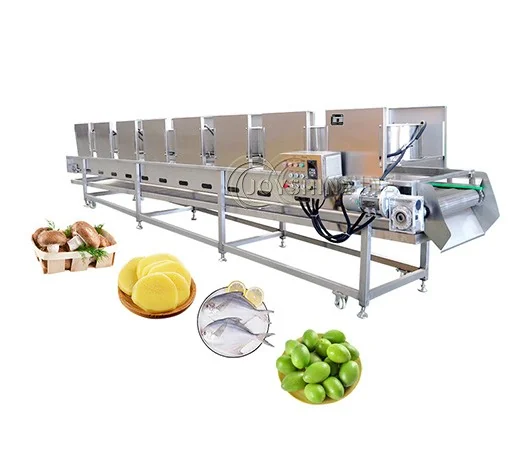
An air drying machine can remove free water from the ginger surface and reduce the load on the dehydration equipment.
The main dehydration stage then lowers the moisture content of the ginger slices to a level suitable for grinding and storage.
Grinding and Packing
After dehydration, the dried ginger slices are transferred to a grinding machine. Grinding fineness can be selected according to the customer’s market requirements.
A sieving system can also be added to improve powder uniformity before the ginger powder is weighed and packed.
2. Garlic Powder Processing Line
The recommended garlic powder production process is:
Whole Garlic Receiving → Garlic Clove Separation → Peeling → Inspection → Washing → Slicing → Dehydration → Grinding → Sieving → Weighing and Packing
Garlic Clove Separation
Whole garlic bulbs must first be separated into individual cloves.
A garlic clove separating machine replaces manual bulb breaking and provides more consistent feeding for the peeling section.
Garlic Peeling and Inspection
The separated cloves enter the peeling machine. After peeling, an inspection conveyor allows operators to remove damaged cloves, remaining skins and foreign material.
The peeling and inspection stages help improve the cleanliness and consistency of the finished garlic powder.
Garlic Washing and Slicing
The peeled cloves are washed before entering the slicing machine.
Garlic should be cut into relatively thin, uniform slices. Consistent slice thickness reduces differences in dehydration time and prepares the product for efficient grinding.
Joyshine can combine washing, peeling, inspection and cutting equipment from its range of single food processing machines.
Garlic Dehydration
The garlic slices are distributed evenly inside the selected drying system.
Drying temperature, air velocity, loading thickness and processing time must be controlled carefully. The objective is to reduce moisture sufficiently for grinding without unnecessarily overheating the garlic.
Actual garlic samples should be tested before confirming the dryer model, loading quantity and drying cycle.
Grinding and Powder Packing
The dried garlic slices are ground into powder and passed through a sieve to obtain a more uniform particle size.
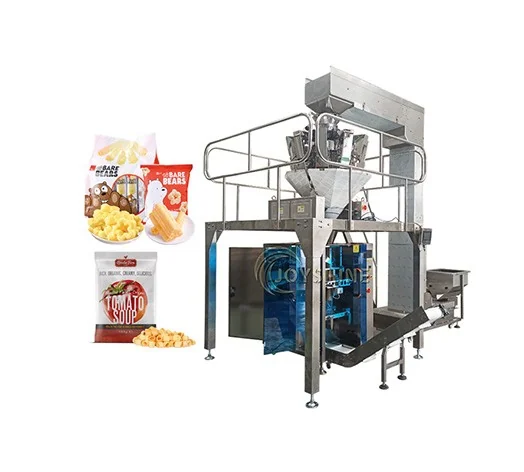
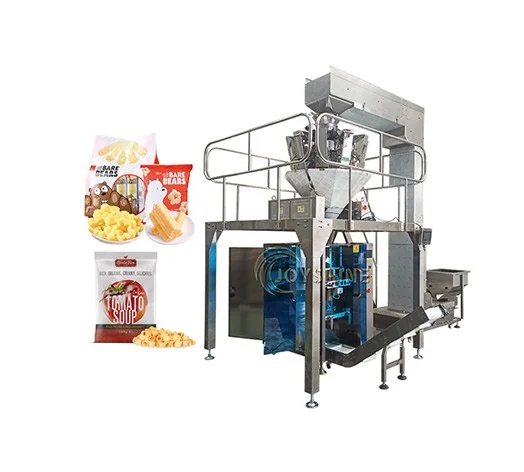
The finished garlic powder can then be packed using an auger-type powder filling machine or another packaging system selected according to the required bag weight.
3. Chili Paste Processing Line
The recommended chili paste manufacturing process is:
Fresh Chili Receiving → Sorting → Washing → Draining → Grinding → Mixing → Filling → Sealing and Packing
Chili Sorting and Washing
Fresh chili peppers are inspected to remove damaged peppers, leaves, stems and foreign material.
The peppers are then cleaned using a fruit and vegetable washing machine. Bubble agitation and water spraying provide continuous cleaning while reducing excessive mechanical damage.
Chili Grinding
After washing and draining, the chili peppers enter the grinding machine.
The grinder breaks down the fresh peppers to produce chili paste. The grinder model and screen configuration should be selected according to the required output and final paste texture.
Ingredient Mixing
The ground chili paste is transferred to a stainless-steel mixing tank.
Salt, oil, spices and other ingredients can be added according to the customer’s recipe. The agitator mixes the ingredients until a relatively uniform product is obtained.
Depending on the recipe, packaging method and required shelf life, heating, pasteurization and cooling equipment can also be added before filling.
Filling and Packaging
The finished chili paste is transported to a filling machine.
The filling system should be selected according to:
- Packaging material
- Bottle, jar, pouch or container size
- Required filling weight
- Product viscosity
- Filling temperature
- Required production speed
An automatic capping, sealing, coding and labeling system can be added when retail packaging is required.
Main Equipment Configuration
| Processing Section | Main Equipment | Main Function |
|---|---|---|
| Ginger Processing | Washing and peeling machine | Removes soil, impurities and part of the ginger skin |
| Ginger Processing | Inspection conveyor | Allows manual quality inspection |
| Ginger Processing | Slicing machine | Produces relatively uniform ginger slices |
| Ginger Processing | Blanching and cooling equipment | Prepares sliced ginger for drying |
| Ginger Processing | Surface air dryer | Removes free surface water |
| Ginger Processing | Dehydration dryer | Reduces internal moisture |
| Ginger Processing | Grinding and sieving system | Produces uniform ginger powder |
| Garlic Processing | Garlic clove separator | Separates whole garlic bulbs into cloves |
| Garlic Processing | Garlic peeling machine | Removes garlic skins |
| Garlic Processing | Inspection and washing equipment | Removes skins, foreign material and impurities |
| Garlic Processing | Garlic slicing machine | Produces uniform slices for drying |
| Garlic Processing | Dehydration dryer | Reduces garlic moisture before grinding |
| Garlic Processing | Grinding and sieving system | Produces garlic powder |
| Chili Processing | Sorting and washing machine | Cleans fresh chili peppers |
| Chili Processing | Chili grinding machine | Produces fresh chili paste |
| Chili Processing | Mixing tank | Blends chili paste with other ingredients |
| Chili Processing | Paste filling machine | Fills bottles, jars, pouches or containers |
| Final Packaging | Powder or paste packaging system | Packs the finished products |
Important Design Considerations
Capacity Matching
The capacity of the washer, slicer, dryer, grinder and packaging equipment must be matched as a complete system.
For powder production, dryer capacity is often calculated according to batch loading, initial moisture content, target moisture content and drying time. The finished-powder output can be considerably lower than the fresh-material input.
The customer should therefore confirm whether the required 100 kg/h refers to:
- Fresh ginger, garlic or chili input
- Dried slices entering the grinder
- Finished powder or paste output
Separation of Wet and Dry Processing Areas
The chili paste section should preferably remain separate from the ginger and garlic powder-grinding areas.
Separating wet and dry zones can make factory cleaning easier and reduce the risk of moisture or chili residue entering the powder-processing section.
Cleaning Between Products
When several spices are processed in one facility, the equipment layout should provide sufficient access for cleaning.
Machines that contact both ginger and garlic should be easy to disassemble or rinse. Dedicated grinders may be preferable when the customer needs to avoid flavor carryover between products.
Flexible Packaging
Ginger powder, garlic powder and chili paste require different filling principles.
Powders normally use screw or auger filling systems, while chili paste requires a filling system suitable for viscous products. The packaging equipment should therefore be selected after confirming the product characteristics and package format.
Value of the Proposed Solution
The proposed configuration gave the Bangladesh customer a structured plan for producing three different spice products within one processing facility.
The modular design offers several advantages:
- Independent processing routes for ginger, garlic and chili
- Flexible equipment configuration according to available investment
- Reduced manual handling
- Better control of cutting size and dehydration
- Adjustable powder fineness
- Flexible powder and paste packaging
- Easier future expansion
- Equipment dimensions and voltage adapted to the customer’s factory
The final machine models, capacity, heating method and factory layout should be confirmed after testing the customer’s raw materials and reviewing the available workshop dimensions.
Start Your Spice Processing Project
Are you planning to produce ginger powder, garlic powder, turmeric powder, chili paste or another spice product?
Please provide the following information:
- Raw material
- Required input and finished-product capacity
- Initial and target moisture content
- Required powder fineness
- Chili paste recipe and viscosity
- Package type and filling weight
- Local voltage and frequency
- Available factory dimensions
- Preferred heating source
Contact Joyshine Machinery to receive a customized equipment configuration, quotation and factory layout proposal.
You can also explore more Joyshine food processing projects from customers around the world.