 English
  العربية
 Español
 Русский
A successful root vegetable washing and packing line is not simply a washer connected to a bagging machine. Potatoes, carrots, sweet potatoes, ginger, radishes, taro, beets and cassava arrive with different amounts of soil, different skin strength and different market requirements. The complete line must therefore match the raw material, target capacity, cleaning standard, drying requirement and final package.
For fresh wholesale or retail produce, a practical process usually includes controlled feeding, soil removal, washing, rinsing, surface-water removal, inspection and packing. If peeling, cutting, cooking, freezing or drying is required, additional modules must be planned from the beginning.
This guide explains the process, main machines, capacity calculations, factory layout and purchasing information needed to build a reliable line.
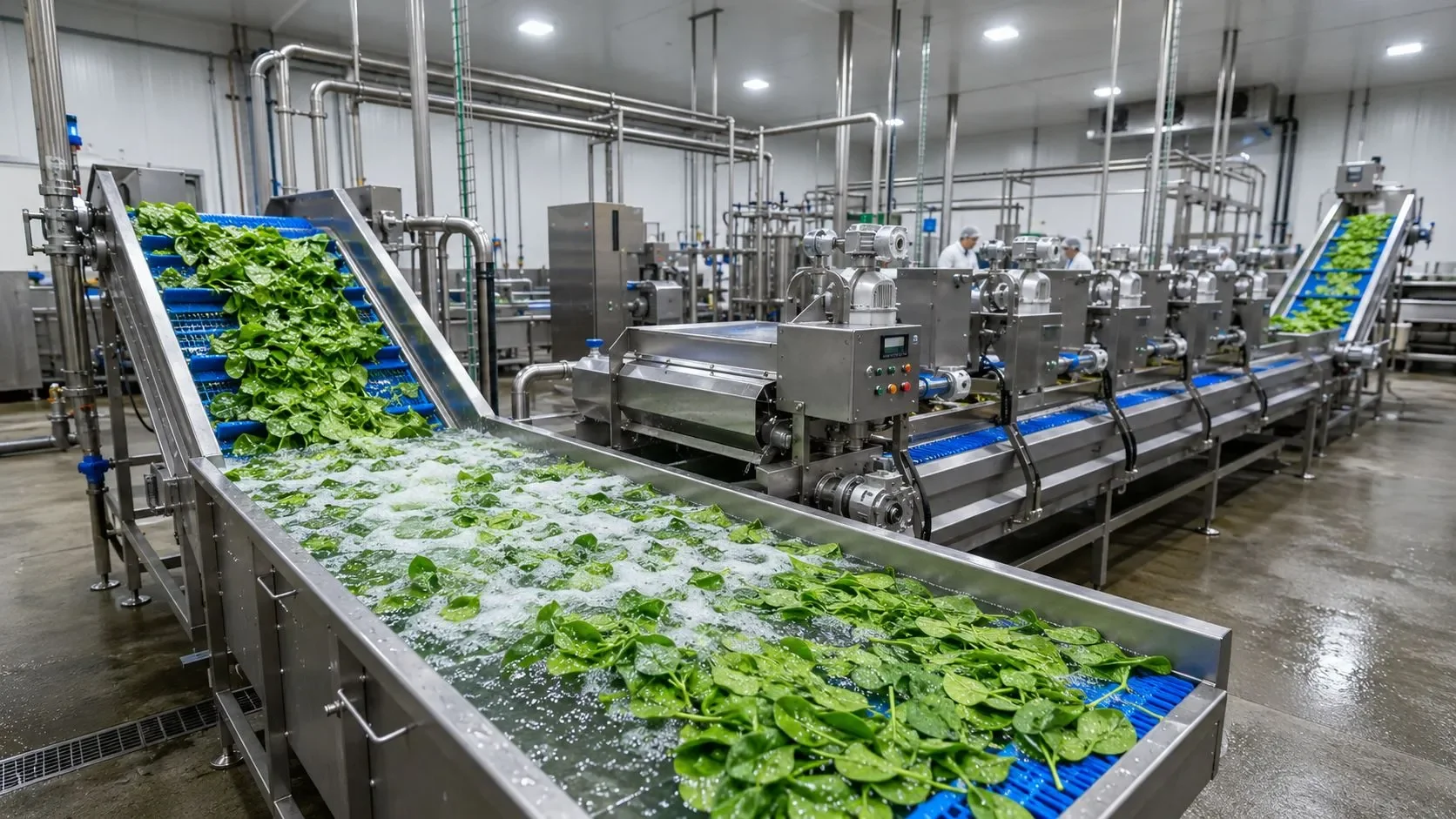
An integrated line should balance cleaning performance, gentle handling, water management and downstream packing capacity.
Which Root Vegetables Can the Line Process?
A configurable line can handle many firm agricultural products, including:
- Potatoes
- Carrots
- Sweet potatoes
- Ginger
- Radishes
- Taro
- Beets
- Cassava
- Other firm tubers and roots
However, one configuration is not automatically suitable for every product. A potato covered with wet clay needs a different cleaning action from a carrot with light sandy soil. Ginger has an irregular surface that can trap dirt, while sweet potatoes may require gentler brushes to protect their skin.
Before selecting equipment, evaluate:
- Product dimensions and shape
- Skin strength and acceptable surface damage
- Type and quantity of soil
- Incoming moisture and temperature
- Required final appearance
- Whether the product will be packed whole, peeled, cut or processed further
Actual raw-material testing is more reliable than choosing a washer from a generic specification alone.
Typical Root Vegetable Washing and Packing Process
A basic fresh-produce line can follow this flow:
Receiving → Feeding and Buffering → Pre-Sorting → Pre-Washing → Brush or Bubble Washing → Spray Rinsing → Draining → Air Drying → Final Inspection → Weighing and Packing
The exact sequence depends on the crop and contamination level. Heavily soiled potatoes and carrots may need pre-soaking or brush cleaning. Products with less stubborn dirt may use bubble washing followed by spray rinsing. Some factories combine several mild stages instead of using one aggressive wash.
Joyshine’s vegetable and fruit washing processing line can combine feeding, bubble washing, brush washing, spray rinsing, dewatering, air drying, sorting and packing modules according to the product and workshop.
1. Receiving, Feeding and Buffering
The receiving section establishes a stable flow for the complete line. Raw vegetables may arrive in crates, bags, bins or bulk loads. Dumping too much material at once can overload the washer, create a deep product layer and reduce cleaning consistency.
A receiving hopper, elevator or belt conveyor can:
- Reduce manual lifting
- Meter the product into the next machine
- Act as a buffer between batch delivery and continuous washing
- Spread the product more evenly across the belt
- Stabilize downstream capacity
For irregular roots, sidewall height and conveyor openings should prevent jamming and product loss. Transfer drops should remain low enough to reduce bruising and impact damage.
2. Pre-Sorting and Soil Removal
Pre-sorting prevents stones, vines, damaged roots and foreign material from entering the main washer. This protects equipment and reduces the contamination load in the water system.
The plant may use:
- Manual inspection conveyors
- Dry soil-removal screens
- Roller tables
- Vibrating screens
- Pre-soaking tanks
- Dry brushing for selected products
When raw vegetables arrive with heavy soil, removing loose dirt before the wet stage can reduce sludge in the wash tank and extend the useful operating period of filters and recirculated water.
3. Choosing the Washing Method
Bubble Washing
A bubble washer uses air agitation and water movement to loosen dirt while a mesh conveyor carries the product forward. It can be useful for produce that needs controlled, relatively gentle cleaning.
The fruit and vegetable washing machine combines air-bubble washing with spray rinsing and adjustable belt movement. For root vegetables, the appropriate washing time and loading depth depend on product firmness and soil level.
Brush Washing
Rotating brushes apply direct friction to the product surface. Brush washing is generally better suited to firm root vegetables with stubborn soil, such as potatoes, carrots, ginger and radishes.
Important variables include:
- Brush material and stiffness
- Brush speed
- Product residence time
- Water flow and spray pressure
- Product loading depth
- Whether cleaning or peeling is required
Overly aggressive brushes may mark the skin or remove more surface material than intended. Product trials should therefore define the brush configuration.
Spray Rinsing
A final spray section removes loosened soil and reduces the carryover of dirty wash water. Nozzle coverage, pressure and water quality must be controlled. Fresh rinse water may be kept separate from the main recirculation loop when the hygiene plan requires it.
For a direct comparison, see Bubble Washing Machine vs Brush Washing Machine.
4. Water Filtration and Recirculation
A recirculation system can reduce fresh-water demand, but reused water must be screened, filtered and managed. Simply pumping dirty water back to the washer can redistribute soil and organic material.
A practical water-management section may include:
- Coarse debris screens
- Sediment collection zones
- Multi-stage filtration
- Overflow control
- Fresh-water replenishment
- Separate final-rinse water
- Accessible tank drains and cleanout points
- Wastewater routing
Water quality, replacement frequency and sanitation procedures should follow the factory’s food-safety plan and local requirements. The equipment supplier should know the incoming soil load and water source before designing the filtration system.
5. Draining and Surface-Water Removal
Packing vegetables while they are still visibly wet can reduce package quality, create condensation and complicate weighing or labeling. The drying objective is normally to remove free surface water—not to dehydrate the vegetable itself.
Gravity and Vibrating Draining
Inclined mesh conveyors and vibrating dewatering sections allow bulk water to fall away before the product reaches the air dryer. This reduces the load on blowers and improves overall efficiency.
Air-Knife Drying
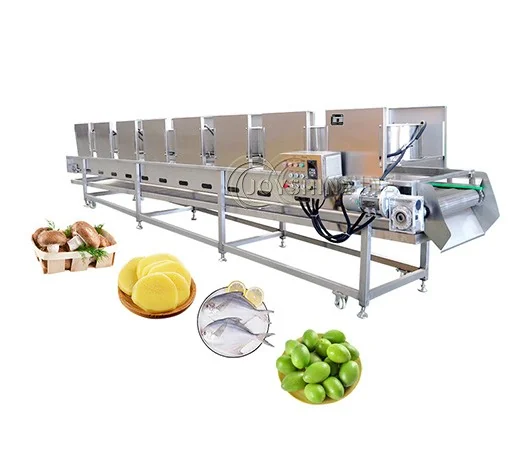
An air drying machine directs high-pressure airflow across the product while it travels on a conveyor. It is a continuous, non-contact method suitable for many whole root vegetables.
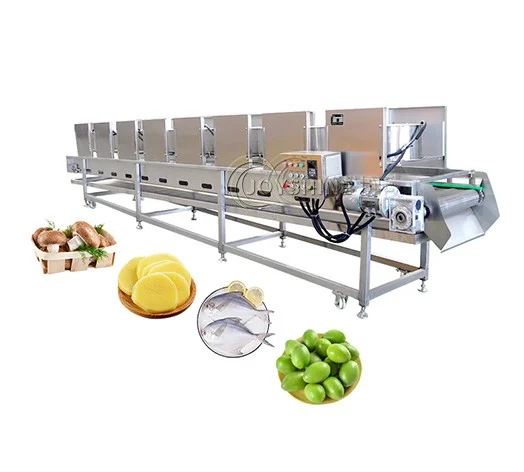
Air knives remove surface droplets before inspection and packing without intentionally dehydrating the crop.
Drying performance depends on:
- Product shape and surface roughness
- Water carried out of the washer
- Conveyor loading depth
- Air velocity and nozzle arrangement
- Belt speed
- Ambient humidity
- Product turning during transport
Centrifugal Dewatering
A vegetable dewatering machine uses centrifugal force and is mainly intended for leafy or cut vegetables. It may suit selected processed root-vegetable pieces, but whole potatoes and carrots are normally better matched to continuous draining and air drying. The choice should follow the product form and acceptable handling force.
6. Inspection, Grading and Packing
After drying, operators or automatic systems can remove damaged, green, undersized or misshapen products. Grading may be based on size, weight or visual quality, depending on the sales channel.
The packaging format must be decided early because it affects upstream drying, grading, accumulation and conveyor height.
Common options include:
- Large bags for wholesale distribution
- Smaller retail bags
- Mesh bags
- Crates or cartons
- Trays or other consumer packs
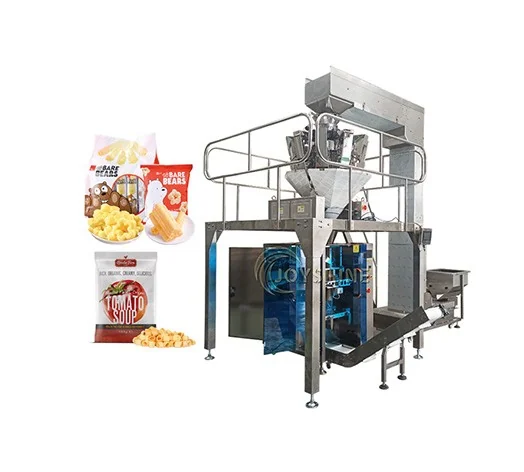
For suitable granular or piece-type products, a food packaging machine can combine weighing, bag forming, filling and sealing. The exact packaging solution must match the product dimensions, target weight, bag material and required line speed.
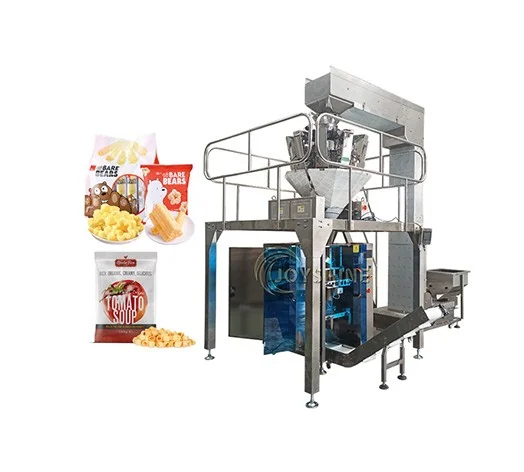
The packing system must accept the real product size and match the output of the washing and drying sections.
How to Calculate the Required Capacity
Start with the required daily packed output:
$$
\text{Required hourly output} = \frac{\text{Target daily packed volume}}{\text{Effective production hours}}
$$
Use effective production hours rather than the full shift length. Allow time for:
- Startup and shutdown
- Cleaning and sanitation
- Product changeovers
- Inspection interruptions
- Bag or film replacement
- Routine maintenance
Then check every section of the line:
| Process stage | Capacity question |
|---|---|
| Feeding | Can the hopper meter the crop without surges? |
| Sorting | Can operators inspect the planned throughput? |
| Washing | Does residence time remain adequate at peak loading? |
| Rinsing | Can nozzles cover the full product layer? |
| Draining | Is bulk water removed before air drying? |
| Air drying | Is belt area and airflow sufficient for the wet load? |
| Grading | Can the grader handle the size range? |
| Packing | Can the selected packer accept the product and target bag size? |
The line capacity is determined by the slowest effective stage, not by the largest number shown on one machine specification.
Example Capacity Configurations
Joyshine lists its complete washing-line range at 200–5,000 kg/h, with customized configurations available. These figures provide a starting point; actual performance depends on crop size, soil level, loading depth and required cleaning result.
200–500 kg/h
Suitable for smaller farms, local packhouses or specialty processors. The line may use manual feeding and inspection with compact washing, draining and packing modules.
1,000–2,000 kg/h
Suitable for medium processing facilities serving wholesalers, retailers or food factories. More consistent automatic feeding, wider conveyors and continuous air drying become important.
3,000–5,000 kg/h
Suitable for larger packhouses and distribution operations. The design should include buffer capacity, robust soil management, sufficient air-drying length, automated weighing and carefully planned crate or bag logistics.
Above 5,000 kg/h
A higher target normally requires a customized layout, wider or parallel machines, larger water-treatment capacity and detailed validation of every downstream interface.
Project Example: 5,000 kg/h Potato and Carrot Line
Joyshine designed a 5,000 kg/h potato and carrot washing and packing line for a customer in the Dominican Republic.
The reported process was:
Lifting and Storage → Bubble Washing → Air Drying → Automatic Packaging
The project was designed around the customer’s raw-material condition, throughput and packing requirements. For heavily soiled roots, the mesh belt and washing structure were customized to reduce clogging and improve soil removal. The automatic packaging section handled 20–30 kg bags for wholesale distribution.
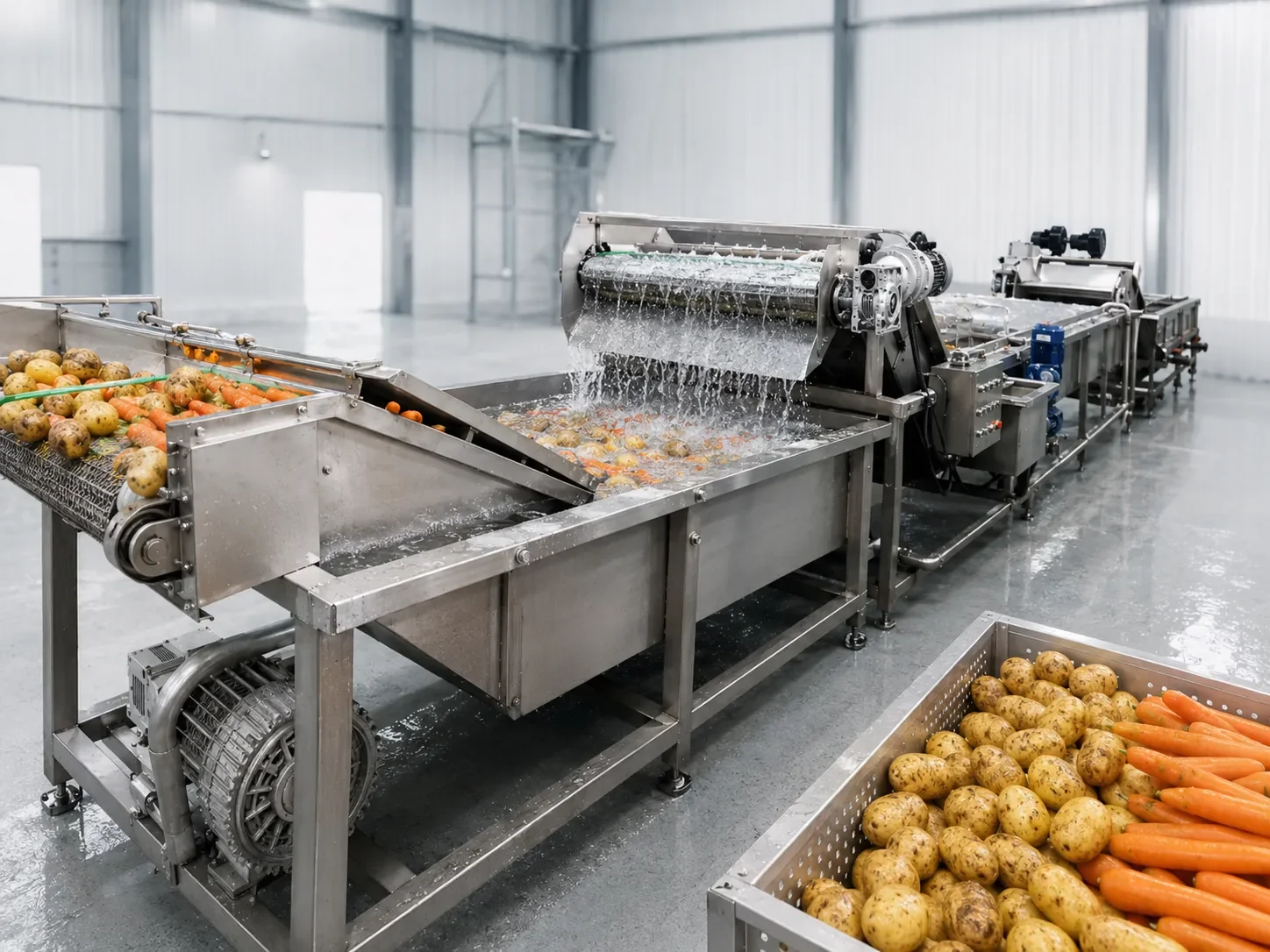
The project illustrates why washing, drying and packing should be engineered as one connected process.
This example should not be copied without review. Soil conditions, product size, factory dimensions and packaging format vary by project.
Factory Layout Planning
A practical layout should maintain one-way movement from dirty receiving to clean packing.
Separate Raw and Clean Zones
Raw vegetables, dirty crates, soil waste and incoming traffic should not cross the route of washed products or clean packaging materials.
Plan Drainage Before Installing Machines
Washing and sanitation generate water. The layout should coordinate floor slope, drainage channels, tank outlets and wastewater routing before equipment positions are fixed.
Leave Cleaning and Maintenance Access
Operators need access to:
- Wash tanks
- Screens and filters
- Pumps and pipelines
- Brush shafts
- Spray nozzles
- Air knives and blower filters
- Conveyor belts
- Packing-machine contact parts
A layout that fits on paper but leaves no service clearance can increase downtime and sanitation difficulty.
Coordinate Utilities
Confirm:
- Water pressure and quality
- Fresh-water demand
- Electrical voltage and frequency
- Compressed air for packing equipment
- Drainage and wastewater capacity
- Ventilation and humidity control
- Space for control cabinets
Choose the Right Line Shape
| Layout | Suitable situation | Main consideration |
|---|---|---|
| Straight | Long workshop with receiving and packing at opposite ends | Simple flow but requires sufficient length |
| L-shaped | Doors, columns or utility points interrupt a straight layout | Corner transfer must avoid drops and congestion |
| U-shaped | Receiving and packing need to remain on the same side | Raw and clean traffic must remain separated |
| Parallel modules | High capacity or multiple product grades | Requires balanced feeding and packing logic |
Water and Waste Management
Root-vegetable washing can generate soil, stones, organic matter and suspended solids. Plan how these materials will be collected instead of allowing them to accumulate in tanks or floor drains.
Consider:
- Dry soil removal before wet washing
- Removable sediment baskets
- Settling tanks or filtration stages
- Easy access for sludge removal
- Controlled overflow
- Separate fresh final-rinse water where needed
- Wastewater treatment according to local rules
- A cleaning schedule for tanks, filters and conveyors
Water-saving claims should always be evaluated against incoming dirt, hygiene requirements and the actual water-management design.
Common Design Mistakes
Selecting the Washer Before Testing the Crop
A generic washer specification does not show how it will handle a particular potato variety, ginger shape or clay soil. Test representative raw material when possible.
Using Bubble Washing for Every Root Vegetable
Bubble washing is versatile, but stubborn soil on firm roots may require brushing, pre-soaking or stronger spray action.
Ignoring the Drying Stage
If washed products reach the packer with excessive surface water, the complete line may fail to meet the required package condition even when washing is effective.
Matching Machines Only by Nominal Capacity
A washer rated at a certain throughput cannot compensate for a slower inspection table, air dryer or packaging machine.
Choosing the Package Too Late
Bag size, target weight and packing method affect grading, accumulation, conveyor height and space requirements.
Leaving No Room for Cleaning
Wet equipment needs clear access to tanks, filters, belts, brushes and drains. Insufficient clearance increases sanitation and maintenance difficulty.
Information to Provide Before Requesting a Proposal
Prepare the following details:
- Root vegetable type and variety
- Minimum, average and maximum dimensions
- Incoming soil type and contamination level
- Required raw-material input and packed output in kg/h
- Daily working hours and seasonal peaks
- Required cleaning and surface-finish standard
- Whether peeling is required
- Final product form: whole, cut or further processed
- Package type and target weight
- Factory dimensions, doors, columns and drainage points
- Water source, pressure and quality
- Local voltage, frequency and available power
- Compressed-air availability
- Required automation level
- Destination country and installation requirements
This information allows the supplier to match washer type, conveyor width, water system, drying length, grading method, packaging equipment and factory layout.
Frequently Asked Questions
Is bubble washing or brush washing better for potatoes and carrots?
Brush washing generally provides stronger physical cleaning for firm root vegetables with stubborn soil. Bubble washing can support pre-washing or controlled cleaning when dirt is lighter. Many lines combine stages according to the actual crop.
Does a root vegetable washing line need an air dryer?
It depends on the final package and required surface condition. Air drying is useful when the product must enter inspection, labeling or packing with reduced surface water. A draining stage before the air dryer can improve efficiency.
Can one line process potatoes, carrots and sweet potatoes?
Yes, if the belt speed, brush action, water flow and transfer settings are adjustable. Each crop should have a defined operating recipe, and the equipment should be cleaned between products.
How much factory space is required?
Space depends on capacity, number of washing stages, drying length, sorting method and packaging system. The supplier needs an accurate factory drawing, including doors, columns, drains and utility points, to prepare a practical layout.
Can wash water be recycled?
A line can include screening, filtration and recirculation. However, water replacement, final rinsing and sanitation must follow the factory’s hygiene plan and local requirements.
What determines the actual line capacity?
Product size, soil load, belt width, loading depth, washing residence time, drying demand, inspection labor and packing speed all affect actual output. The slowest effective section determines complete-line capacity.
Conclusion
A dependable root vegetable washing and packing line must be designed as one connected process. Washing strength, soil management, water quality, surface drying, inspection, packaging and factory layout all influence the final result.
Begin with the actual crop, contamination level, target output and package—not with a standalone machine. When every section is capacity-matched and accessible for cleaning, the line can deliver more stable operation and more consistent packed produce.
If you are planning a potato, carrot, ginger, sweet potato or mixed-root processing project, send Joyshine your raw-material details, required capacity, package specification and factory drawing.
Request a customized root vegetable washing and packing line proposal