 English
  العربية
 Español
 Русский
A French fries factory needs more than potatoes and processing machines. Its daily performance also depends on water, electricity, heat, frying oil, refrigeration, compressed air, packaging film, cleaning materials and waste-handling capacity.
These operating inputs form the factory's consumables and utility footprint. If they are estimated too late, a project may face an undersized transformer, insufficient water pressure, unstable fryer temperature, limited refrigeration capacity, packaging bottlenecks or unexpectedly high operating costs.
This guide explains where each major input is used, which process decisions affect consumption and what information a buyer should prepare before requesting a production-line proposal. It does not provide one universal consumption figure because the real requirement depends on product specification, raw-material condition, capacity, equipment configuration, operating hours and local climate.
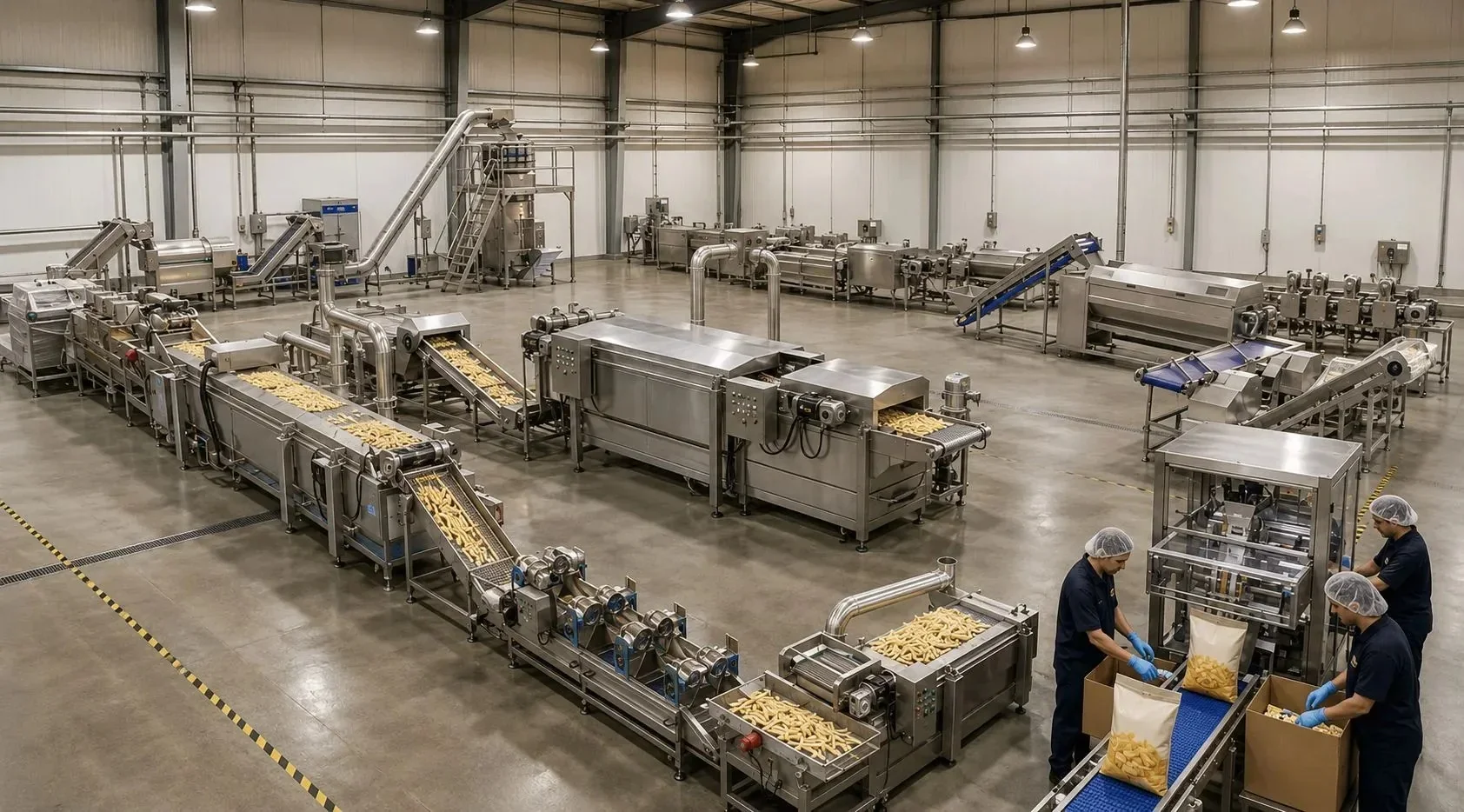
The process layout and utility plan should be developed together, not as separate projects.
The Utility Footprint at a Glance
A typical frozen French fries process is:
Potato receiving → washing → peeling → cutting → rinsing → blanching → cooling → dewatering → pre-frying → de-oiling → cooling → IQF freezing → weighing and packaging → cold storage
Each stage creates a different operating demand.
| Production area | Main utilities or consumables | Main drivers |
|---|---|---|
| Washing and peeling | Water, electricity, cleaning labor, wastewater handling | Soil level, peeling method, water reuse |
| Cutting and rinsing | Water, electricity, blades, starch removal | Strip size, potato solids, rinse design |
| Blanching and cooling | Water, steam/electricity/gas, cooling capacity | Product load, residence time, heat recovery |
| Dewatering | Electricity, compressed air where used | Incoming surface moisture, equipment type |
| Frying and de-oiling | Frying oil, heat, electricity, filters | Product moisture, oil temperature, filtration |
| IQF freezing | Electricity, refrigerant system, defrost water | Inlet temperature, product load, ambient conditions |
| Packaging | Film, labels, coding ribbon/ink, electricity, compressed air, nitrogen where used | Bag size, packs per minute, seal format |
| Cleaning and sanitation | Water, detergent, sanitizer, heat, labor | Hygienic design, cleaning schedule, product changes |
| Cold storage | Electricity, refrigeration, pallets/cartons | Storage time, door traffic, insulation, climate |
1. Water: More Than a Washing-Line Requirement
Water is used throughout a French fries plant, not only at the first washer. Typical demand points include:
- Removing soil and loose debris from potatoes
- Supporting peeling and transporting separated solids
- Rinsing cut strips and removing surface starch
- Blanching and cooling
- Cleaning belts, tanks, floors and food-contact surfaces
- Supplying make-up water to recycling systems
- Defrosting or cleaning refrigeration-related equipment, depending on the design
What increases water demand?
Incoming potatoes with heavy soil generally require more pre-cleaning. Abrasive peeling, open overflow rinsing, frequent product changes and poorly controlled cleaning hoses can also increase demand.
The target product matters as well. Thin strips and smaller cuts create more exposed surface area and may release starch differently from thick-cut fries or wedges. Water temperature, turnover rate and solids removal must therefore suit the actual process.
How to reduce water use without weakening hygiene
A practical water-management plan may include:
- Dry removal of soil and stones before intensive washing
- Counter-current rinsing, where suitable
- Screens or settlement systems for potato solids
- Reuse of water only between compatible process stages
- Flow-control valves instead of continuously open hoses
- Separate metering for production and sanitation water
- Drainage designed around each machine's discharge points
Water recycling must not simply return contaminated water to a cleaner process stage. The factory should define water-quality requirements, treatment steps and local discharge obligations with qualified local specialists.
For equipment sequence and layout considerations, see the French fries production line and the French fries factory layout guide.
2. Electrical Power: Build a Connected-Load Schedule
Electricity may power conveyors, pumps, peelers, cutters, blowers, controls, packaging equipment, refrigeration compressors and—in some projects—the blancher or fryer heating system.
The nameplate power of one machine does not represent the complete factory demand. A useful electrical plan separates:
- Connected load: the sum of installed electrical ratings
- Operating load: the equipment expected to run at the same time
- Starting demand: temporary peaks from motors and compressors
- Critical load: equipment that must remain stable during production
- Future allowance: realistic expansion capacity
Major electrical consumers
In a frozen-fries factory, refrigeration is often a major electrical load. Air blowers, circulation pumps, cold-room systems and packaging equipment also contribute. If electric heating is selected for blanching or frying, the electrical infrastructure changes substantially.
Request a machine-by-machine load list showing voltage, frequency, phase, rated power and connection point. The plant designer can then coordinate the transformer, distribution panels, cable routes, motor protection and backup strategy according to local rules.
Do not size the electrical system from a generic kg/h figure alone. Two lines with the same output may have different connected loads because of heating method, freezer design, automation level and factory temperature.
3. Fryer Heat: Electric, Gas or Steam
The fryer must replace the heat absorbed by the product and lost through exhaust, equipment surfaces and oil circulation. Heating-source selection affects utility infrastructure, control response, installation and operating cost.
- Electric heating can offer direct control and a simpler fuel system, but it requires adequate electrical capacity.
- Gas heating may be attractive where gas is available and economical, but combustion, ventilation and safety provisions must be planned.
- Steam heating may suit a factory with a suitable boiler system and other steam users, but steam pressure, condensate return and heat-exchanger design matter.
The correct comparison should use local energy prices and the complete installed system—not only the purchase price of the fryer. Review the detailed electric vs gas vs steam industrial fryer comparison before selecting the heat source.
4. Frying Oil: Track Absorption, Carryover and Replacement
Frying oil is both a processing medium and a recurring consumable. Oil leaves the system through product absorption, surface carryover, residue removal, cleaning losses, leakage and replacement of degraded oil.
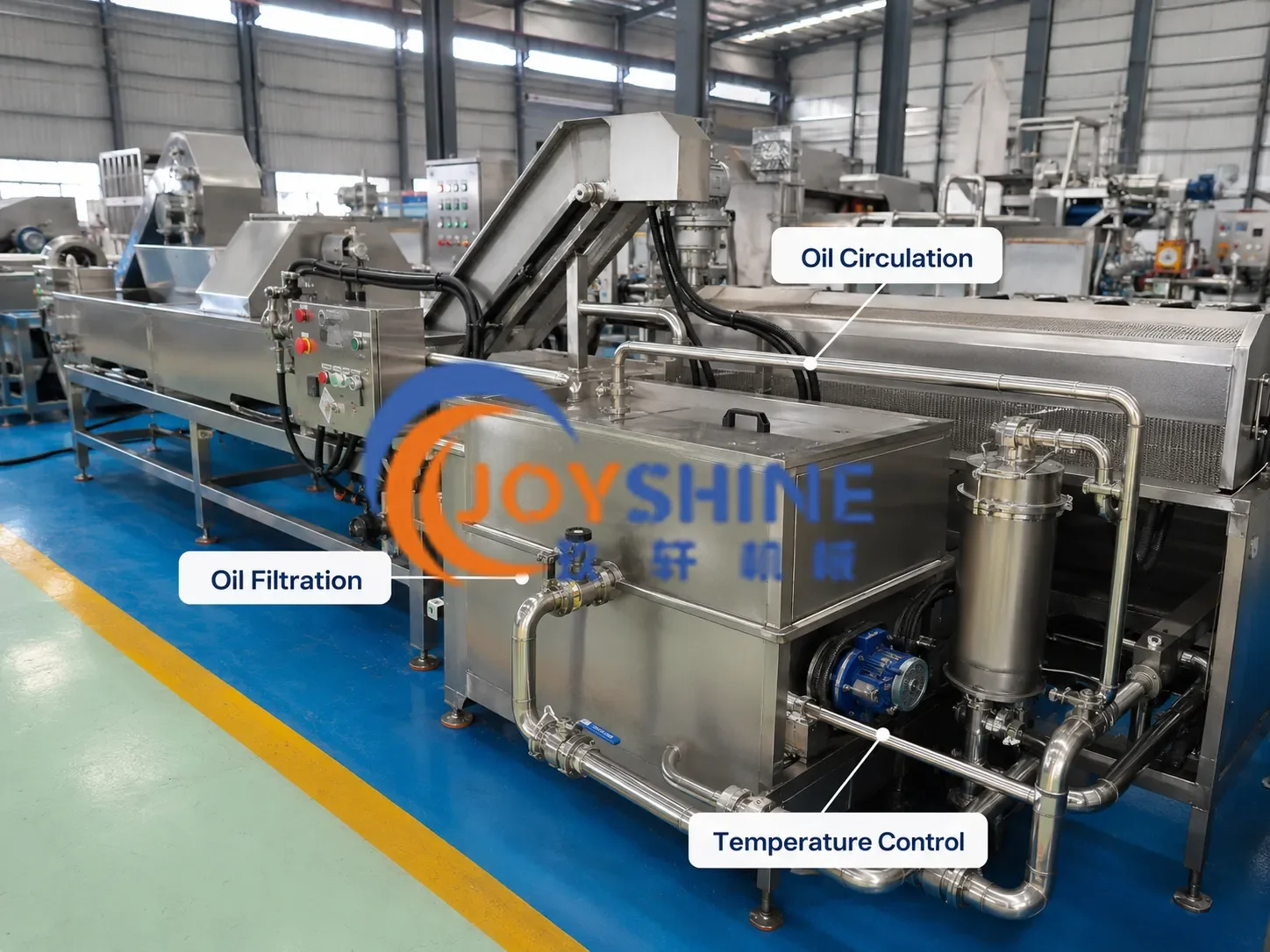
Stable feeding, dewatering, temperature control, filtration and de-oiling work together to control oil use.
Main factors affecting oil consumption
- Potato variety and solids content
- Strip dimensions and surface condition
- Blanching and coating process
- Surface moisture before frying
- Frying temperature and residence time
- Product loading consistency
- Oil turnover and filtration
- De-oiling performance after the fryer
- Product breakage and residue generation
- Cleaning and oil-recovery procedures
Wet product can reduce oil temperature, create strong bubbling and destabilize frying. Effective dewatering before the fryer is therefore important for both energy and oil management.
Continuous filtration removes starch and broken product particles before they burn and accelerate oil deterioration. Uniform oil circulation reduces local overheating, while prompt de-oiling limits surface carryover into the cooling and freezing sections.
Track a consistent factory KPI:
Oil added per ton of saleable finished fries
Record it by shift, potato batch and product specification. A sudden change can indicate poor dewatering, unstable temperature, filter blockage, leakage, excessive breakage or a raw-material change.
For a full improvement checklist, read how to reduce frying oil consumption in an industrial food production line. Joyshine's industrial continuous fryer can be configured with electric, gas or steam heating and an integrated filtration and circulation system.
5. Refrigeration: Calculate the Product Load, Not Only Air Temperature
A frozen French fries line normally cools the pre-fried product before IQF freezing. The refrigeration system must then remove heat from the fries, conveyors, air infiltration, fans, motors and defrost cycles while operating under the factory's ambient conditions.
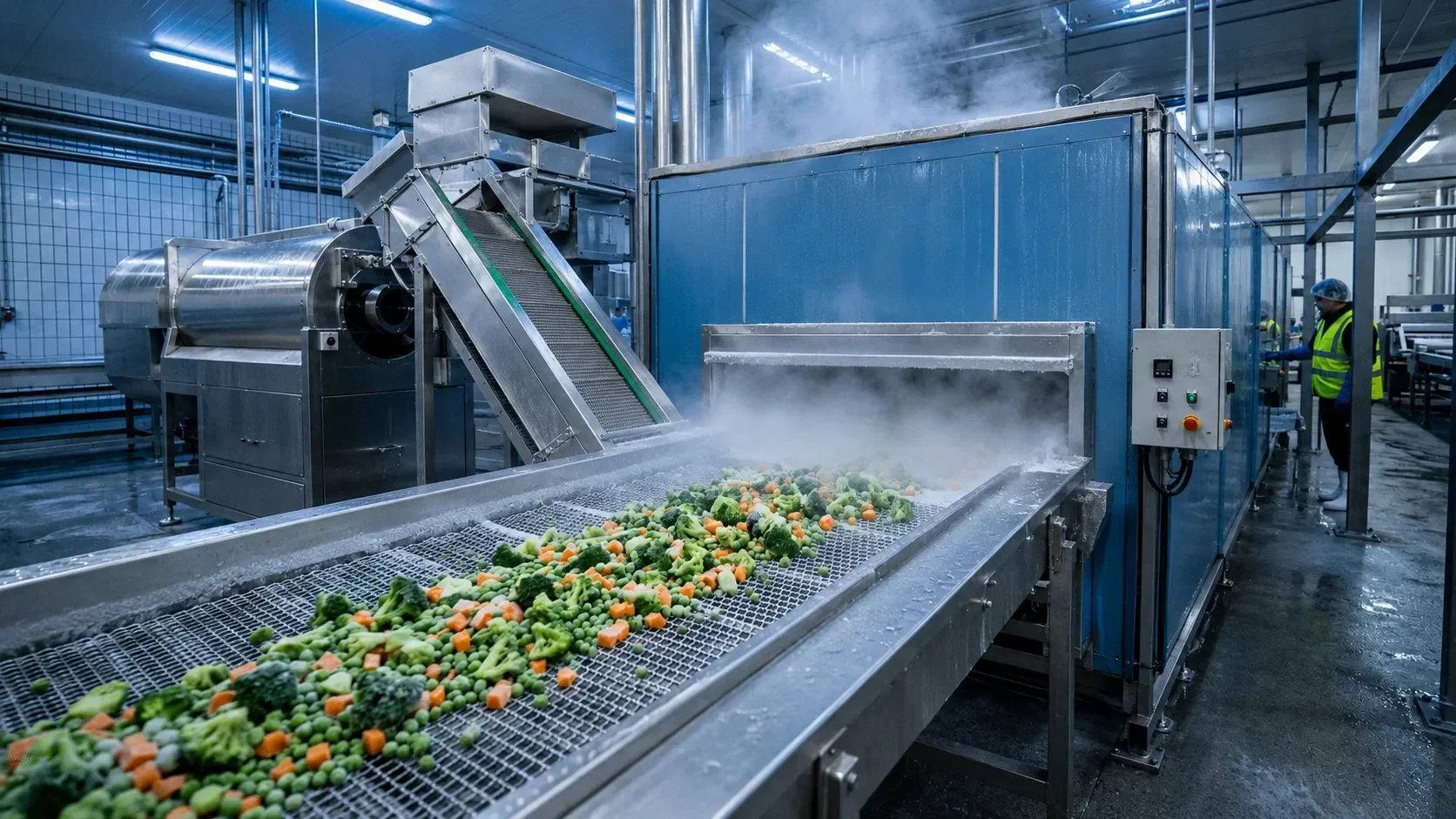
IQF capacity depends on product load, inlet condition, residence time and the complete refrigeration system.
Information needed for refrigeration planning
- Finished-product throughput
- Fries dimensions and formulation
- Product temperature at freezer inlet
- Required outlet or core temperature
- Operating hours and shift pattern
- Ambient temperature and humidity
- Freezer insulation and door/opening conditions
- Defrost method and frequency
- Refrigeration-system location
- Cold-storage load and holding time
A freezer's chamber-air temperature alone does not prove that the required product temperature will be achieved at the target throughput. The process should define product residence time, belt loading and heat load together.
The Joyshine IQF freezing line is available in customized configurations for frozen foods, including French fries. Its capacity, belt dimensions and refrigeration arrangement should be matched to the complete line rather than selected as an isolated machine.
Reducing avoidable refrigeration load
- Dewater effectively before frying
- Remove excess oil after frying
- Cool the fries consistently before freezing
- Avoid overloaded or uneven freezer belts
- Maintain door seals and insulation
- Control warm-air infiltration
- Keep evaporator surfaces and airflow paths clean
- Coordinate defrosting with the production schedule
- Move packed product promptly into suitable cold storage
6. Packaging Materials and Packing-Line Utilities
Frozen French fries packaging may require roll film, labels, coding ribbon or ink, cartons, tape, pallets and stretch wrap. Depending on the product and package, the line may also use compressed air and nitrogen.
The bag material and seal design must suit low-temperature handling, distribution and the required shelf-life strategy. The final specification should be confirmed with the packaging-material supplier and validated on the actual packing machine.
What determines packaging consumption?
- Retail or food-service package size
- Bag dimensions and film width
- Film thickness and laminate structure
- Number of packs per minute
- Product giveaway from weighing variation
- Start-up and changeover waste
- Seal rejection rate
- Coding and label requirements
- Secondary packaging format
A small reduction in film waste or product giveaway can become significant over many shifts. Packaging performance should therefore be monitored with indicators such as:
- Film used per 1,000 accepted bags
- Rejected bags by reason
- Average pack weight and giveaway
- Changeover waste
- Cartons and labels used per saleable unit
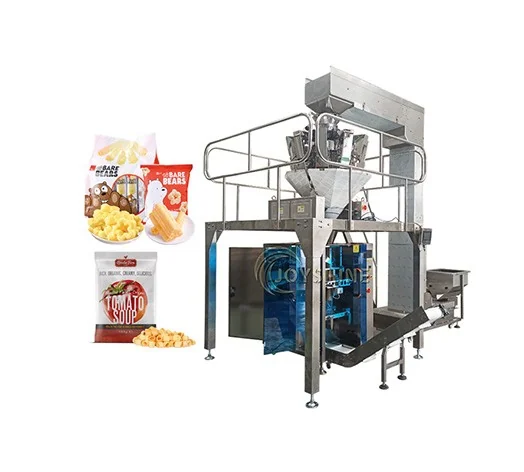
Joyshine's food packaging machine combines a multi-head weigher with vertical form-fill-seal packaging for French fries and other piece-type foods. Optional functions include coding, metal detection and nitrogen flushing.
7. Compressed Air and Optional Nitrogen
Compressed air may operate pneumatic cylinders, valves, reject devices and parts of the packaging system. The utility plan should state required pressure, flow, air quality and the simultaneous demand of all connected machines.
Do not select an air compressor from pressure alone. Insufficient flow can cause slow cylinders, unreliable sealing or reject-system faults. The system should also address dryers, filters, receivers, pipe losses and drainage.
Nitrogen is not automatically required for every frozen French fries package. If it is specified, consumption depends on bag volume, residual-oxygen target, flushing method, machine speed and leakage control. Confirm the packaging objective and validate the gas setting instead of using an arbitrary flow rate.
8. Cleaning Chemicals, Wear Parts and Maintenance Consumables
A realistic operating budget also includes items that are easily overlooked:
- Detergents and sanitizers
- Brushes, squeegees and cleaning tools
- Filter media and fryer filters
- Cutter blades and peeler wear parts
- Conveyor belts or belt repairs
- Pump and shaft seals
- Lubricants suitable for the application
- Temperature sensors, fuses and electrical spares
- Coding ribbon, ink and labels
- Personal protective equipment
The supplier should provide a recommended spare-parts list for commissioning and routine operation. The factory should then classify parts by replacement frequency, lead time and production impact.
Hygienic machine access can reduce cleaning time and chemical use. It also helps operators inspect filters, drains, belts and seals before small issues become extended shutdowns.
9. Wastewater, Potato Solids and Used Oil
The utility footprint has an output side. A French fries factory must handle soil, stones, potato peels, trim, starch-rich water, rejected product, used frying oil, damaged packaging and sanitation wastewater.
Map each waste stream to its source and handling route. Keep clean packaging areas separate from peel and wastewater movement. Screens, collection bins and drainage access should be included in the layout before equipment installation.
Disposal, reuse and treatment requirements vary by location. Engage qualified local environmental, food-safety and utility professionals to determine the applicable rules and treatment design. The equipment supplier can provide process discharge information, but local compliance decisions should not be based on a generic line quotation.
10. How to Build a Practical Utility Estimate
Use a staged estimate rather than one unsupported total.
Step 1: Define production assumptions
Document:
- Raw potato input and required finished output
- Product type and strip dimensions
- Daily operating hours and shifts
- Operating days per year
- Fresh or frozen final product
- Package sizes and product mix
- Target automation level
Step 2: Map every process stage
Create a process flow from receiving through cold storage. Include buffers, inspection, cleaning and product-change procedures—not only the main machines.
Step 3: Request supplier data by machine
For each machine, request:
- Working capacity for the actual product
- Electrical rating
- Water connection and expected operating demand
- Heating source and connection requirements
- Steam, gas or compressed-air requirements where applicable
- Drain size and discharge conditions
- Refrigeration interface
- Cleaning requirements
Step 4: Separate production from peak demand
Calculate normal operation, start-up, cleaning, defrosting and simultaneous peak conditions separately. A utility may be adequate during steady production but inadequate when multiple systems start or clean at the same time.
Step 5: Add cold storage and building services
Include cold rooms, lighting, ventilation, office/laboratory loads, sanitation hot water, air compressors, water treatment and wastewater systems.
Step 6: Validate locally
Have qualified local engineers verify electrical, gas, steam, refrigeration, fire-safety, water and wastewater designs. Local energy prices and regulations are necessary for a meaningful operating-cost model.
11. KPIs for Controlling the Footprint After Start-Up
Install meters and record data from the first production runs. Useful KPIs include:
| KPI | Why it matters |
|---|---|
| Water per ton of saleable fries | Shows washing, rinsing and cleaning efficiency |
| Electricity per ton | Tracks line, freezer and cold-storage performance |
| Heat or fuel per ton | Evaluates blanching and frying efficiency |
| Frying oil added per ton | Detects absorption, carryover, leakage and oil-life issues |
| Film per 1,000 accepted bags | Measures packaging waste and setup losses |
| Product giveaway per pack | Connects weighing accuracy to direct product loss |
| Refrigeration runtime and defrost frequency | Helps identify load, airflow or maintenance problems |
| Wastewater and solids per ton | Supports treatment planning and raw-material evaluation |
| Downtime by utility cause | Reveals undersized or unreliable infrastructure |
Compare similar products and shifts. Do not mix data from different fry sizes, recipes or package formats without noting the change.
Common Planning Mistakes
Using one generic consumption figure
A kg/h capacity does not define water, power, oil or refrigeration demand by itself.
Treating the freezer as a standalone machine
Its load depends on upstream cooling, inlet temperature, product mass and cold-storage requirements.
Ignoring cleaning and peak conditions
Production averages may hide high simultaneous water, hot-water, air or electrical demand.
Selecting the fryer before choosing the energy source
The local electrical, gas or steam infrastructure can change the practical configuration.
Buying packaging late
Bag format and packing speed affect film, compressed air, product buffers, cold-room flow and the upstream production balance.
Forgetting waste outputs
Water and raw material entering the line create wastewater, solids and used consumables that need space and handling systems.
Frequently Asked Questions
How much water does a French fries factory use?
There is no reliable universal figure. Water demand depends on potato soil level, washing and peeling method, rinsing, blanching, cooling, sanitation, reuse design and wastewater constraints. Request a stage-by-stage estimate for the actual process and product.
What is usually the largest electrical load?
In a frozen-fries factory, the refrigeration system can be a major electrical consumer. The result changes if electric heating is used for blanching or frying, so the complete connected-load schedule must be reviewed.
How can a factory reduce frying oil consumption?
Control surface moisture, feeding rate, frying temperature, oil circulation, filtration, product breakage, de-oiling and leakage. Record oil added per ton of saleable finished product to detect changes.
Does every frozen French fries line need nitrogen flushing?
No. The need depends on the product, film, package, shelf-life objective and distribution conditions. Validate the packaging specification before adding gas consumption to the utility plan.
What information is required for an accurate utility proposal?
Provide raw material condition, product dimensions, hourly capacity, operating schedule, process flow, package formats, inlet and target temperatures, local voltage, available heating sources, factory dimensions, ambient conditions and cold-storage requirements.
Conclusion
The consumables and utility footprint of a French fries factory should be designed alongside the process and factory layout. Water, power, heat, frying oil, refrigeration, compressed air, packaging and cleaning systems all interact with product quality and production capacity.
Start with a defined product and realistic output. Map every process stage, obtain machine-level requirements, include start-up and sanitation peaks, and validate the final infrastructure with qualified local engineers. Once the factory starts, use metering and per-ton KPIs to control cost and detect process problems early.
Joyshine supplies customized French fries production lines covering washing, peeling, cutting, blanching, frying, IQF freezing and packaging. Send us your potato specification, required output, factory drawing, package sizes and available utilities so our engineers can prepare an equipment configuration and layout proposal.