 English
  العربية
 Español
 Русский
Blanching is a critical thermal treatment used in industrial food processing, primarily applied to vegetables and some fruits before freezing, drying, or canning. By briefly exposing produce to hot water or steam, blanching inactivates the natural enzymes that cause degradation in color, flavor, and texture during long-term storage.
However, improper blanching can do more harm than good. Under-blanching accelerates enzymatic activity, while over-blanching results in a loss of texture, vitamins, and overall product quality. A well-designed industrial vegetable blanching process balances precise temperature control, correct residence time, and immediate cooling.
This guide explains the function of blanching, typical parameters for common vegetables, the transition to IQF freezing, and how to select the right industrial blanching equipment.
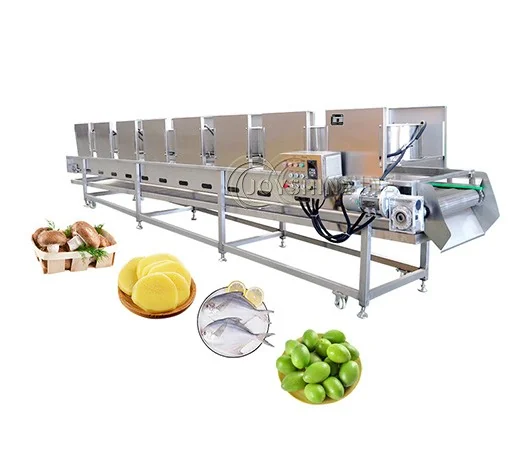
A continuous blanching machine uses automatic temperature control and adjustable belt speeds to ensure consistent thermal treatment.
Why Blanching is Essential in Food Processing
When vegetables are harvested, they remain biologically active. Without intervention, enzymes like peroxidase and lipoxygenase will continue to break down cellular structures even at deep-freeze temperatures.
In an industrial setting, blanching achieves several key objectives:
- Enzyme Inactivation: Halts the enzymatic actions that cause off-flavors, browning, and texture loss during cold storage.
- Color Preservation: Enhances the natural color (especially in green vegetables like peas and broccoli) by removing intercellular air.
- Microbial Load Reduction: Hot water significantly reduces surface bacteria and potential pathogens, improving food safety.
- Tissue Softening: Makes vegetables more pliable, which is particularly useful before canning or dehydrating.
- Air Removal: Displaces oxygen trapped in plant tissues, which extends shelf life and prevents oxidation.
The Industrial Blanching Process
A continuous industrial blanching operation typically involves three stages: Heating, Holding, and Cooling.
1. The Heating and Holding Stage (Blanching)
Washed and cut vegetables are fed onto a mesh conveyor belt that carries them through a hot water bath (or a steam chamber). The temperature is generally maintained between 85°C and 100°C.
The duration the product spends in this zone (residence time) dictates the core temperature reached by the vegetable pieces. A high-quality vegetable blanching machine utilizes a frequency-controlled belt to adjust this time from 1 to 15 minutes, ensuring every piece receives identical treatment.
2. Immediate Cooling
Once the required blanching time is complete, the vegetables must be cooled immediately to halt the cooking process. If left hot, residual heat will overcook the product, turning it mushy and diminishing its nutritional value.
Cooling is achieved through either a cold-water immersion bath or high-volume cold water sprays. The goal is to drop the product's core temperature rapidly before it proceeds to dewatering and freezing.
3. Surface Water Removal
After cooling, the vegetables are dripping wet. Before they enter an IQF freezer, this excess surface water must be removed. A vibrating dewaterer followed by air knives strips away droplets, preventing ice buildup and product clumping inside the freezer.
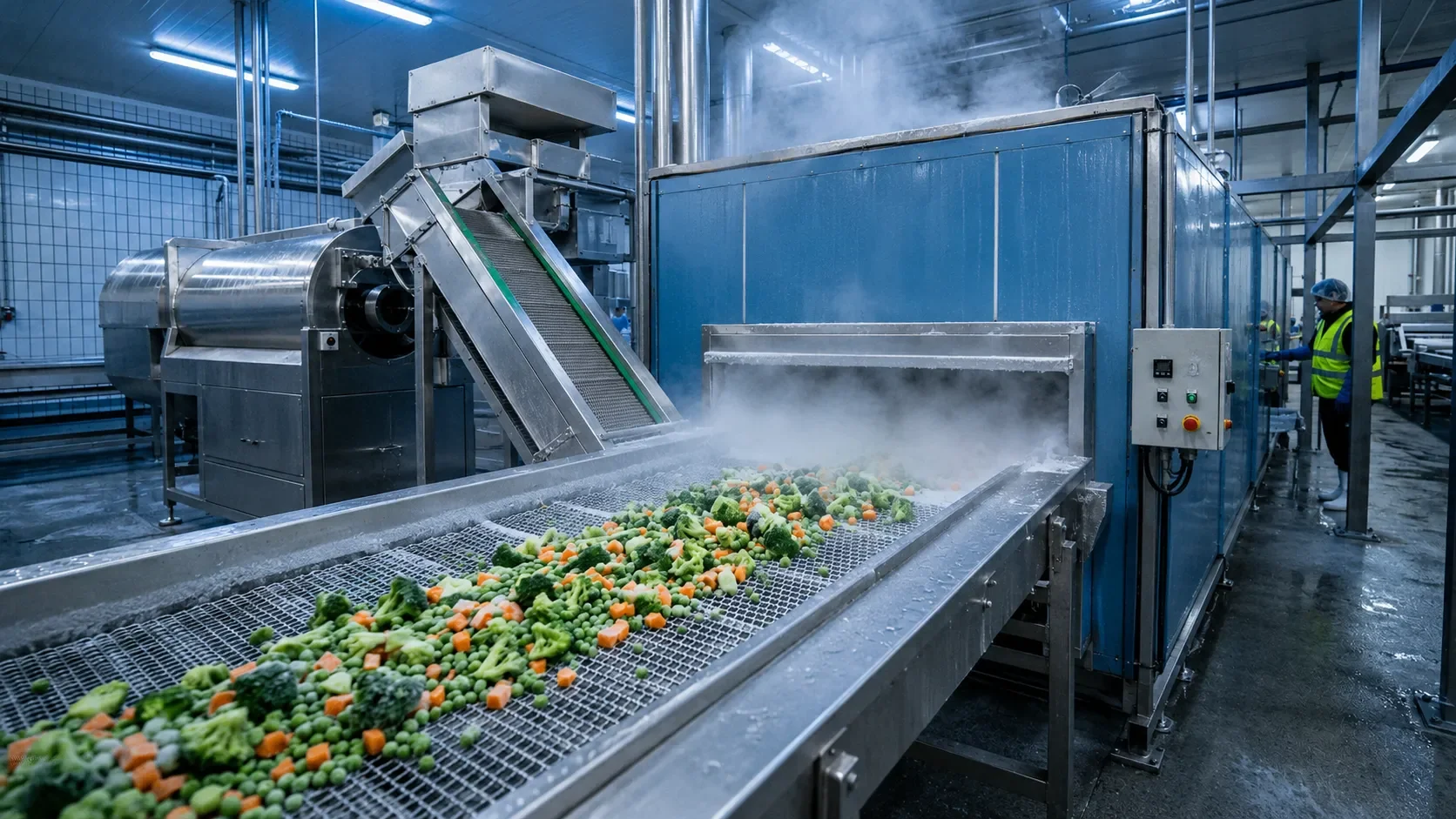
Proper blanching, cooling, and dewatering are prerequisites for efficient IQF freezing.
Blanching Time and Temperature Guidelines
The ideal blanching parameters depend on the vegetable's size, density, and maturity. While a PLC-controlled system allows for fine-tuning, the following are general starting points for hot-water blanching:
| Vegetable Type | Preparation | Typical Temp (°C) | Time (Minutes) |
|---|---|---|---|
| Peas | Shelled | 85-90°C | 1 - 2 min |
| Green Beans | Cut or Whole | 90-95°C | 2 - 4 min |
| Broccoli / Cauliflower | Florets | 95-100°C | 3 - 5 min |
| Carrots | Diced or Sliced | 95-100°C | 3 - 5 min |
| Spinach | Whole Leaves | 85-95°C | 1 - 2 min |
| Potatoes (for Fries) | Strips | 80-90°C | 3 - 8 min (Often multi-stage) |
Note: These parameters are estimates. Processors must conduct peroxidase tests on their actual raw materials to verify complete enzyme inactivation without overcooking.
Blanching Before IQF Freezing
Blanching is most commonly associated with frozen vegetable production. In a complete IQF freezing line, the blancher is positioned after washing and cutting, but before the freezing tunnel.
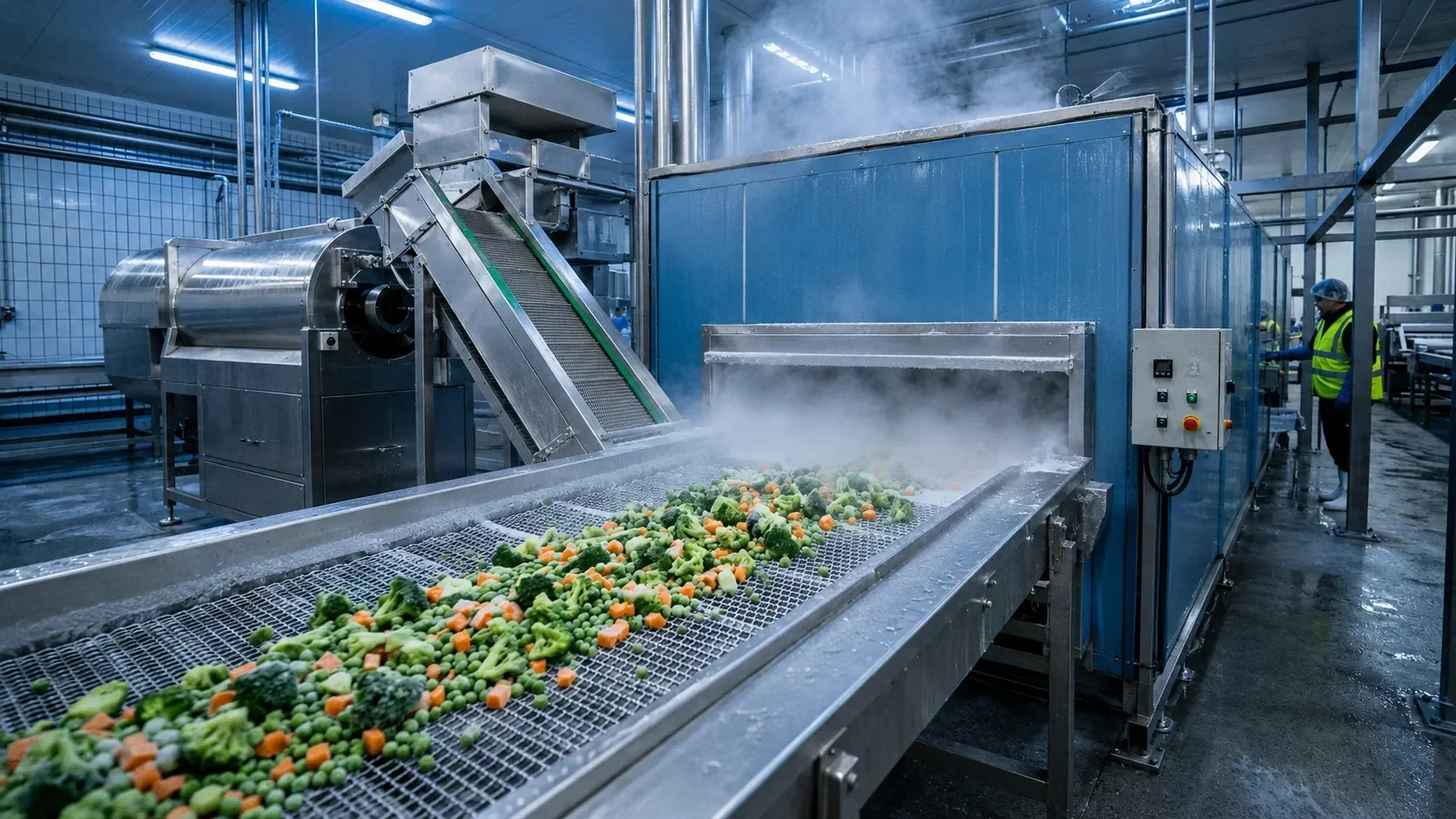
The capacity of the blanching and cooling section must be perfectly matched to the capacity of the IQF freezer.
If blanching is inadequate, the frozen vegetables will develop an "off" taste resembling cardboard or hay after a few months in cold storage. Conversely, if the cooling phase is inadequate, the vegetables will enter the IQF food freezing machine at too high a temperature. This not only overwhelms the freezer's refrigeration capacity but also causes the pieces to freeze together into solid blocks instead of remaining individually separated.
For a deeper dive into freezing operations, refer to our IQF Frozen Food Processing Line Guide.
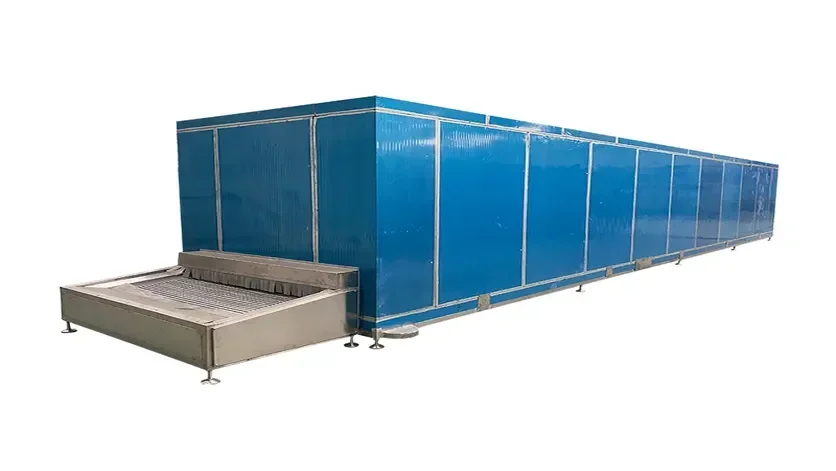
A fluidized bed IQF tunnel requires properly cooled and dewatered vegetables to prevent clumping.
How to Select Industrial Blanching Equipment
When investing in continuous blanching equipment, capacity is just one factor. Consider the following engineering details to ensure a reliable process:
1. Heating Method: Steam vs. Electric
Blanchers can be heated via direct electric elements or steam heat exchangers.
- Steam is highly recommended for industrial capacities (500 kg/h and above) as it provides rapid, cost-effective heat recovery when cold products enter the bath.
- Electric heating is suitable for smaller operations (200-300 kg/h) or facilities where installing a steam boiler is impractical.
2. Precise Temperature Control
The machine must feature an automated PLC control system with highly responsive temperature sensors (accurate to ±1°C). If the water temperature fluctuates too much as fresh product enters, the blanching result will be inconsistent.
3. Belt Speed Adjustability
Because different vegetables require different residence times (from 1 minute for spinach to 5 minutes for carrots), a frequency-controlled variable speed drive on the mesh belt is mandatory.
4. Insulation and Safety
A double-wall insulated tank minimizes heat loss, saving significant energy costs over time, and protects operators from accidental burns.
5. Water Circulation and Filtration
An efficient water circulation pump ensures there are no cold spots in the blanching tank. Additionally, a built-in filtration system catches floating debris and vegetable fragments, extending the time required between complete water changes.
Frequently Asked Questions
Do all vegetables need to be blanched before freezing?
Most do. However, there are exceptions. Vegetables commonly eaten raw (like onions, green peppers, and certain herbs) are often frozen without blanching to preserve their crisp texture, though their freezer shelf life is shorter.
What is the difference between hot water and steam blanching?
Hot water blanching immerses the product in a water bath, providing very even heat transfer, which is great for root vegetables and dense products. Steam blanching exposes the product to live steam; it typically retains more water-soluble vitamins (like Vitamin C) and is preferred for leafy greens and broccoli, though it requires specialized steam hoods.
How do I know if the vegetable is blanched correctly?
Processors use a simple chemical test for peroxidase activity. Peroxidase is one of the most heat-resistant enzymes in plants. If the peroxidase test is negative (showing no activity), you can be confident that all other degrading enzymes have also been inactivated.
Can the blanching machine be integrated directly into my existing line?
Yes. Continuous blanchers are designed with adjustable infeed and outfeed heights to connect seamlessly with upstream cutters or washers and downstream cooling flumes or dewaterers.
Upgrade Your Vegetable Processing Line
Achieving the perfect balance of color, flavor, and texture requires reliable, continuous thermal processing.
Whether you are preparing peas for IQF freezing or dehydrating carrots, Joyshine provides customizable, food-grade SUS 304 stainless steel blanching and cooling systems tailored to your specific capacity (200–2,000 kg/h) and energy availability.
Contact Joyshine Machinery today to discuss your product specifications and receive a detailed equipment proposal.