 English
  العربية
 Español
 Русский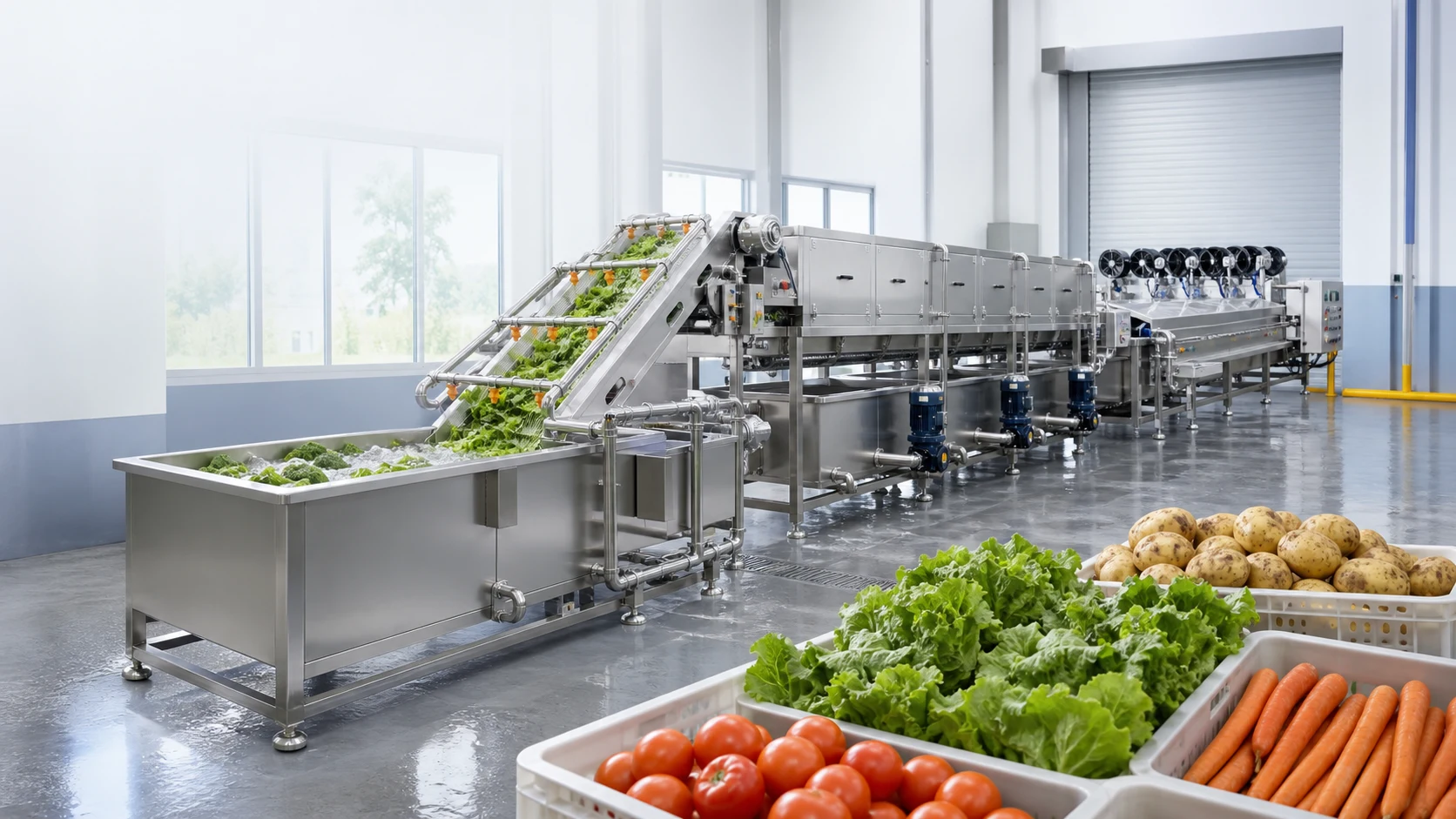
A vegetable washing line is rarely just one washing machine. For a commercial food factory, the real question is how to connect feeding, sorting, washing, dewatering, air drying, cutting, blanching, and packing into a stable process. The right configuration depends on the raw material, the final product, the required capacity, and whether the line is built for fresh packing, frozen vegetables, ready-to-cook products, or further processing.
This guide explains the main equipment used in a vegetable washing line and how to choose the right modules for different factory scenarios.
Recommended Line Flow
For most fresh vegetable and fruit processing projects, a practical line can follow this structure:
Feeding -> Sorting -> Bubble Washing -> Spray Washing -> Dewatering -> Air Drying -> Inspection -> Packing
For root vegetables such as potatoes, carrots, ginger, taro, and cassava, the process may become:
Hoist -> Brush Washing -> Peeling -> Sorting -> Cutting -> Washing -> Dewatering -> Packing
For frozen or ready-to-cook vegetables, additional modules such as cutting, blanching, cooling, and IQF freezing may be added after washing.
Joyshine's Vegetable Fruit Washing Processing Line can be configured as a complete production line or combined with single machines according to the customer's factory layout.
1. Feeding and Pre-sorting
The first step is stable material feeding. A hoist or belt conveyor helps transfer vegetables into the processing line at a controlled speed. This reduces manual handling and keeps the downstream washing machine working continuously.
Pre-sorting is also important. Workers can remove damaged leaves, stones, packaging residue, or oversized raw materials before washing. For potatoes, carrots, onions, tomatoes, berries, and mixed vegetables, a sorting table or inspection conveyor helps improve product quality before the main cleaning stage.
2. Bubble Washing Machine
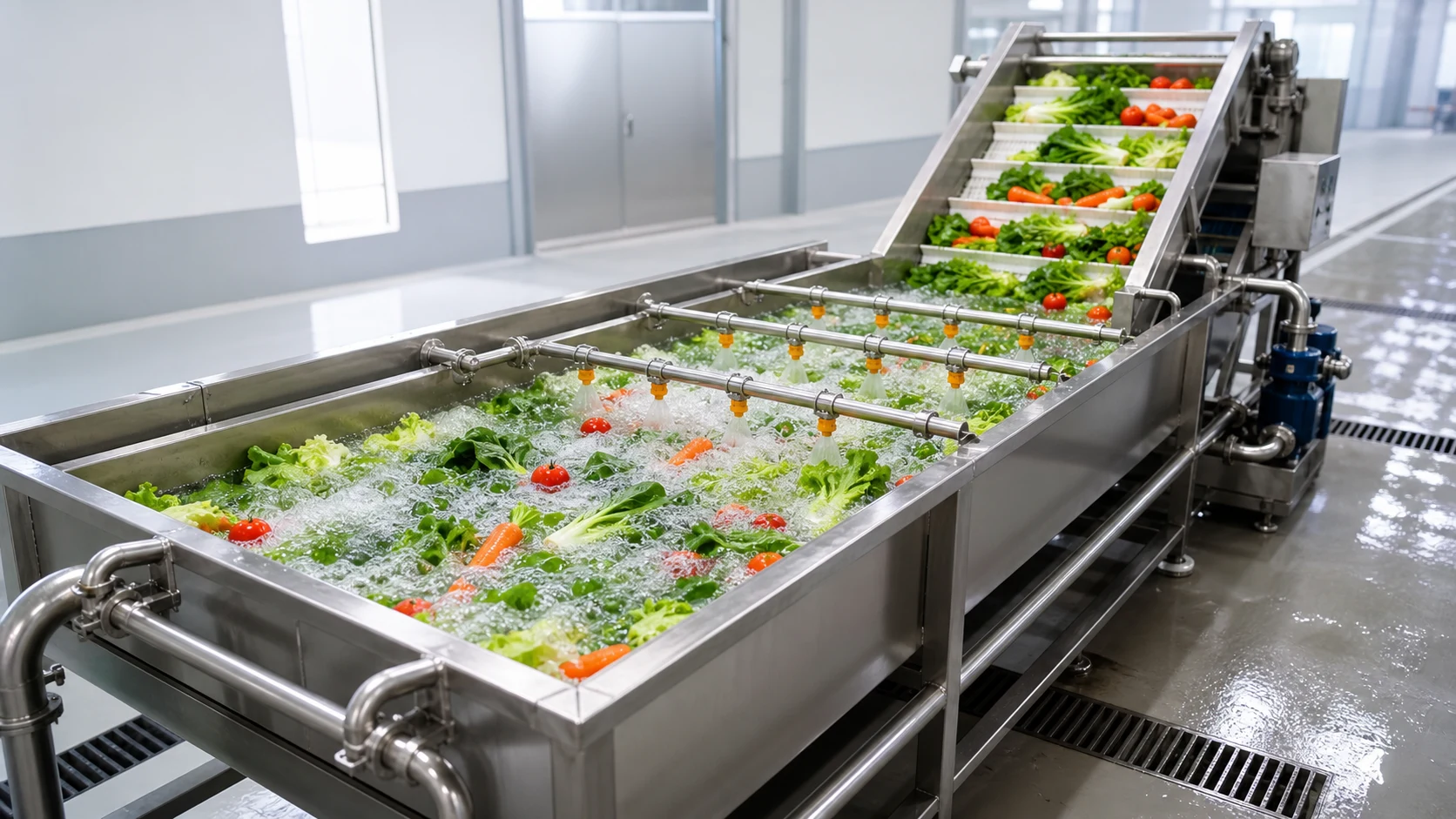
The bubble washing machine is one of the most common machines in a vegetable washing line. It uses water flow, air bubbles, and optional spray cleaning to remove soil, dust, insects, and floating impurities from the product surface.
It is suitable for many raw materials, including leafy vegetables, tomatoes, peppers, cucumbers, mushrooms, strawberries, blueberries, seafood, and cut vegetables. For delicate products, the water flow and bubble intensity should be gentle enough to avoid damage. For products with heavier dirt, the line can add high-pressure spray cleaning, brush cleaning, or circulating water filtration.
For buyers comparing single machines, see the fruit and vegetable washing machine page for machine-level details.
3. Leafy Vegetable Washing
Leafy vegetables need a different approach from hard root vegetables. Lettuce, cabbage, spinach, pak choi, coriander, celery, and fresh-cut salad products are easy to bruise or fold. A leafy vegetable washing machine should keep the product moving smoothly without excessive mechanical force.
Useful design points include:
- Wide water tank for better material dispersion
- Controlled bubble strength
- Food-grade conveyor belt
- Spray section for final rinsing
- Easy-to-clean structure
- Optional ozone, circulating water filtration, or multiple washing tanks
4. Dewatering and Air Drying
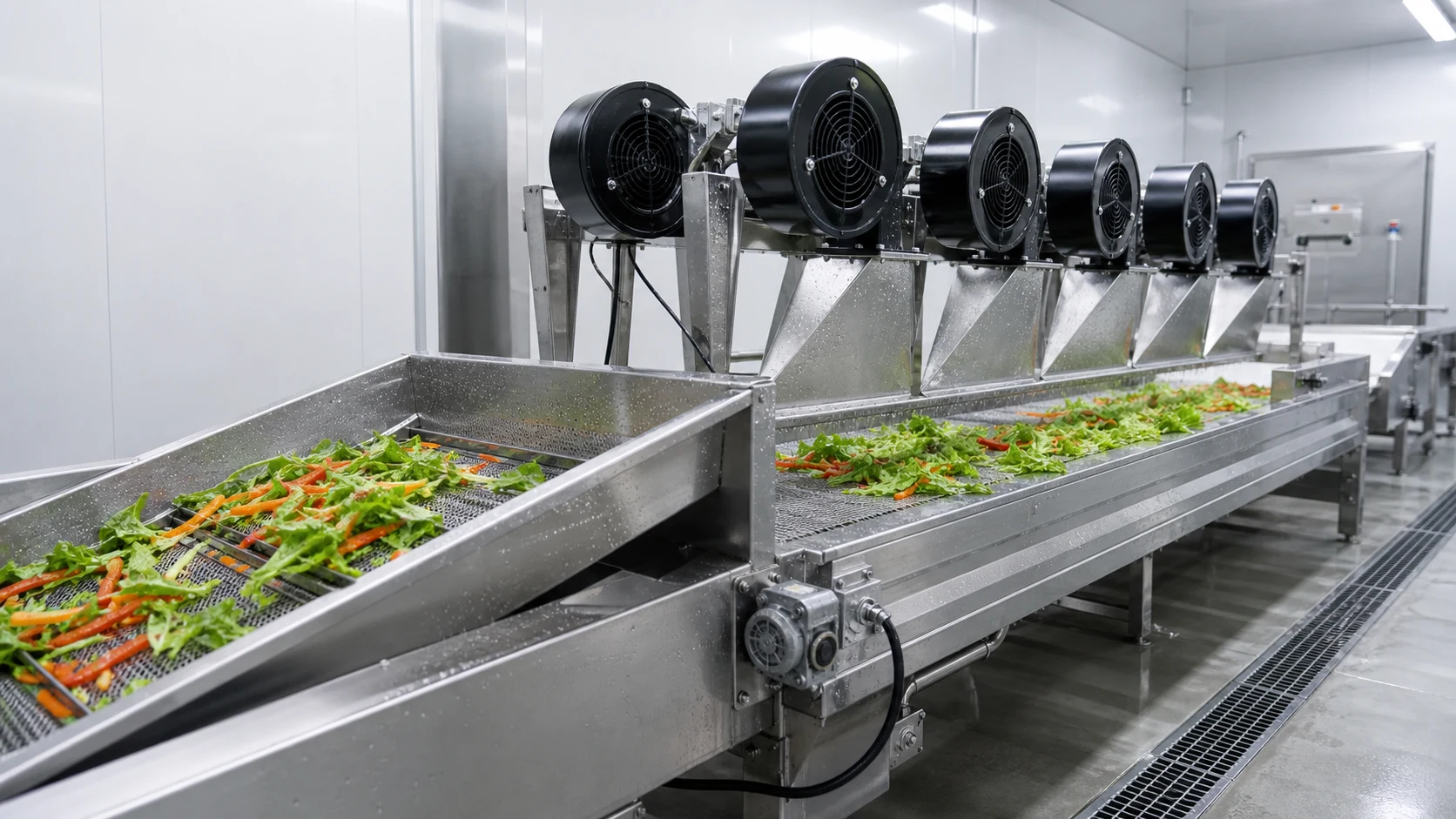
After washing, surface water must be removed before cutting, packing, frying, or freezing. Too much water can affect shelf life, packing quality, oil consumption, freezing efficiency, and product appearance.
A typical line may use:
- Vibration dewatering machine for initial water removal
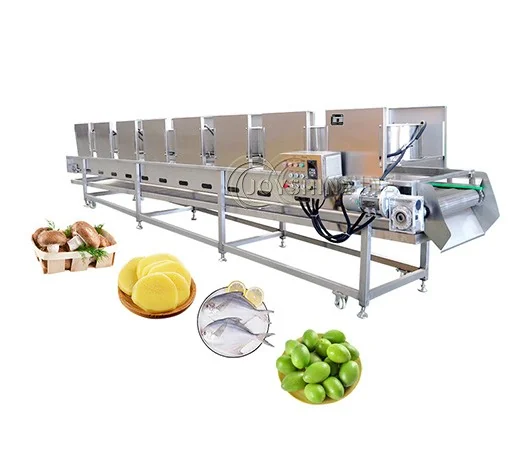
- Air drying machine for surface moisture reduction
- Centrifugal dewatering machine for selected cut vegetables
- Inspection conveyor before packing
For fresh packed vegetables, air drying is often enough to reduce surface water before weighing and packaging. For vegetables that will enter an IQF freezer, better dewatering can reduce frost and improve freezing efficiency. The new site already includes a dedicated air drying machine page and a vegetable dewatering machine page for these modules.
5. Optional Cutting and Blanching Modules
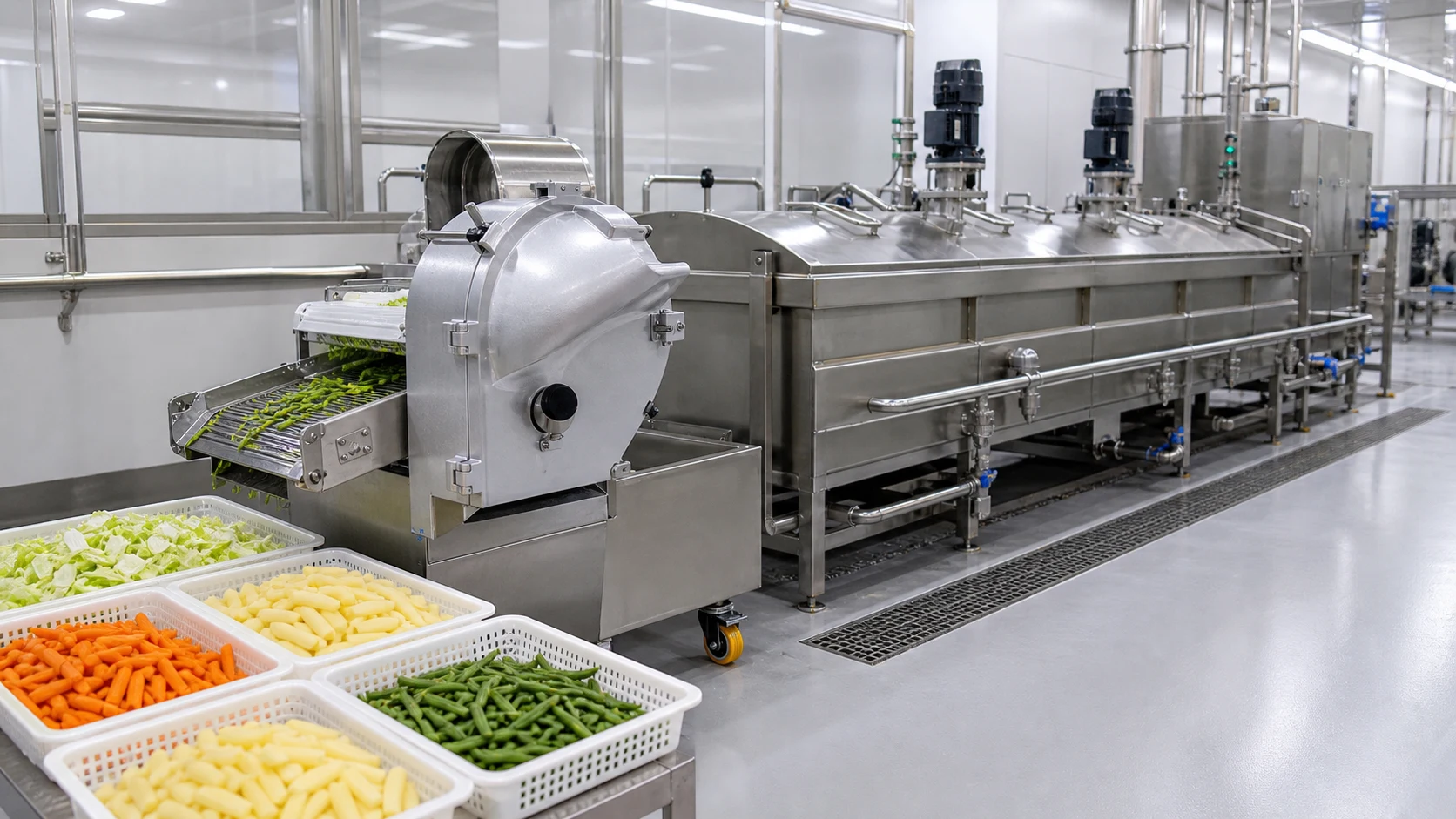
Not every washing line needs cutting or blanching. These modules are added when the factory wants to produce fresh-cut vegetables, ready-to-cook ingredients, frozen vegetables, or pre-treated products for further processing.
A vegetable cutting machine can be used for slicing, dicing, shredding, or cutting strips depending on the product. Typical applications include cabbage, carrot, cucumber, potato, onion, pepper, and fruit pieces.
Blanching is used when the product needs enzyme inactivation, color protection, partial cooking, or preparation before freezing. A vegetable blanching machine is commonly used for green vegetables, root vegetables, potato products, and some seafood or meat products.
6. Sorting, Grading, and Packing
For factories selling fresh produce or high-value fruit, sorting and grading can be added before packing. A roller grading machine, belt inspection table, or manual sorting conveyor can help classify products by size, remove defects, and improve final product consistency.
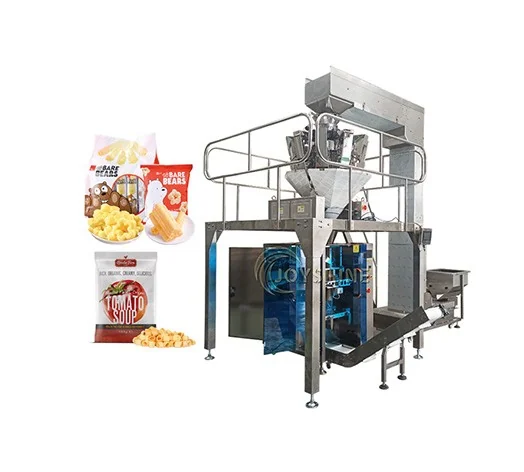
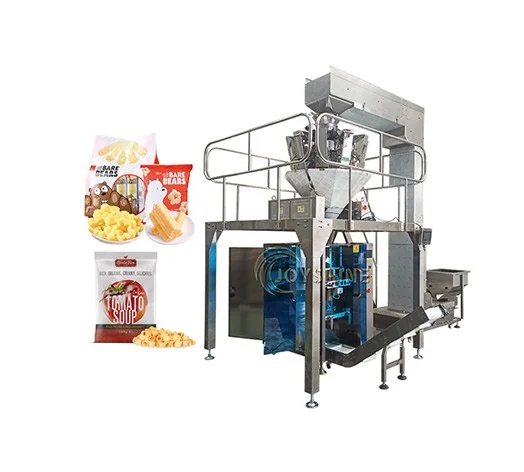
After sorting, the line can connect to weighing and packing equipment. For factories that need a complete solution, the packing method should be confirmed early, because bag type, weighing accuracy, product shape, and factory layout can all affect the upstream line design.
How to Choose the Right Configuration
Before buying a vegetable washing line, clarify these points:
| Question | Why it matters |
|---|---|
| What raw material will be processed? | Leafy vegetables, root vegetables, berries, and hard fruits need different cleaning methods. |
| What is the target capacity? | Capacity affects tank size, conveyor width, pump power, drying section length, and labor planning. |
| Is the product fresh, frozen, cut, or cooked? | Fresh packing may need gentle washing and air drying; frozen products may need blanching and IQF freezing. |
| How dirty is the raw material? | Heavy soil may require brush cleaning, pre-soaking, or stronger spray washing. |
| What is the factory layout? | Line length, drainage, water circulation, and operator positions should be planned together. |
| What packaging format is required? | Packing requirements influence drying level, inspection, weighing, and conveyor discharge height. |
Example Configurations
Fresh Leafy Vegetable Line
Feeding conveyor -> Sorting table -> Bubble washing machine -> Spray cleaning -> Vibration dewatering -> Air drying machine -> Inspection -> Packing
This layout is suitable for lettuce, cabbage, spinach, celery, and fresh-cut salad processing.
Root Vegetable Washing and Peeling Line
Hoist -> Brush washing machine -> Peeling machine -> Sorting -> Cutting or packing
This layout is suitable for potatoes, carrots, ginger, sweet potatoes, taro, and cassava.
Fruit Washing and Air Drying Line
Sorting -> Bubble washing -> Spray washing -> Air drying -> Inspection -> Packing
This layout is suitable for strawberries, blueberries, cherry tomatoes, avocados, mangoes, and other fruits that need controlled washing strength.
Why Work With Joyshine
Joyshine provides food processing machinery solutions for vegetables, fruits, potato products, fried snacks, IQF freezing, drying, and packaging. For a vegetable washing project, the line can be customized according to raw material, capacity, cleaning requirement, and factory layout.
If you are planning a new vegetable washing line or upgrading an existing process, share your raw material, required capacity, product size, and final packing method. Joyshine can help design a suitable process flow and recommend the right combination of equipment.
Learn more about the complete Vegetable Fruit Washing Processing Line or contact the team through the Joyshine contact page.