 English
  العربية
 Español
 Русский
Processing fresh turmeric rhizomes into high-quality dried slices or powder starts with effective washing, uniform cutting, and controlled drying. Unlike leafy greens or smooth-skinned vegetables, fresh turmeric has a tough, irregular surface with deep grooves where soil and sand easily hide. Simple soaking or manual rinsing is rarely enough to prepare it for industrial drying and grinding.
A specialized turmeric washing, cutting, and drying line provides a structured solution. By combining heavy-duty brush roller washing, precision slicing, and controlled tray drying, processors can improve cleaning consistency, reduce drying time, and preserve the natural yellow-orange color of the turmeric.
This guide explains the core processing stages, equipment selection, and practical considerations for setting up a turmeric processing line, using a successful Fiji customer project as an example.
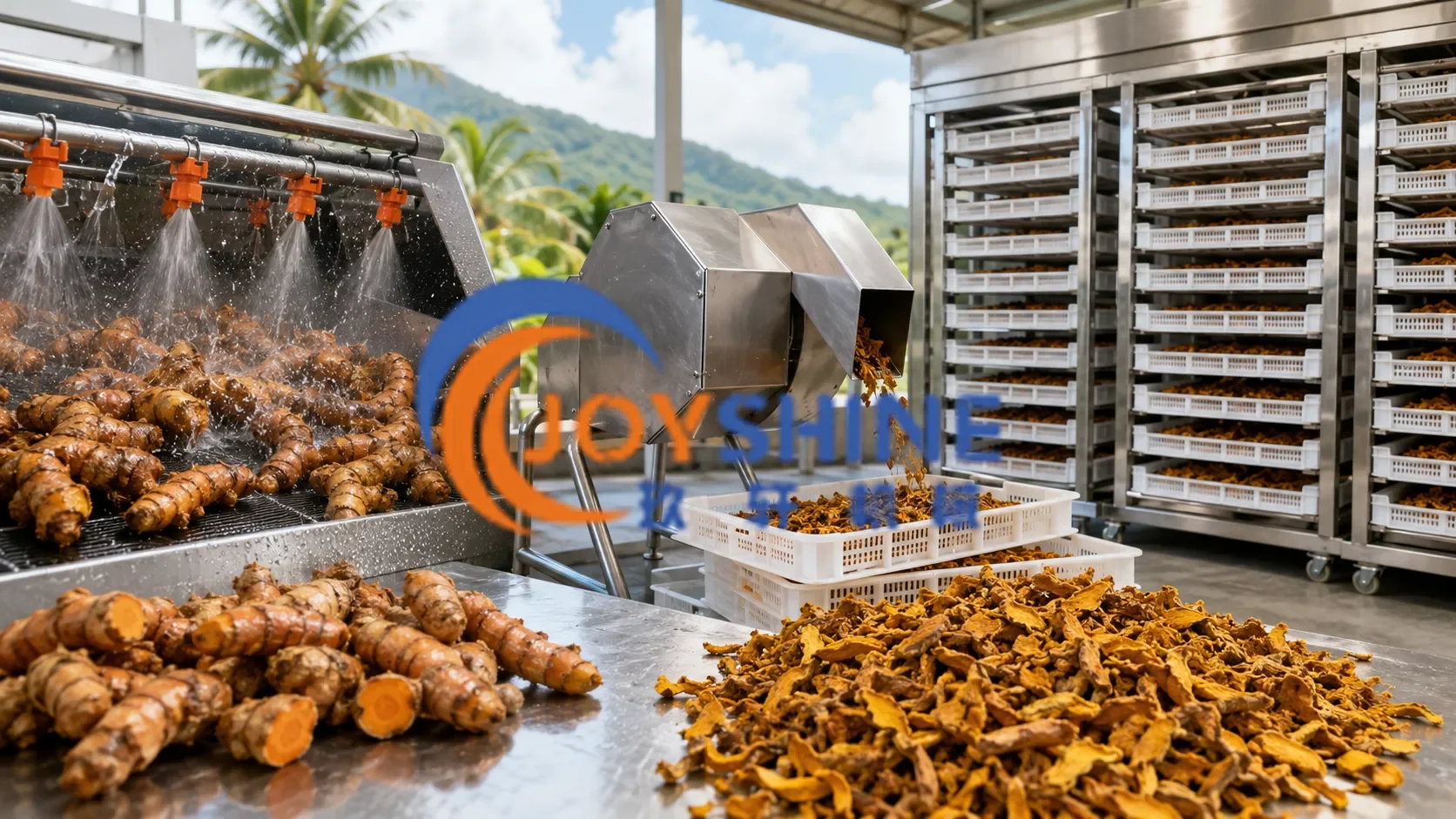
An integrated turmeric processing line combines brush washing, precision slicing, and controlled drying to produce high-quality dried turmeric pieces.
1. Core Processing Flow for Fresh Turmeric
Fresh turmeric processing requires a continuous, logical flow to prevent bottlenecks and ensure consistent final moisture content. A typical small-to-medium industrial setup follows this sequence:
- Fresh Turmeric Receiving: Loading freshly harvested rhizomes onto the line.
- Brush Washing & High-Pressure Spraying: Removing heavy soil, sand, and fine impurities from irregular surfaces.
- Uniform Cutting: Slicing the cleaned turmeric into consistent pieces.
- Manual Tray Loading: Spreading the cut turmeric evenly onto drying trays.
- Electric Heating Drying: Removing moisture in a controlled batch dryer.
- Final Inspection & Packaging: Verifying moisture levels before storage or further grinding.
2. Key Equipment in the Turmeric Processing Line
Brush Washing and High-Pressure Spray Rinsing
The first major challenge in turmeric processing is cleaning. Fresh rhizomes are covered in field soil that becomes trapped in natural crevices. A standard bubble washer—while excellent for delicate leaves—lacks the physical scrubbing power needed for root crops.
The solution is a fruit and vegetable washing machine configured with tough nylon brush rollers and high-pressure water spray. As the turmeric travels along the rotating brushes, the bristles scrub the irregular surfaces, loosening stubborn dirt. Simultaneously, top-mounted high-pressure spray nozzles rinse away the detached soil and fine impurities. This combination ensures a thoroughly clean raw material without excessively damaging the turmeric skin.
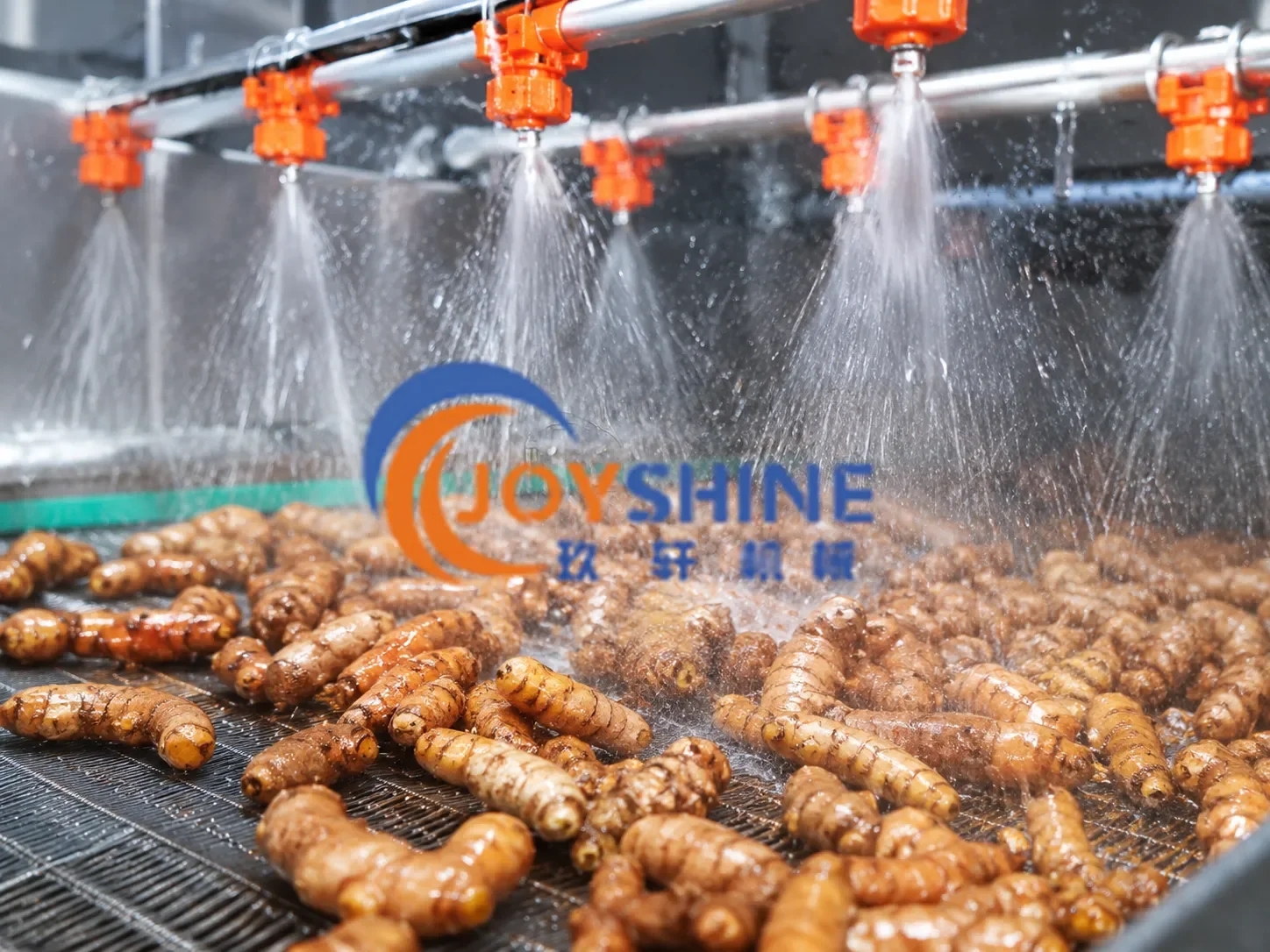
Brush roller washing combined with high-pressure water spray provides the aggressive cleaning required for root crops with heavy soil.
Uniform Turmeric Cutting
After washing, the turmeric must be cut before drying. If whole rhizomes are dried, the process takes far too long and results in an unevenly dried, hard core. Furthermore, if the pieces are cut unevenly, thin slices will over-dry and lose color, while thick chunks will retain moisture and risk mold growth during storage.
An industrial vegetable cutting machine ensures that the turmeric is processed into uniform strips or slices. Consistent cutting size allows hot air to flow evenly through the product bed during the drying stage. This uniformity reduces the difference in drying speeds across the batch, improves the final product quality, and prepares the turmeric perfectly for downstream grinding.
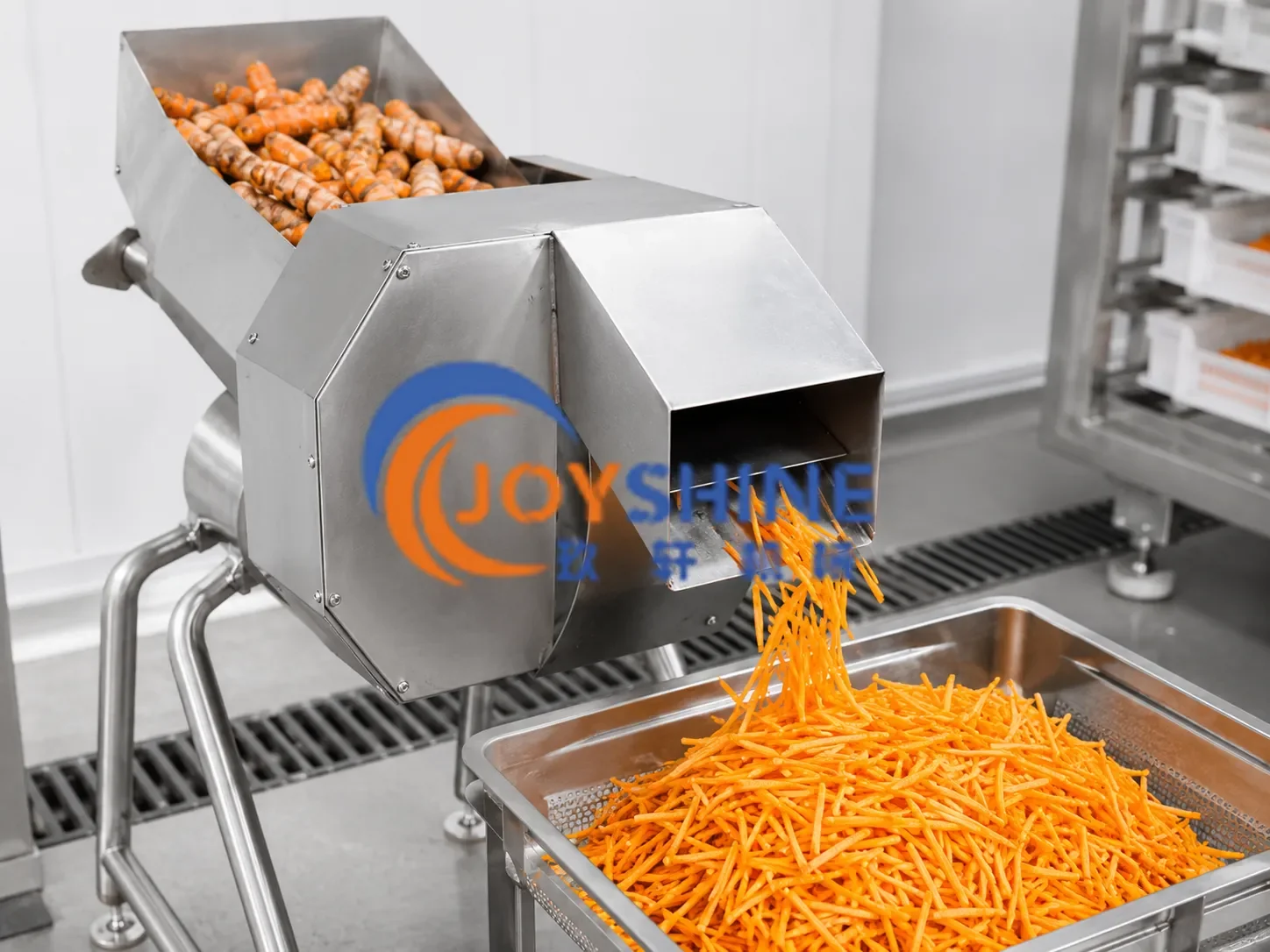
An industrial cutting machine processes fresh turmeric into uniform slices, ensuring consistent drying speeds across the entire batch.
Controlled Batch Drying (Electric Tray Dryer)
The final critical stage is moisture removal. For small-to-medium agricultural cooperatives and farms, a batch-type tray dryer is often the most practical and flexible choice.
In a recent Joyshine project in Fiji, a 48-tray electric heating dryer was utilized. After cutting, operators manually spread the turmeric pieces evenly across the trays. Proper tray loading—avoiding overly thick piles—ensures that hot air circulates effectively over the maximum surface area.
The electric heating system provides highly controllable drying temperatures. In the Fiji test batch, approximately 100 kg of fresh turmeric was dried evenly in about 13 hours, resulting in uniformly dried pieces with excellent preservation of the natural color.
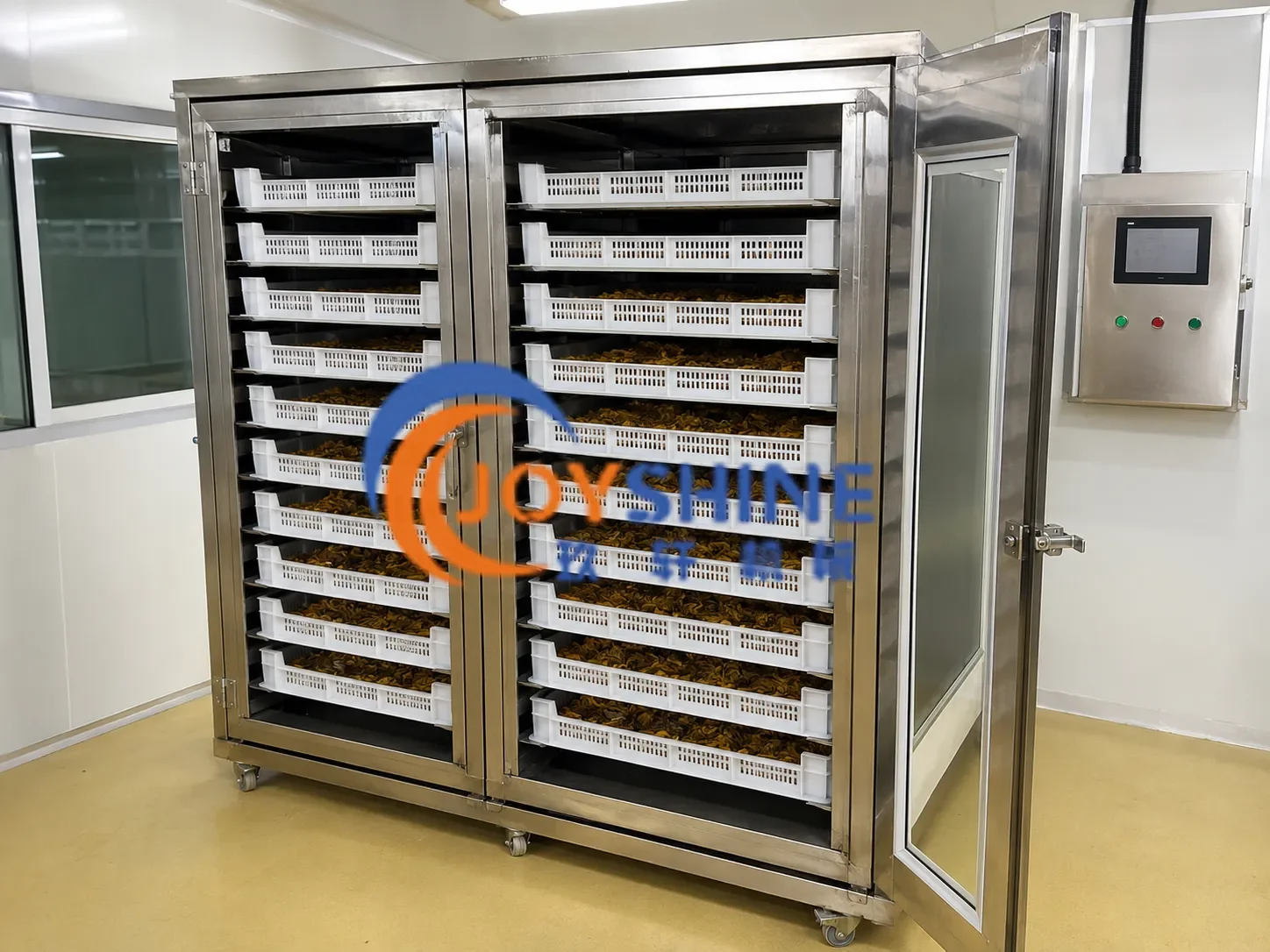
A 48-tray electric heating dryer provides a controlled environment for batch drying, preserving the natural color and quality of the turmeric.
3. Extending the Line for Other Root Crops
A major advantage of this processing configuration is its versatility. The same sequence of brush washing, uniform cutting, and tray drying is not limited to turmeric. With minor adjustments to brush stiffness, cutting blades, and drying parameters, the line can process a variety of firm agricultural products and root crops, including:
- Kava
- Cassava
- Taro
- Ginger and Garlic
Different raw materials may require different drying temperatures and times, so conducting a test batch—as demonstrated in the Fiji project—is always recommended to establish the optimal processing parameters.
Frequently Asked Questions
Why is brush washing better than bubble washing for turmeric?
Turmeric rhizomes have irregular shapes and deep grooves that trap soil tightly. Bubble washing is gentle and ideal for leafy greens, but it lacks the mechanical friction needed to dislodge heavy dirt from root crops. Brush washing physically scrubs the surface, ensuring thorough cleaning.
How does cutting size affect the drying process?
Uniform cutting size is critical for consistent drying. If pieces are uneven, hot air will dry thin slices too quickly (causing color loss or burning) while leaving thick pieces wet inside. Uniform slices ensure that the entire batch reaches the target moisture content at the same time.
Can this line be used to make turmeric powder?
Yes. This line produces the high-quality dried turmeric pieces required for milling. To produce powder, you simply need to add an industrial grinding machine and a powder packaging machine downstream of the drying stage.
How long does it take to dry a batch of turmeric?
Drying time depends on the initial moisture content, cutting thickness, tray loading density, and the set drying temperature. In our 48-tray electric dryer test, a 100 kg batch of sliced fresh turmeric took approximately 13 hours to dry fully while maintaining excellent color.
Start Your Turmeric Processing Project
Whether you are processing fresh turmeric, kava, cassava, or taro, selecting the right washing, cutting, and drying equipment is essential for producing high-quality, market-ready products. Joyshine Machinery offers tailored solutions based on your raw material, capacity requirements, and factory conditions.
Contact Joyshine with your expected hourly or batch capacity, target moisture content, and preferred heating source to receive a customized equipment configuration, quotation, and layout design.