 English
  العربية
 Español
 Русский
An industrial fruit washing line must do more than remove visible dirt. It should clean the product consistently while controlling bruising, product drops, surface moisture, water quality and the flow into sorting, cutting, freezing or packaging.
The correct line depends on the fruit. Apples and citrus can tolerate different handling from strawberries, grapes or soft stone fruit. Fruit intended for fresh retail packing also requires a different process from fruit that will be cut, pulped, juiced, dried or individually quick frozen.
This guide explains how a complete fruit washing processing line works, which machines are normally required, how to match capacity and how to arrange the equipment inside a factory.
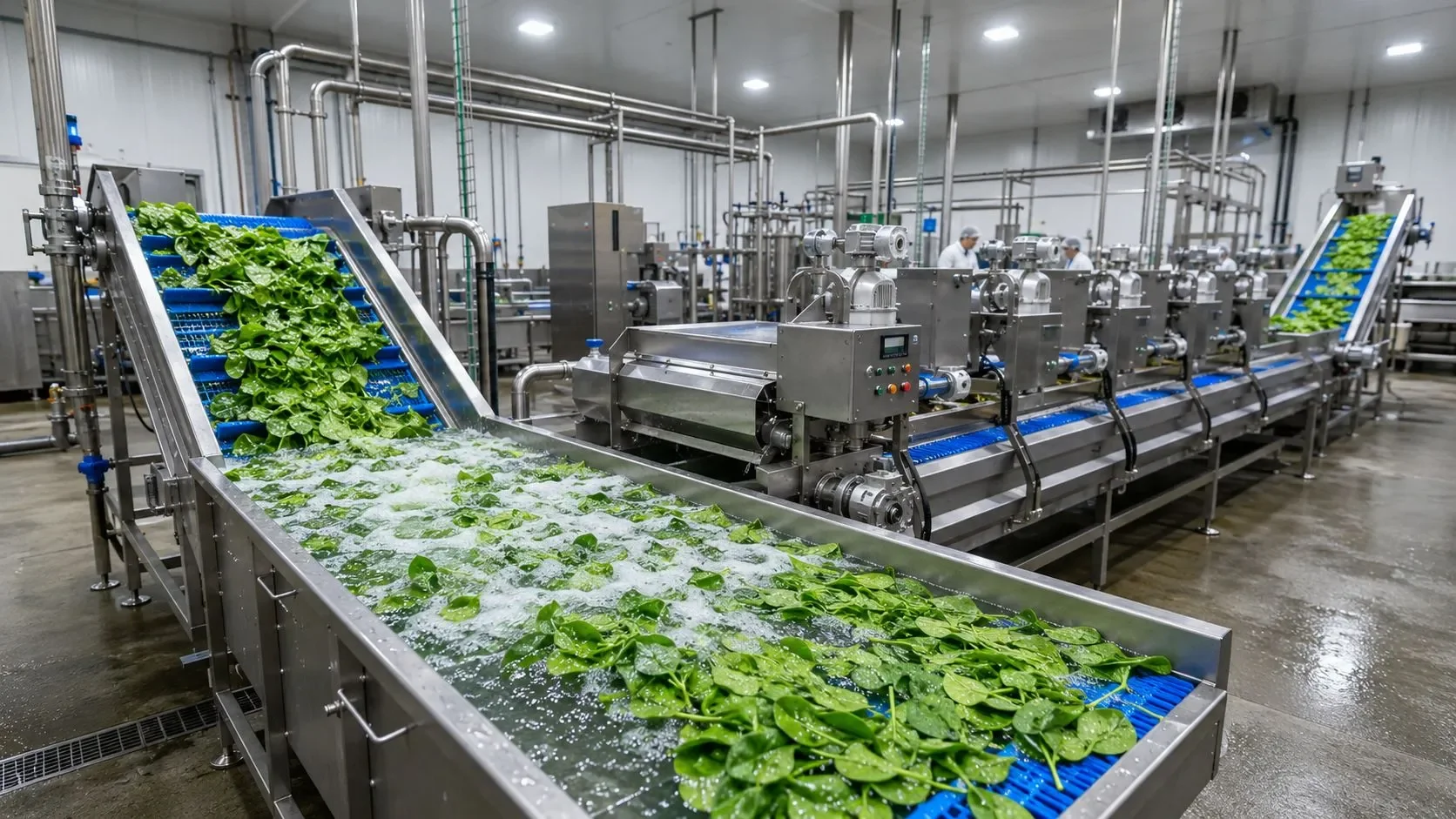
An industrial fruit washing line should balance cleaning performance, gentle handling, water management and downstream capacity.
What Is an Industrial Fruit Washing Line?
An industrial fruit washing line is a connected group of machines that receives, sorts, washes, rinses, drains, dries and inspects fruit before the next processing or packing stage.
A basic line may consist of:
Feeding → Inspection → Bubble Washing → Spray Rinsing → Draining → Air Drying → Sorting → Packing
A more complex processing line can add brushing, cutting, peeling, destemming, grading, cooling, freezing or juice-processing equipment. The line configuration should follow the fruit surface, firmness, contamination level and final product.
Joyshine’s vegetable and fruit washing processing line combines several washing and post-washing modules in a continuous system that can be customized to the raw material and factory space.
Why Fruit Requires Product-Specific Washing
Fruit varieties differ in firmness, skin condition, geometry and sensitivity to water or impact. These characteristics determine the washing method.
| Fruit Group | Handling Characteristics | Typical Washing Approach |
|---|---|---|
| Apples, pears and citrus | Firm skin; can usually tolerate controlled rolling | Bubble washing, optional soft brushing and spray rinsing |
| Strawberries and berries | Delicate surface; easily bruised | Gentle bubble washing, low drop height and controlled air drying |
| Grapes | Clusters can trap debris; berries can detach | Gentle immersion or bubble washing with careful transfer |
| Mangoes, peaches and stone fruit | Sensitive to impact and surface marking | Controlled feeding, mild washing and soft transfer surfaces |
| Dates and jujubes | Firmer surface; variable dust load | Bubble or spray washing followed by effective drying |
| Cut fruit pieces | Exposed surface and short processing window | Hygienic washing, rapid draining, cooling and immediate downstream transfer |
The strongest washing action is not always the best. Excessive brush pressure, turbulence or drop height can reduce the commercial value of delicate fruit even when the surface appears clean.
Typical Industrial Fruit Washing Process
A complete process can be divided into eight stages.
1. Fruit receiving and controlled feeding
Fruit enters through crates, bins, receiving hoppers or conveyors. The feeding system should avoid sudden dumping and excessive product depth.
Important design points include:
- Low transfer height for delicate fruit
- Adjustable feeding speed
- Even distribution across the washing belt
- Removal of empty crates and foreign material
- Space for weighing or batch identification
2. Pre-sorting and inspection
Pre-sorting removes rotten, damaged or heavily contaminated fruit before washing. This prevents unsuitable material from consuming washing capacity or contaminating recirculated water.
The section may use a manual inspection conveyor, roller sorting table, vibrating screen or size grader.
3. Pre-washing
A pre-wash removes loose leaves, dust and surface debris. When fruit arrives with a high soil or organic load, separating the first wash from the final rinse can improve water management.
4. Main washing
The main washing stage uses the method selected for the fruit. Bubble washing is widely used because the water movement can clean many fruit types without relying on strong mechanical friction.
5. Final spray rinsing
Fresh water sprays can remove loosened contaminants and reduce carryover from the recirculated wash tank. Nozzle pressure and angle should be adjusted to avoid damaging the fruit.
6. Draining and surface-water removal
After washing, free water should drain before air drying, sorting, cutting, freezing or packing. The line may use an inclined mesh conveyor, vibrating dewaterer or roller section.
7. Air drying and inspection
Air knives or blower systems remove remaining surface droplets without applying heat that could damage fresh fruit. An inspection conveyor can then support quality grading and manual removal of defects.
8. Grading, processing or packaging
The washed fruit may move to size grading, cutting, freezing, juice extraction or retail packing. The washing line must deliver the product at a rate and condition that the downstream equipment can accept.
Main Equipment in a Fruit Washing Line
Feeding Conveyor or Elevator
The feeding conveyor controls line input. Belt speed, sidewall height, belt material and transfer geometry should suit the fruit.
For soft fruit, avoid steep elevators and long drops. For firm fruit, water flumes or roller transfers may provide additional handling options.
Inspection and Sorting Conveyor
An inspection conveyor creates a controlled area for removing damaged fruit, leaves, stems and foreign material. Lighting, belt width and operator access affect inspection performance.
If the plant processes several fruit sizes, a grader may be installed before or after washing depending on the process and packaging requirements.
Bubble Washing Machine
A bubble washer injects air into the water tank to create movement around the fruit. The agitation helps loosen dirt and debris while a mesh conveyor transports the product through the machine.
A fruit and vegetable washing machine can combine air-bubble washing with a final high-pressure spray section. Belt speed and washing time should be adjusted for the fruit and contamination level.
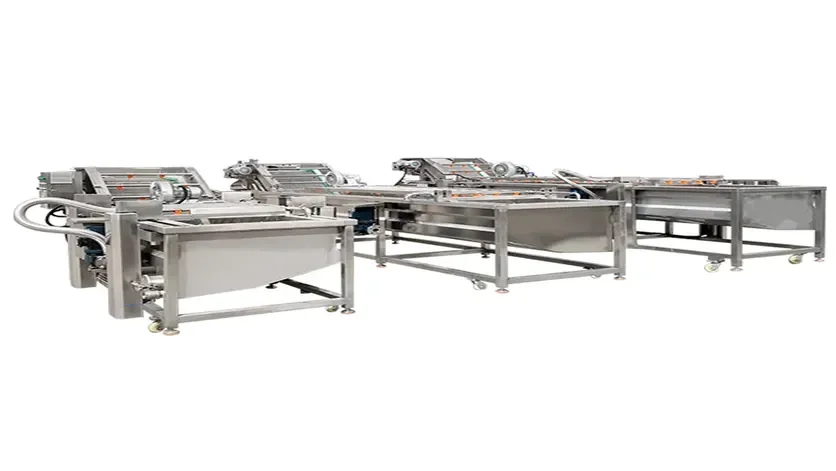
Bubble washing can provide continuous cleaning while reducing direct mechanical friction on many fruit types.
Brush Washing Machine
Brush washers use rotating brushes to clean the surface. They may suit apples, citrus and other firm fruit, but brush material, speed and pressure must be matched carefully.
A brush stage is not appropriate for every fruit. Delicate berries or easily marked fruit generally require gentler washing.
Spray Rinsing System
Spray nozzles provide final rinsing as the fruit exits the wash tank. The system should offer:
- Suitable nozzle pattern and coverage
- Adjustable water pressure
- Easy nozzle inspection and cleaning
- Separation of fresh rinse water from dirty return water where required
- Drainage that prevents standing water
Water Filtration and Recirculation
A recirculating system can reduce fresh-water demand, but reused water must be managed rather than simply returned to the tank.
A practical system may include:
- Debris screens
- Settling or collection zones
- Multi-stage filtration
- Overflow control
- Fresh-water replenishment
- Tank drainage and cleanout access
- Water-quality monitoring according to the plant’s hygiene plan
Water should flow from cleaner stages toward dirtier stages where the process design allows. The final rinse may require a separate fresh-water supply.
Dewatering Equipment
A dewatering stage removes bulk surface water before air drying. Options include mesh conveyors, vibrating screens and centrifugal equipment.
A vegetable dewatering machine may be suitable for selected cut or robust products, but delicate whole fruit needs a gentler method.
The dewatering method must remove free water without bruising or deforming the fruit.
Air Drying Machine
Air drying helps prepare fruit for inspection, labeling, packaging, freezing or further processing. A food air drying machine uses controlled airflow to remove surface droplets.
Key design factors include:
- Air velocity
- Nozzle or blower arrangement
- Product turning or rolling
- Conveyor speed
- Fruit sensitivity
- Required final surface condition
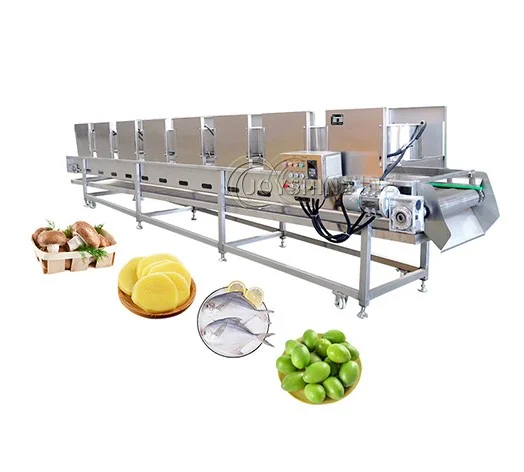
Effective surface drying supports downstream inspection, packing and cold processing.
Grading and Packaging Equipment
After drying, fruit can be graded by size, weight, color or quality. Retail products may move to trays, punnets, bags or cartons.
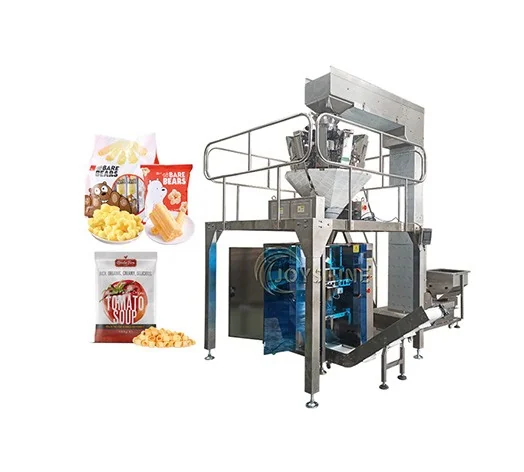
If the line uses automatic weighing and bags, the food packaging machine must be configured for the product dimensions, fragility, target weight and packaging format.
Washing Methods: Which One Fits Your Fruit?
Bubble washing
Best suited to many delicate and medium-firm fruits. It provides water movement around irregular surfaces with less direct friction than aggressive brushing.
Brush washing
Useful for firm fruit with dirt or wax-related surface requirements. Brush stiffness and speed require product testing.
Spray washing
Often used as a final rinse or for fruit that moves in a single layer. Pressure must be controlled.
Flume washing
Uses flowing water for transport and washing. It can reduce dry mechanical transfer but requires careful water and product-flow design.
Combined washing
Industrial lines often combine pre-washing, bubble washing and spray rinsing. Multiple mild stages can be safer than one aggressive cleaning stage.
For a general machine comparison, see How to Choose the Right Fruit and Vegetable Washing Machine.
Example Process Flows by Fruit and Final Product
Fresh apples or citrus for retail packing
Receiving → Pre-Sorting → Bubble or Brush Washing → Spray Rinsing → Air Drying → Grading → Labeling or Packing
Strawberries for fresh processing
Gentle Feeding → Manual Inspection → Bubble Washing → Spray Rinsing → Roller or Air Drying → Final Inspection → Packing Preparation
Joyshine implemented a 500 kg/h strawberry washing and drying line in Guatemala using gentle washing, surface-water removal and practical line integration.
Grapes for juice processing
Cluster Receiving → Sorting → Gentle Washing → Draining → Destemming and Crushing → Juice Processing
The washing section can connect to a grape juice production line when the final product is juice rather than packed fresh fruit.
Fruit for IQF freezing
Receiving → Sorting → Washing → Cutting if Required → Draining → Air Drying → Pre-Cooling → IQF Freezing → Packaging → Cold Storage
Surface-water control is especially important before an IQF freezing line because excessive moisture can contribute to ice buildup and product sticking.
Mixed produce for a distribution center
Feeding → Bubble Washing → Spray Rinsing → Air Drying → Inspection → Crate or Bag Packing
A 3-meter fruit and vegetable bubble washing machine project in Colombia demonstrates a flexible washing solution for a produce distribution application.
How to Calculate the Required Line Capacity
Start with the required daily output:
$$
\text{Required hourly capacity} = \frac{\text{Target daily output}}{\text{Effective production hours}}
$$
Use effective production hours rather than the full shift duration. Allow time for startup, cleaning, product changeovers, inspection and normal interruptions.
Then compare the capacity of every stage:
- Feeding rate
- Inspection labor or sorting capacity
- Washer loading and residence time
- Rinse conveyor output
- Dewatering and drying capacity
- Grading speed
- Packaging rate
- Cold-room or downstream processing capacity
The nominal capacity of the washer does not guarantee the capacity of the complete line. Fruit size, loading depth, belt speed and required cleaning time affect actual output.
Protecting Delicate Fruit During Washing
For strawberries, berries, grapes, peaches and other delicate fruit, line design should reduce mechanical stress.
Control transfer height
Keep drops between conveyors and machines as low as practical. Use guide plates or water-assisted transfer where suitable.
Avoid excessive product depth
A deep layer increases fruit-to-fruit pressure and makes washing or drying less uniform.
Adjust bubbles, brushes and sprays
Washing intensity should be high enough to clean but not so strong that it bruises, scratches or detaches the fruit.
Control residence time
Longer washing is not automatically better. Excessive time in water may affect sensitive fruit and slow the complete line.
Test the actual raw material
Fruit variety, ripeness and incoming condition can change handling behavior. Product testing is more reliable than selecting settings from a generic specification.
Water Management and Hygiene Design
A fruit washing line operates in a wet environment, so hygienic design must extend beyond the washer itself.
Check for:
- Food-contact materials suitable for the process
- Smooth and accessible product-contact surfaces
- Removable screens and reachable tank corners
- Sloped surfaces that drain fully
- Easy-open covers and inspection points
- Separation of raw and clean product zones
- Controlled water replenishment and overflow
- Floor drainage around the line
- Cleaning access under conveyors
- Documented cleaning and water-quality procedures
Do not assume that filtration makes recirculated water permanently suitable for reuse. The plant’s sanitation plan should define monitoring, water replacement and cleaning frequency.
Factory Layout for a Fruit Washing Line
A practical layout follows a one-way product flow from raw receiving to clean packing or processing.
Separate raw and clean zones
Raw fruit, dirty crates and waste should not cross the path of washed fruit and packaging materials.
Plan drainage before machine placement
Washing, rinsing and cleaning generate water. Floor slope, channels and drain positions should be coordinated with the equipment layout.
Leave room for operators
Inspection, trimming, crate handling and packaging may require manual workstations. Provide safe access without blocking conveyors.
Provide cleaning and maintenance clearance
Operators need access to tanks, filters, pumps, belts, nozzles and control panels. A line that fits tightly into the drawing may be difficult to maintain.
Coordinate utilities
Confirm water pressure, water quality, electrical supply, compressed air, cooling, drainage and wastewater handling.
Reserve future expansion space
A plant may later add a second washer, grader, cutter, freezer or automatic packing machine. Modular conveyors and reserved floor space simplify expansion.
The broader food processing plant equipment list can help identify auxiliary and downstream systems that should be included in the layout.
Straight, L-Shaped or U-Shaped Layout?
| Layout | Best Used When | Main Consideration |
|---|---|---|
| Straight line | Long, narrow workshop with clear receiving and discharge ends | Simple flow but requires sufficient building length |
| L-shaped line | Doors, columns or utility points prevent a straight arrangement | Corner transfers must protect delicate fruit |
| U-shaped line | Receiving and packing need to remain near the same side | Maintain separation between raw and clean zones |
| Modular cells | The plant processes several fruits or changes configuration often | Requires flexible conveyors and clear sanitation controls |
The correct arrangement depends on the actual building, not only the machine dimensions. Include operator space, crate circulation, waste removal, cleaning access and packaging-material movement in the layout drawing.
How to Choose the Right Fruit Washing Line
Define the fruit and final product
State the fruit variety, dimensions, ripeness, incoming contamination and whether it will be packed fresh, cut, frozen, dried or processed into juice.
Confirm cleaning objectives
Identify what the line must remove and what surface condition is required after washing.
Specify realistic capacity
Provide hourly and daily output plus operating hours, seasonal peaks and future expansion.
Match washing intensity to fruit sensitivity
Choose bubble, brush, spray, flume or combined washing based on product tests.
Design the post-washing stages
Draining, air drying, inspection and packing are essential parts of the washing solution.
Review water and sanitation requirements
Confirm filtration, fresh-water supply, tank drainage, cleaning method and water-quality controls.
Check equipment interfaces
Verify conveyor width, height, speed, product drop and control logic between machines.
Design around the factory
Provide a layout drawing showing walls, doors, columns, drainage, utilities, cold storage and packing areas.
Joyshine can combine washing, drying, inspection and packaging modules through its turnkey food processing plant solutions.
Information to Provide Before Requesting a Proposal
Prepare the following information:
- Fruit type and variety
- Fruit dimensions and average piece weight
- Incoming condition and contamination level
- Required output in kg/h
- Daily operating hours and seasonal peaks
- Required washing result
- Final product: fresh-packed, cut, frozen, dried or juiced
- Downstream equipment and packaging method
- Factory dimensions and layout drawing
- Water source, pressure and quality
- Drainage and wastewater conditions
- Local voltage, frequency and available power
- Preferred automation level
- Cleaning and sanitation requirements
- Destination country and installation needs
With these details, engineers can recommend the washing method, belt width, tank length, drying arrangement, conveyor interfaces and factory layout more accurately.
Common Fruit Washing Line Mistakes
Using one washing intensity for every fruit
Settings suitable for apples may damage berries or grapes. Product recipes should control belt speed, bubbles, brushes and spray pressure.
Focusing only on the washer
A washer without effective draining, drying and downstream transfer may simply move the bottleneck to the next stage.
Overloading the conveyor
Excessive product depth reduces cleaning uniformity and increases fruit-to-fruit pressure.
Ignoring water flow and filtration
Poor water management can recirculate debris, increase cleaning time and complicate sanitation.
Creating large transfer drops
A line can wash gently but still damage fruit between machines if transfer heights are not controlled.
Choosing packaging after the line is installed
Packing format and speed influence grading, drying, product accumulation and factory space.
Leaving insufficient cleaning access
Filters, tanks, conveyors and drains must be reachable for routine sanitation and maintenance.
Frequently Asked Questions
Which washing machine is best for delicate fruit?
Bubble washing is commonly used for delicate fruits because it reduces direct mechanical friction. However, bubble intensity, residence time, product depth, transfer height and spray pressure still need to be tested with the actual fruit.
Can one line wash different types of fruit?
Yes, if the equipment offers adjustable belt speed, washing intensity and modular stages. The plant should define separate operating and cleaning procedures for each fruit.
Does a fruit washing line need an air dryer?
It depends on the next step. Surface drying is particularly useful before visual inspection, labeling, retail packing, cutting or IQF freezing. The drying method must suit the fruit’s sensitivity.
How much space does a fruit washing line require?
Space depends on capacity, number of washing stages, drying length, inspection stations, packaging and layout shape. A supplier needs the factory drawing to calculate a practical arrangement.
Can wash water be recycled?
Many lines use filtration and recirculation to reduce water consumption. Water reuse must follow the plant’s hygiene plan, with suitable monitoring, replenishment, drainage and cleaning.
What capacity should I choose?
Calculate the required hourly output from daily demand and effective production hours. Then confirm that sorting, washing, drying and packing can all handle the same flow.
Can the washing line connect to cutting or freezing equipment?
Yes. A complete line can discharge to cutting, juice processing, drying, an IQF freezer or packaging. The interfaces and surface-water condition should be designed for the downstream process.
Conclusion
A successful industrial fruit washing line balances four priorities: cleaning performance, product protection, water and hygiene management, and smooth downstream flow.
The best configuration is determined by the fruit, contamination level, final product, capacity and factory layout. Feeding, washing, rinsing, draining, drying, inspection and packaging should be designed as one connected process rather than purchased as unrelated machines.
If you are planning a new fruit washing plant or upgrading an existing line, send Joyshine your fruit details, required capacity, final product, packaging method and factory drawing. The engineering team can prepare a customized process and layout proposal.