 English
  العربية
 Español
 Русский
Frying vegetables on an industrial scale presents unique challenges that distinguish it from processing meat or standard potato chips. High-moisture vegetables, such as eggplants, okra, and peppers, can cause severe temperature fluctuations in the fryer, leading to uneven cooking, heavy oil absorption, and rapid oil degradation. For food processors looking to expand their capacity, upgrading from semi-automatic batch fryers to a continuous frying system is essential for maintaining product quality while scaling output.
A recent Armenia 600kg/h fried eggplant continuous frying line case highlights how customized equipment solves these issues. By combining an advanced double-mesh belt conveying system, precision temperature control, and automatic oil filtration, producers can ensure that every slice of eggplant reaches the desired golden color and crispy texture without wasting expensive frying oil.
This guide explores the critical features you must consider when designing and selecting an industrial vegetable frying line.
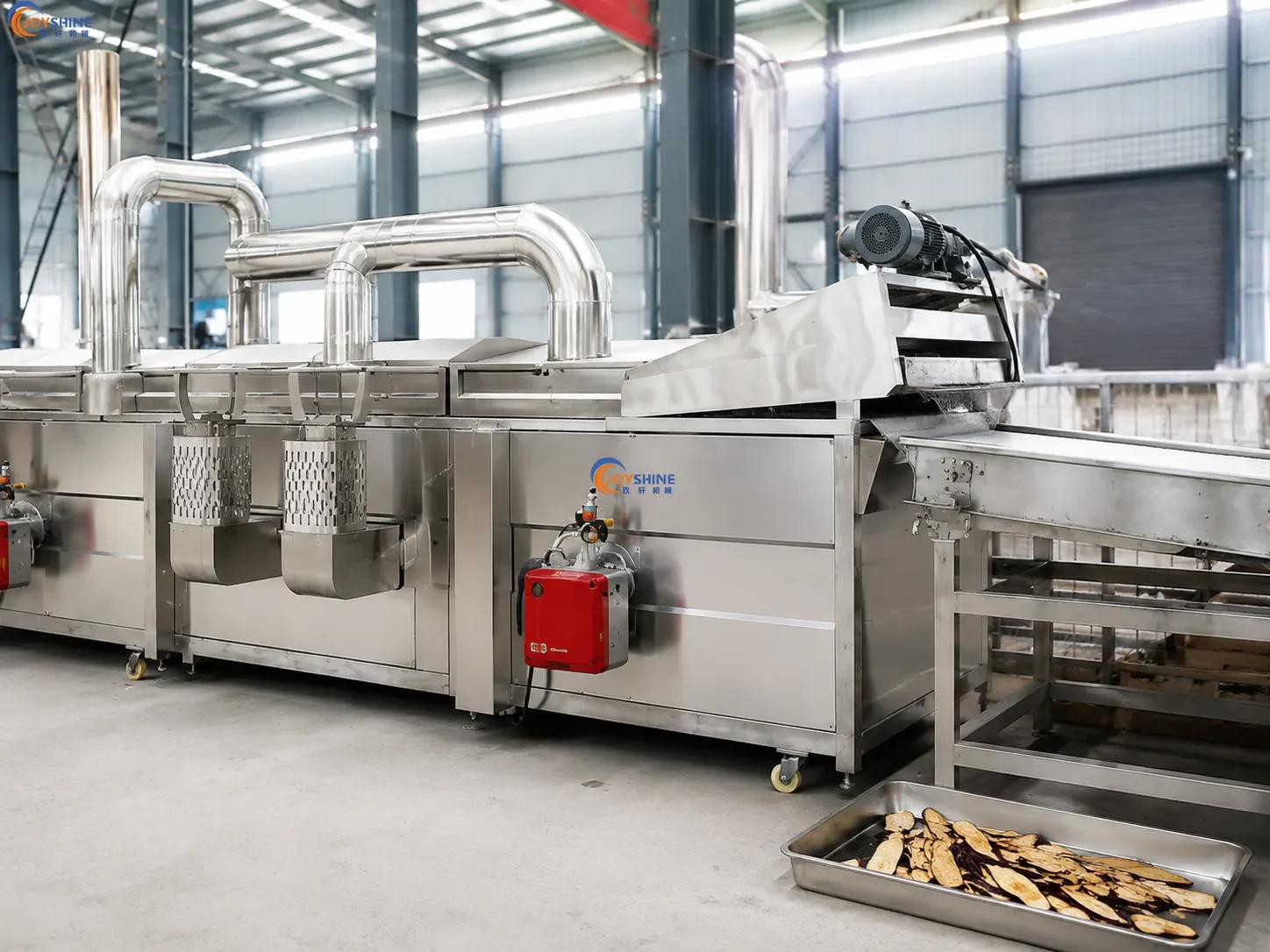
A complete industrial vegetable frying line manages conveying, frying, discharging, and oil filtration continuously to standardize product quality.
1. Why High-Moisture Vegetables Require Continuous Frying
Eggplant is notorious for acting like a sponge. When raw, inconsistent eggplant slices enter a batch fryer, they immediately lower the oil temperature. If the temperature drops too far, the slices absorb excess oil instead of frying crisply. Conversely, if the heat is too high, thin slices will burn before thicker pieces are cooked.
A continuous frying machine resolves this by utilizing an elongated tank with multiple heating zones and a highly responsive 0–300°C auto-control system. Instead of dumping a massive batch of cold vegetables into the oil at once, a continuous feeder introduces the sliced eggplants at a steady, controlled rate. This steady feed prevents sudden temperature drops and guarantees that every slice receives the exact same frying time and thermal exposure.
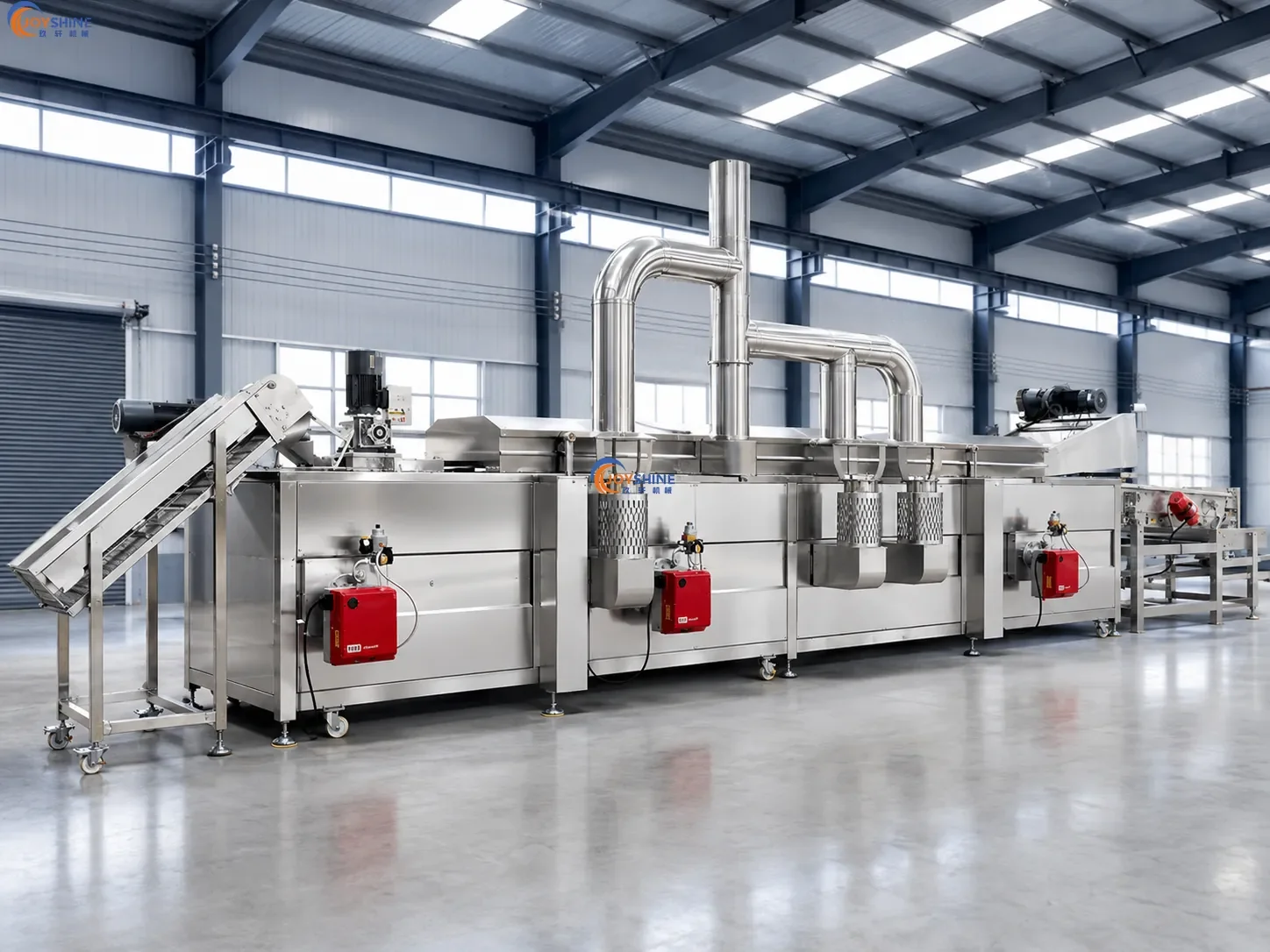
Continuous frying machines introduce product at a steady rate, preventing the sudden temperature drops that ruin high-moisture vegetables like eggplants.
2. The Double Mesh Belt Design for Floating Vegetables
Unlike heavy meat products that sink, sliced eggplants and light vegetable tempura tend to float on the oil's surface. If left unmanaged, the tops of the slices will remain raw while the bottoms burn.
An industrial continuous fryer handles this with a specialized Double Mesh Belt Design:
- The Lower Belt: Carries the product steadily through the length of the fryer.
- The Upper Belt: Features a wave shape and baffle plates to gently press floating vegetables down into the hot oil.
By trapping the eggplant slices between these two synchronized belts, the machine ensures that the vegetables are fully submerged and evenly fried on all sides. A frequency-controlled drive allows operators to adjust the belt speed (typically 2–15 m/min), allowing precise customization of frying time based on the vegetable's thickness and moisture content.
3. Oil Filtration: Protecting Product Color and Saving Costs
During the frying of battered or natural vegetables, small particles and burnt residue detach and accumulate in the oil. If not removed, these particles stick to new batches, ruining the golden appearance of the fried eggplant and causing the oil to rapidly turn dark and acidic.
To solve this, a high-quality frying line must integrate a robust oil management system:
- Preliminary Oil Filter Screen: Located within the main circulation loop, this screen catches larger debris before it can burn at the bottom of the tank.
- Vacuum Oil Filter (Optional but Recommended): For deep purification, a vacuum oil filter device effectively removes micro-particles. This advanced filtration can extend the usable life of frying oil by 30% to 50%, significantly reducing operating costs.
- Oil Storage Tank: A large-capacity auxiliary tank allows operators to safely drain, store, and refill oil during daily cleaning and maintenance.
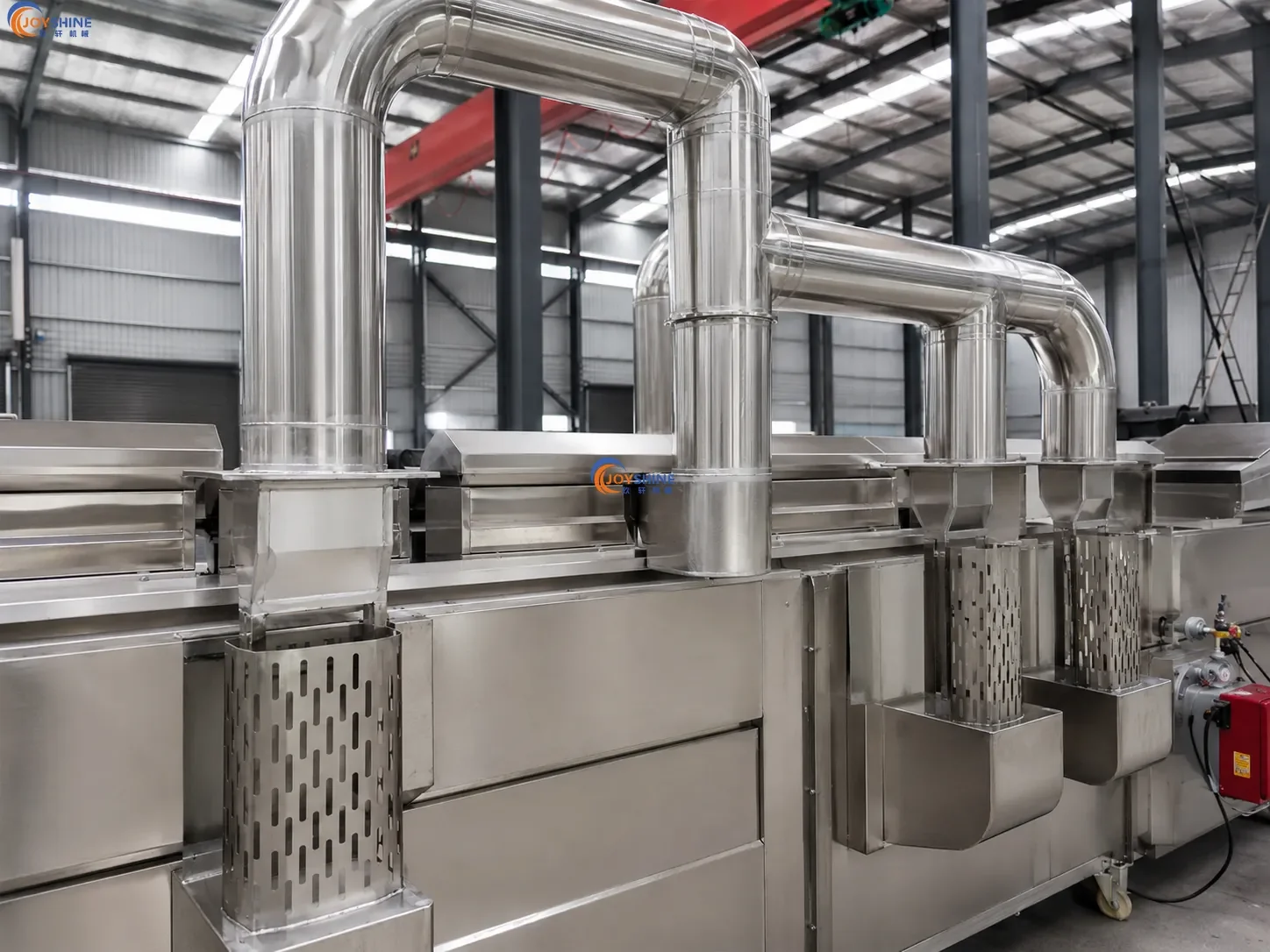
Automatic oil filtration systems continuously remove burnt particles during production, protecting product color and extending oil life.
4. Heating Methods and Maintenance Features
Industrial continuous fryers are highly customizable to fit local utility costs and factory infrastructure. Processors can choose between:
- Electric Heating: Provides highly precise temperature control and a clean factory environment.
- Gas Heating (LNG/LPG): Often preferred for high-capacity lines (like a 600kg/h or 800kg/h system) due to faster heat recovery and lower running costs in many regions.
- Dual-Mode Heating: Combines both gas and electric heating for maximum flexibility.
Easy Cleaning and Hygiene
Frying equipment must be cleaned thoroughly to prevent rancid oil buildup. Joyshine’s fryers are built from SUS 304 stainless steel and feature an automatic lifting device. With the push of a button, the entire mesh belt assembly lifts out of the oil tank, providing operators with complete access to clean the interior and heating elements safely and quickly.
The automatic lifting device allows the entire mesh belt assembly to be raised for easy and safe cleaning of the frying tank.
Frequently Asked Questions
Can the same continuous frying line be used for different vegetables?
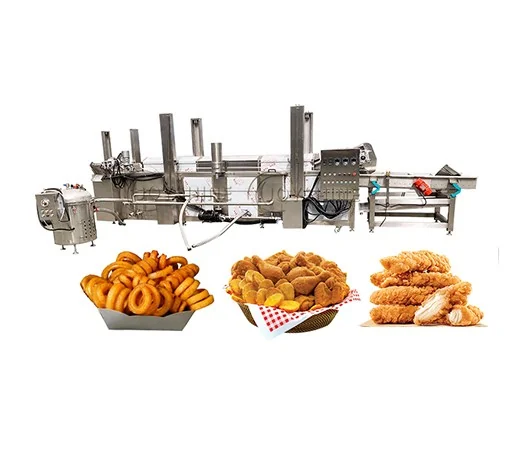
Yes. By adjusting the mesh belt speed and the automatic temperature control (0–300°C), the same line can process eggplants, okra, peppers, tempura vegetables, and even potato chips or chicken products.
Why do my fried eggplants absorb too much oil?
Excessive oil absorption usually happens when the frying oil temperature drops too low during a batch process, or if the product is not properly de-oiled after frying. A continuous fryer prevents temperature drops, and the addition of a centrifugal or vibration de-oiling machine immediately after frying removes surface oil before cooling.
How often do I need to change the frying oil?
Oil change frequency depends on your production volume and the amount of debris the vegetables leave behind. However, utilizing a continuous oil circulation system with a vacuum oil filter can extend your oil's life by 30-50% compared to fryers without active filtration.
Do I need to cut the vegetables uniformly before frying?
Absolutely. Consistent slicing is crucial. If slices are uneven, thin pieces will burn while thick pieces remain raw inside. Using a professional vegetable cutting machine prior to frying ensures that every slice cooks at exactly the same rate.
Upgrade Your Vegetable Frying Process
Transitioning from semi-automatic fryers to a fully continuous line standardizes your product quality, reduces labor dependency, and handles increasing order volumes with ease. Whether you need to process 100 kg/h or 800 kg/h of fried eggplants, tempura, or root vegetables, Joyshine Machinery offers tailored solutions including fryers, oil filters, cutters, and de-oilers.
Contact Joyshine with your product type, target capacity, and preferred heating method to receive a customized industrial frying line configuration and factory layout proposal.