 English
  العربية
 Español
 Русский
How to Choose a Continuous Fryer for Filled Pastry Products
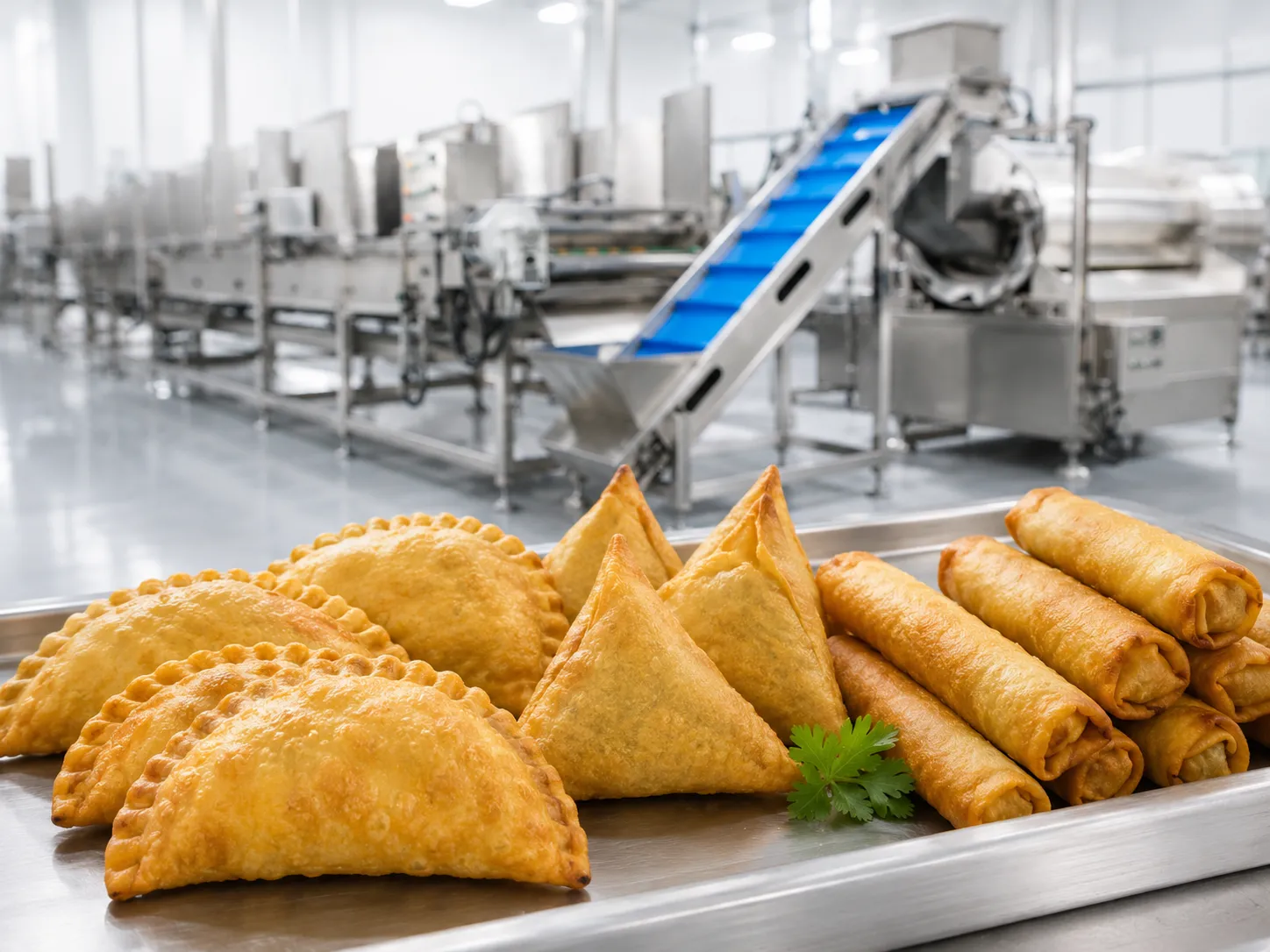
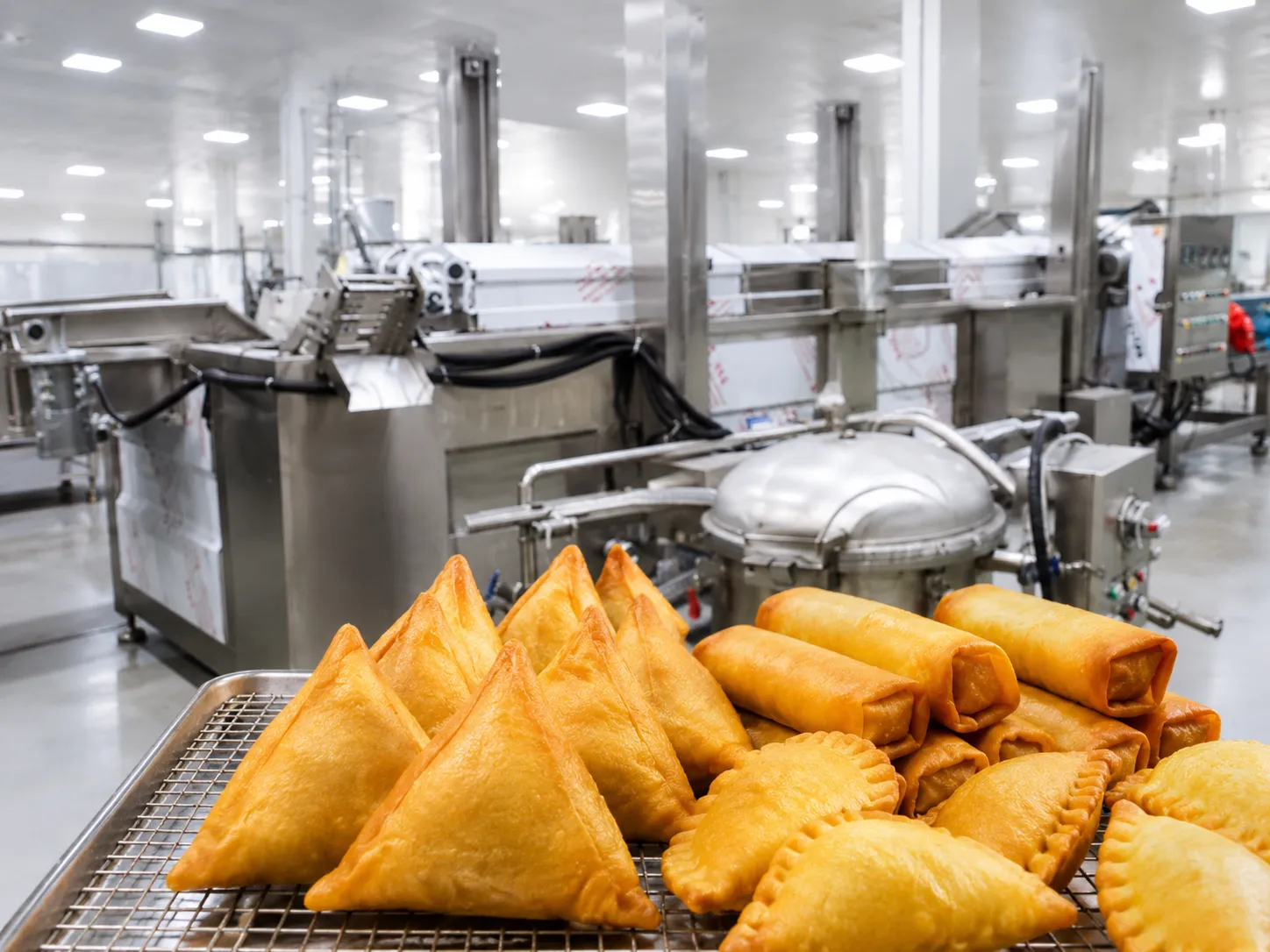
Filled pastry products are popular in many markets around the world. Products such as Chebureki, empanadas, meat pies, samosas, curry puffs, and spring rolls all require stable frying performance to achieve a golden color, crispy texture, and complete product shape.
For small production, manual batch frying may be enough. But when a food factory needs higher output, stable product quality, and lower labor cost, an industrial continuous fryer becomes a better choice.
Choosing the right continuous fryer is not only about machine size. You need to consider product weight, filling type, frying time, oil temperature, conveyor design, heating method, oil filtration, cleaning requirements, and factory layout.
This guide explains the key points to consider when selecting a continuous fryer for filled pastry products.
Why Filled Pastry Products Need a Suitable Fryer
Filled pastry products are different from simple fried snacks. They usually have dough on the outside and meat, vegetable, cheese, or other fillings inside. This structure makes the frying process more sensitive.
If the fryer is not suitable, several problems may happen:
- Uneven product color
- Broken or deformed pastry shape
- Filling leakage during frying
- Over-fried outside but undercooked inside
- High oil absorption
- Unstable texture between batches
- Low production efficiency
A suitable continuous fryer can help control frying time, oil temperature, conveying speed, and product movement. This is especially important for medium and large-scale food processing factories.
1. Confirm the Product Type and Size
The first step is to understand the product itself. Different filled pastry products have different frying requirements.
For example, Chebureki is usually larger and flatter. Empanadas and meat pies may be thicker. Spring rolls are long and narrow. Samosas may have a triangular shape and need careful conveying to avoid damage.
Before choosing the fryer, you should confirm:
- Product name
- Product shape
- Product length, width, and thickness
- Weight per piece
- Fresh or frozen product
- Filling type
- Dough thickness
- Required final color and texture
The size and shape of the product will directly affect the fryer width, conveyor type, oil depth, and frying time.
2. Calculate the Required Capacity
Capacity is one of the most important factors when choosing a continuous fryer. The capacity is usually calculated by kilograms per hour or pieces per hour.
For example, if each pastry weighs 100g and the target output is 3,000 pieces per hour, the required capacity is about 300kg/h.
When discussing capacity with a supplier, you should provide:
- Weight per piece
- Target pieces per hour
- Target kilograms per hour
- Working hours per day
- Future expansion plan
It is better to leave some capacity margin instead of choosing a fryer that only meets the current minimum requirement. If your production demand increases later, a slightly larger fryer will be more flexible.
3. Determine the Frying Time
Frying time is another key point. Filled pastry products usually need more time than thin snacks because the inside filling must be heated properly while the outside becomes crispy and golden.
Common frying time may vary depending on product type, thickness, and whether the product is fresh or frozen.
For example:
| Product Type | Possible Frying Time |
|---|---|
| Chebureki | About 3–5 minutes |
| Empanada | About 3–6 minutes |
| Meat pie | About 4–8 minutes |
| Spring roll | About 2–4 minutes |
| Samosa | About 3–6 minutes |
The final frying time should be confirmed through product testing. Once the frying time is confirmed, the supplier can calculate the suitable fryer length and conveyor speed.
4. Choose the Right Fryer Length
A continuous fryer works by moving products through the oil tank at a controlled speed. The longer the required frying time, the longer the fryer may need to be.
If the fryer is too short, the conveyor must run very slowly to reach the required frying time. This may reduce production efficiency. If the fryer is too long, it may occupy more factory space and increase cost.
For filled pastry products, the fryer length should be selected according to:
- Required frying time
- Target capacity
- Product size
- Conveyor loading density
- Factory layout
- Heating efficiency
A professional supplier should calculate the fryer size based on real product data instead of only recommending a standard model.
5. Pay Attention to Conveyor Design
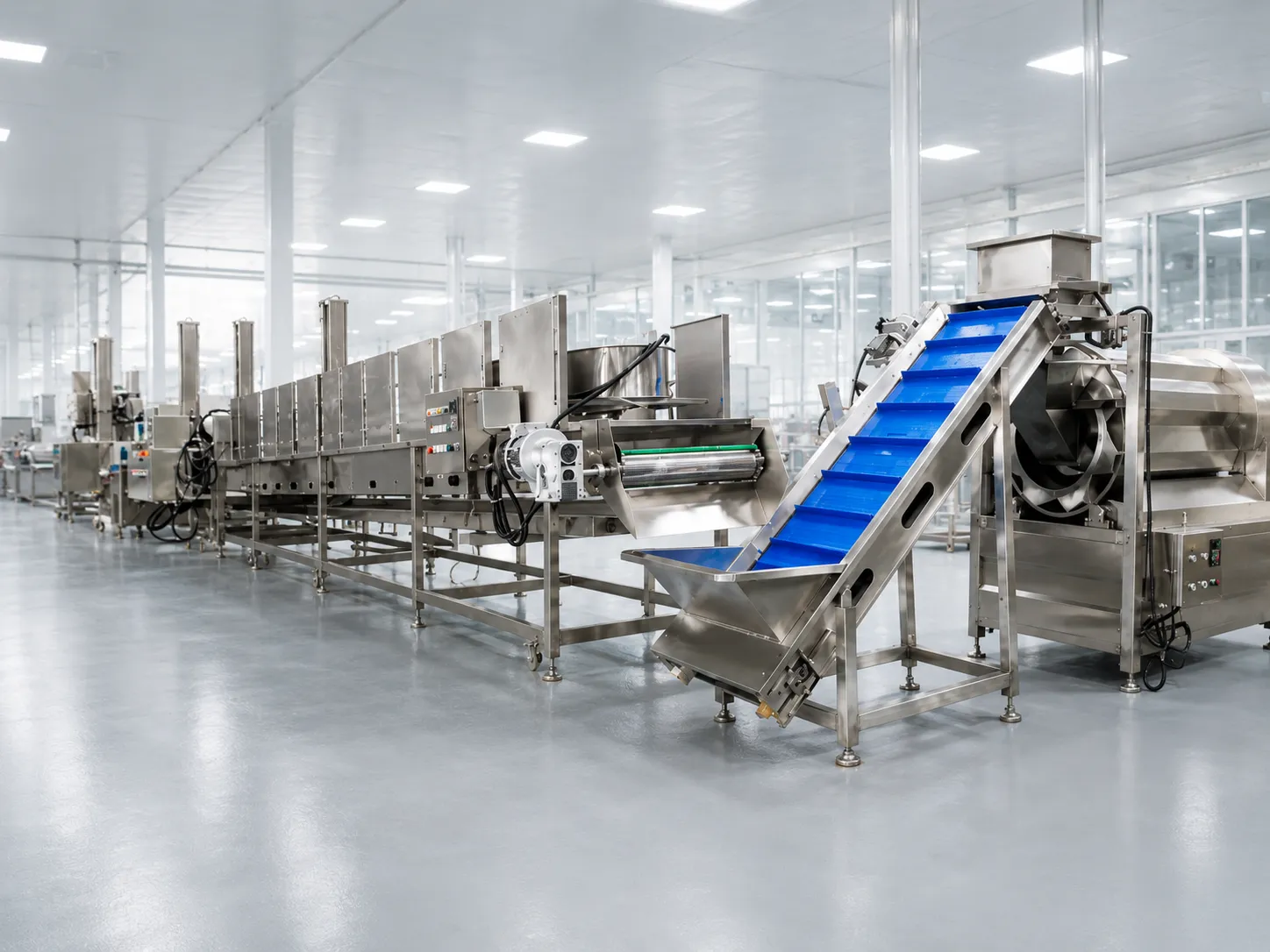
The conveyor system is very important for filled pastry products. The product must move smoothly through the fryer without being squeezed, flipped incorrectly, or damaged.
For larger pastries, the conveyor should provide stable support. For floating products, a hold-down belt may be needed to keep the products fully or partially immersed in oil. For fragile products, the conveyor structure should reduce impact and product collision.
When choosing the conveyor system, consider:
- Mesh belt type
- Belt width
- Product loading method
- Discharge method
- Hold-down belt requirement
- Conveyor speed adjustment
- Product spacing
- Easy cleaning and maintenance
A good conveyor design helps protect product shape and improve final appearance.
6. Select the Suitable Heating Method
Industrial continuous fryers can use different heating methods, such as electric heating, gas heating, diesel heating, or thermal oil heating. The best choice depends on local energy cost, factory conditions, production capacity, and customer preference.
Electric Heating
Electric heating is clean and easy to control. It is suitable for small and medium production lines or factories where electricity cost is acceptable.
Gas Heating
Gas heating is commonly used for medium and large production. It can provide strong heating capacity and is often more economical in some regions.
Diesel Heating
Diesel heating may be used in areas where gas supply is not convenient.
Thermal Oil Heating
Thermal oil heating is suitable for larger industrial frying systems that require stable and uniform heat transfer.
When choosing the heating method, you should consider not only machine price, but also long-term energy cost and local installation conditions.
7. Check Oil Temperature Control
Stable oil temperature is essential for filled pastry products. If the oil temperature drops too much after feeding, the product may absorb more oil and become greasy. If the temperature is too high, the outside may become dark before the inside is properly cooked.
A good continuous fryer should have accurate temperature control and stable heating performance.
Important points include:
- Automatic temperature control
- Temperature display
- Heating power matching capacity
- Even oil temperature distribution
- Safety protection
- Easy adjustment during production
For products with filling, stable temperature helps achieve consistent color, texture, and internal cooking effect.
8. Consider Oil Filtration and Residue Removal
Filled pastry products may release crumbs, flour, or small particles during frying. If these residues stay in the oil for too long, they may affect oil quality, product color, and final taste.
For continuous production, an oil filtration or residue removal system is very useful.
Depending on production requirements, the fryer can be equipped with:
- Bottom residue scraper
- Oil circulation system
- Oil filter
- Oil storage tank
- Automatic lifting system
- Easy-cleaning design
Better oil management can help extend oil service life and improve product consistency.
9. Think About Cleaning and Maintenance
Food factories need equipment that is easy to clean and maintain. This is especially important for frying machines because oil, crumbs, and product residue can accumulate during production.
When choosing a continuous fryer, check whether the machine has:
- Stainless steel food-grade structure
- Easy-open covers
- Liftable conveyor
- Easy oil discharge
- Smooth internal surfaces
- Accessible heating and conveying parts
- Simple maintenance design
Easy cleaning can reduce downtime and help the factory maintain food hygiene standards.
10. Match the Fryer with the Full Production Line
A continuous fryer is often only one part of the whole production process. For filled pastry products, the full line may include forming, feeding, frying, de-oiling, cooling, seasoning, freezing, or packaging.
Before purchasing the fryer, think about how it will connect with other equipment.
You may need to consider:
- Feeding height
- Discharge height
- Conveyor direction
- Space before and after the fryer
- Cooling or de-oiling equipment
- Packaging line connection
- Worker operation space
- Factory power and gas layout
A well-planned layout can make the whole production process smoother and more efficient.
11. Ask for Customization Based on Your Product
There is no single fryer model that fits every filled pastry product. The best solution should be customized according to your product and production target.
A professional fryer supplier should ask for product details before recommending a machine. If possible, you can provide product photos, videos, size, weight, frying time, and target capacity.
Useful information includes:
- Product photo or drawing
- Product size and weight
- Fresh or frozen condition
- Required capacity
- Current frying temperature
- Current frying time
- Desired final appearance
- Factory layout
- Preferred heating method
With this information, the supplier can recommend a more accurate and practical fryer solution.
Example: Continuous Fryer for Chebureki Production
Chebureki is a typical filled pastry product that requires stable frying time and careful conveying. It has a large surface area and contains filling inside, so the fryer must maintain product shape while ensuring even frying.
For a commercial Chebureki production project, Joyshine can customize the fryer according to product size, weight, frying time, and required output. For example, a 6-meter continuous fryer may be suitable when the product requires several minutes of frying time and medium-scale industrial capacity.
This type of solution can help food factories achieve continuous production, stable color, better product consistency, and lower manual operation.
Final Checklist Before Buying a Continuous Fryer
Before confirming your continuous fryer order, check the following points:
- What is the product size and weight?
- What is the target capacity per hour?
- What is the required frying time?
- What oil temperature is needed?
- Is the product fresh or frozen?
- Does the product float during frying?
- Is a hold-down belt required?
- Which heating method is suitable?
- Does the machine include oil filtration or residue removal?
- Is the fryer easy to clean?
- Can the fryer connect with other machines?
- Does the supplier offer customization and technical support?
Conclusion
Choosing a continuous fryer for filled pastry products requires more than comparing machine prices. You need to evaluate the product characteristics, production capacity, frying time, conveyor design, heating method, oil management, cleaning structure, and factory layout.
For products such as Chebureki, empanadas, meat pies, samosas, and spring rolls, the right fryer can help improve production efficiency, reduce labor, and keep product quality stable.
Joyshine provides customized industrial continuous fryers and automatic frying production lines for different food processing applications. Whether you need a small fryer or a complete frying line, our team can recommend a suitable solution according to your product and capacity requirements.
Need Help Choosing a Continuous Fryer?
If you are planning to produce filled pastry products on an industrial scale, contact Joyshine for a customized frying solution.