 English
  العربية
 Español
 Русский
Black truffles have an irregular surface with many folds and small cavities where clay, sand and organic debris can remain after harvesting.
For small batches, workers may clean the truffles manually with brushes and water. However, manual cleaning becomes slow, inconsistent and labor-intensive when a cultivation base, distributor or export processor needs to handle larger seasonal volumes.
The solution is not simply to use a stronger washing machine. Black truffles are high-value and relatively delicate products. Excessive brushing, uncontrolled water pressure or rough conveying can damage the surface and reduce the commercial value of the finished product.
A properly designed black truffle washing and air-drying line should therefore achieve two objectives:
- Remove clay and fine particles from irregular surfaces
- Protect the truffles from unnecessary mechanical damage
This guide explains the recommended processing flow, main equipment, configuration options and important factors to consider when planning an industrial truffle processing line.
Recommended Black Truffle Processing Flow
A complete process can be configured as follows:
Raw Truffle Receiving → Manual Inspection → Soft-Brush Pre-Cleaning → Bubble Washing → Fresh-Water Spray Rinsing → Vibration Dewatering → Air-Knife Drying → Grading → Packing or Freezing
The exact configuration should be adjusted according to the incoming soil level, required capacity, final product and packing method.
Factories processing several types of agricultural products may also integrate the truffle section into a modular vegetable and fruit washing processing line.
Why Black Truffles Require a Specialized Washing Process
Black truffles cannot be treated in exactly the same way as potatoes, carrots or other firm root vegetables.
Irregular Surface
Soil and fine sand can remain inside the natural folds of the truffle. Simple surface spraying may not reach these recessed areas.
High Product Value
Even a relatively small amount of surface damage can affect appearance, grading and selling value. The line must minimize hard drops, strong friction and uncontrolled collisions.
Heavy Seasonal Soil Load
Freshly harvested truffles may arrive with dry soil, sticky clay or fine mud attached to the surface. Sending all this material directly into a water tank can quickly contaminate the washing water.
Moisture After Washing
Water may remain inside surface folds after cleaning. The truffles should be dewatered and air-dried before grading, packing, refrigerated storage or further processing.
For these reasons, the best result normally comes from combining several gentle processing stages instead of relying on one aggressive washing machine.
1. Raw Material Receiving and Inspection
The first section of the line should include a receiving table or inspection conveyor.
Workers remove:
- Stones
- Leaves and plant residues
- Severely damaged truffles
- Oversized soil clumps
- Foreign materials collected during harvesting
This step protects downstream equipment and prevents unnecessary contamination of the washing water.
The feeding speed should remain stable. Overloading the conveyor may cause truffles to pile up, making inspection and washing less effective.
For larger projects, an adjustable feeding conveyor can be added to maintain continuous and even material flow.
2. Soft-Brush Pre-Cleaning
When incoming truffles carry a large amount of dry soil or clay, a soft-brush pre-cleaning machine should be installed before the water-washing section.
The purpose of this machine is not to peel or polish the truffles. It is used to loosen and remove large particles before the main washing process.
Important design considerations include:
- Food-grade soft brushes
- Adjustable brush rotation speed
- Adjustable conveying speed
- Limited contact pressure
- Smooth inlet and discharge transitions
- Easy access for cleaning
Dry or low-water pre-cleaning can significantly reduce the amount of mud entering the washing tank.
This lowers the washing load, slows down water contamination and helps the filtration system operate more efficiently.
Abrasive potato peeling machines should not be used for this stage because their surface action may be too strong for premium truffle products.
3. Gentle Bubble Washing
After pre-cleaning, the truffles enter the main washing tank.
A fruit and vegetable washing machine using air-bubble agitation is suitable as the core washing section.
Air introduced from the bottom of the tank creates circulating water movement. The truffles move gently through the water while soil and fine particles are loosened from their surface folds.
Compared with direct mechanical scrubbing, bubble washing provides several advantages:
- Reduced hard contact with the product
- More complete contact between water and irregular surfaces
- Adjustable washing time
- Continuous material conveying
- Easy integration with spray rinsing
- Compatibility with water filtration systems
The air volume, belt speed and water level should be adjustable. Settings that work for potatoes or carrots may be too aggressive for truffles.
Raw-material testing is therefore recommended before confirming the final operating parameters.
4. Fresh-Water Spray Rinsing
Bubble washing removes most of the attached soil, but suspended particles may remain on the truffle surface when the product leaves the tank.
A spray-rinsing section should be installed near the discharge end of the washer.
Fresh water is sprayed from multiple nozzles while the truffles move along the conveyor. This provides a final rinse before dewatering.
The spray pressure must be controlled carefully. Very high pressure does not always produce a better result and may cause unnecessary product movement or surface damage.
The nozzle arrangement should provide broad and even coverage rather than concentrating water on a small area.
For better water management, the system can use:
- Recirculated water for pre-washing
- Filtered water for the main washing tank
- Fresh water for the final rinse
This staged arrangement helps balance cleaning performance and water consumption.
5. Vibration Dewatering
Washed truffles should not move directly from the washing tank into final packing.
A layer of free water usually remains on the product surface. The first moisture-removal stage can use a vegetable dewatering machine.
The vibrating conveyor gently spreads the truffles and allows excess water to drain away.
This stage has two main functions:
- Remove larger water droplets before air drying
- Distribute the truffles into a more even layer
An even product layer is important because piled-up truffles prevent airflow from reaching all sides of the material.
The vibration intensity and conveying speed should be adjustable according to truffle size and loading density.
6. Ambient Air-Knife Drying
After vibration dewatering, the truffles enter an air-drying section.
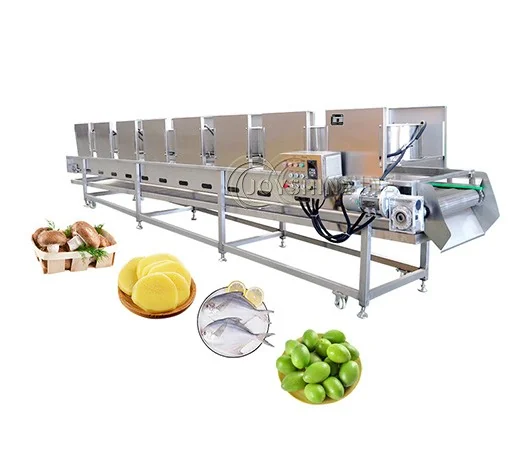
High-volume air is directed across the product surface through air knives or adjustable air outlets. The airflow removes smaller droplets that remain inside the folds and recessed areas.
For fresh truffle processing, this should normally be a surface-water removal process rather than thermal drying.
The goal is not to dehydrate or cook the product. The air-drying system should:
- Use normal or temperature-controlled air
- Provide airflow from multiple directions
- Avoid excessive product movement
- Maintain an even material layer
- Allow adjustment of fan speed and conveyor speed
- Be easy to open and sanitize
Combining vibration dewatering with air-knife drying is generally more efficient than asking the air dryer to remove all the water by itself.
7. Grading and Quality Inspection
Once surface water has been removed, the truffles can enter a grading and inspection section.
Depending on the customer’s business model, grading may be based on:
- Product diameter
- Individual weight
- Surface appearance
- Shape
- Damage level
- Final market or packing grade
Small projects may use a manual inspection conveyor. Larger processors can add a roller grader or customized sorting system.
The product transfer points between machines should be kept as low and smooth as possible. High drops can cause the truffles to collide with the conveyor or with each other.
8. Packing or Further Processing
The downstream configuration depends on the required final product.
Fresh Truffle Packing
Fresh products may be manually weighed and packed in trays, cartons or vacuum packages.
The selected packing method should match the product grade, distribution distance and cold-chain requirements.
Automatic Retail Packing
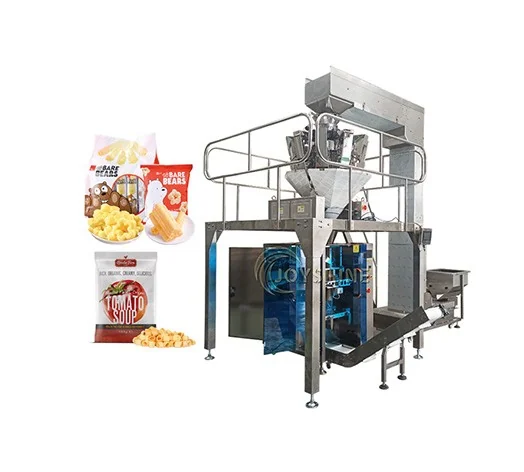
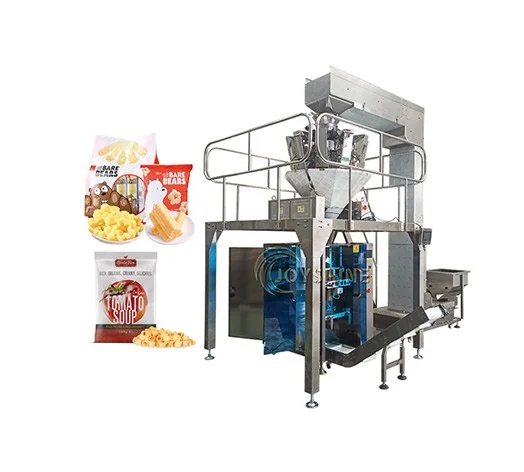
For suitable product formats, a food packaging machine can be integrated with the line. However, the feeding and weighing system must be selected specifically for the size, value and handling requirements of truffles.
Frozen Truffle Processing
Processors producing frozen truffles can connect the washing and drying section to an IQF freezing line.
The freezing configuration, product temperature, residence time and belt loading should be confirmed through product testing before finalizing the system.
How to Choose the Right Production Capacity
Production capacity should be calculated from the incoming raw material rather than only from the desired packed-product output.
When discussing the project with an equipment supplier, provide the following information:
- Maximum kilograms processed per hour
- Total processing volume per day
- Number of operating hours per shift
- Duration of the harvest season
- Expected percentage of soil and foreign material
- Typical truffle size range
- Final packing method
- Available workshop dimensions
- Local voltage and frequency
- Water supply and drainage conditions
The washing machine, dewatering conveyor and air dryer must have compatible capacities.
Selecting each machine independently may create bottlenecks. For example, an oversized washing tank will not improve total output when the air-drying section is too small.
You can also refer to our guide on planning a complete food processing production line before confirming the equipment layout.
Suggested Line Configurations
Small Cultivation Base or Packing Workshop
A practical configuration may include:
Inspection Table → Soft-Brush Cleaner → Bubble Washer with Spray Rinse → Vibration Dewatering → Air Dryer → Manual Grading and Packing
This solution keeps the process relatively simple while reducing dependence on manual washing.
Medium-Sized Export Processing Plant
A more continuous line may include:
Controlled Feeding → Brush Pre-Cleaning → Multi-Stage Bubble Washing → Fresh-Water Rinsing → Vibration Dewatering → Multi-Fan Air Dryer → Grading Conveyor → Packing
Water filtration, adjustable controls and additional inspection points can be added.
Large or Multi-Product Processing Facility
A larger factory may require:
- Automatic feeding
- Multiple washing stages
- Larger filtration tanks
- Continuous sediment removal
- Automatic grading
- Packing-line integration
- Centralized electrical control
- Production data monitoring
- Separate cleaning zones
A modular design is especially useful when the same factory processes truffles, mushrooms, root vegetables or other agricultural products at different times of the year.
Common Mistakes to Avoid
Using an Aggressive Peeling Machine
Equipment designed to remove potato or root-vegetable skin may damage the natural surface of truffles.
Skipping the Pre-Cleaning Stage
Sending heavily soiled truffles directly into the bubble washer causes the water to become dirty more quickly and increases the filtration load.
Applying Excessive Spray Pressure
Strong water jets may move the product violently without cleaning the recessed areas effectively.
Overloading the Conveyor
A thick product layer reduces inspection quality, washing uniformity and air-drying efficiency.
Packing Products While Still Wet
Residual water can affect product appearance, package cleanliness and downstream handling. Surface moisture should be checked before packing.
Ignoring Machine-to-Machine Matching
All sections must use compatible belt widths, inlet heights, discharge heights and processing capacities.
Questions to Ask Before Ordering a Truffle Washing Line
Before confirming a proposal, ask the supplier:
- Can the equipment be tested with actual black truffles?
- Can brush speed and conveyor speed be adjusted?
- Can the bubble intensity be controlled?
- Is the spray pressure adjustable?
- Does the system include water filtration?
- Are contact surfaces made from food-grade stainless steel?
- Can machine dimensions be adapted to the workshop?
- How are the machines opened for daily cleaning?
- Can the line connect to grading, packing or freezing equipment?
- What installation and operator-training support is available?
A supplier should design the line around the product and factory conditions instead of simply combining several standard machines.
Frequently Asked Questions
Can a standard vegetable washing machine clean black truffles?
A standard bubble washing machine can be used as the core section, but the airflow, conveyor speed, spray pressure, transfer height and contact surfaces should be adapted for delicate truffles.
Is brush washing necessary?
It depends on the condition of the incoming material. Soft-brush pre-cleaning is useful when the truffles arrive with large amounts of dry soil or clay. Products with lighter contamination may use a simpler configuration.
Does air drying mean heating the truffles?
Not necessarily. In this application, air drying normally means removing surface water with ambient or controlled-temperature airflow rather than using high-temperature dehydration.
Can the same line process other products?
A modular line may also process selected mushrooms, root vegetables and firm agricultural products. However, operating parameters and brush types must be changed for different materials.
Should an IQF freezer be included?
An IQF freezer is only required when frozen truffles are part of the final product plan. Fresh packed truffles usually proceed from drying to grading, packing and cold-chain storage.
Conclusion
A successful black truffle washing line must balance cleaning efficiency with gentle product handling.
Instead of relying on one high-intensity machine, the recommended process separates the work into several controlled stages:
Soft-Brush Pre-Cleaning → Bubble Washing → Spray Rinsing → Vibration Dewatering → Air-Knife Drying
This configuration removes different types of contamination gradually while reducing unnecessary friction and impact.
The final equipment design should be based on actual truffle samples, incoming soil conditions, production capacity, workshop layout and final packing method.
Joyshine Machinery provides customized washing, dewatering, air-drying, grading, freezing and packing solutions for agricultural processing projects.
Contact Joyshine and send us your raw-material photos, required capacity, workshop dimensions and final product requirements. Our engineers will help you design a suitable black truffle processing line.