 English
  العربية
 Español
 Русский
In industrial root vegetable processing, peeling is the critical first step that dictates product yield, appearance, and downstream efficiency. Whether you are operating a French fries production line or a fresh-cut vegetable facility, manually peeling hundreds of kilograms of potatoes per hour is impossible.
An industrial potato peeling machine automates this process using mechanical abrasion. However, root vegetables have vastly different skin toughness and surface textures. A machine configured for tough taro might cause excessive flesh loss on delicate carrots.
This guide explains how abrasion peeling works, compares the two primary roller types (emery vs. brush), and highlights key features to look for when investing in industrial peeling equipment.
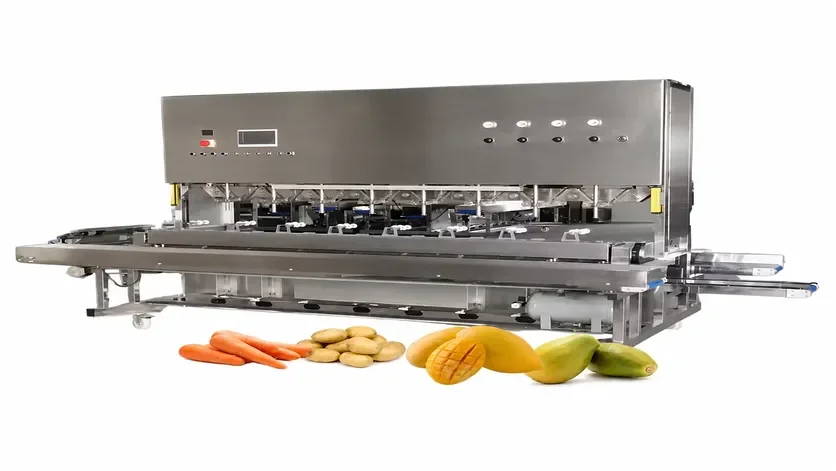
An industrial abrasion peeler uses rotating rollers and continuous water spray to remove root vegetable skins efficiently.
How Does Abrasion Peeling Work?
An abrasion peeling machine features a cylindrical chamber lined with specialized rotating rollers. As the root vegetables are loaded into the hopper, the rapid rotation of the rollers creates friction against the product surface, rubbing away the outer skin.
Simultaneously, a built-in water spray system continually rinses the peeled skin out of the chamber. This water serves a dual purpose:
- It flushes away debris, preventing the abrasive surfaces from clogging.
- It keeps the vegetables cool, preventing heat discoloration caused by continuous friction.
After a set time (typically 3 to 8 minutes), a pneumatic or motor-driven discharge door opens automatically, ejecting the peeled products onto a sorting conveyor.
Choosing the Right Roller: Emery vs. Brush
The heart of any root vegetable peeler is its roller configuration. Choosing the wrong texture will either leave skin on the product (requiring manual trimming) or grind away too much valuable flesh (reducing yield and profits).
1. Emery (Carborundum) Rollers
Emery rollers are coated with a tough, coarse abrasive material, similar to heavy-duty sandpaper.
- Best For: Hard, thick-skinned root vegetables with irregular shapes, such as mature potatoes, sweet potatoes, taro, and cassava.
- Advantages: Extremely aggressive peeling action. It easily removes tough outer skins and digs into the "eyes" of potatoes, ensuring a thorough peel.
- Considerations: Because the friction is intense, the peeling time must be strictly controlled (usually 2-5 minutes) to avoid grinding away the usable vegetable flesh.
2. Brush Rollers
Brush rollers use stiff nylon bristles rather than a sandpaper-like coating.
- Best For: Softer or thinner-skinned products like carrots, young potatoes, radishes, and ginger.
- Advantages: Provides a gentler peeling and polishing action. It removes the thin outer layer while leaving a smooth, attractive finish without aggressive flesh loss.
- Considerations: Brush rollers may struggle to remove deep indentations or extremely tough skins, occasionally requiring manual touch-ups for irregular products.
Tip: For flexible food processing plants, Joyshine designs peeling machines with easily interchangeable rollers, allowing you to switch between emery and brush setups based on the season's harvest.
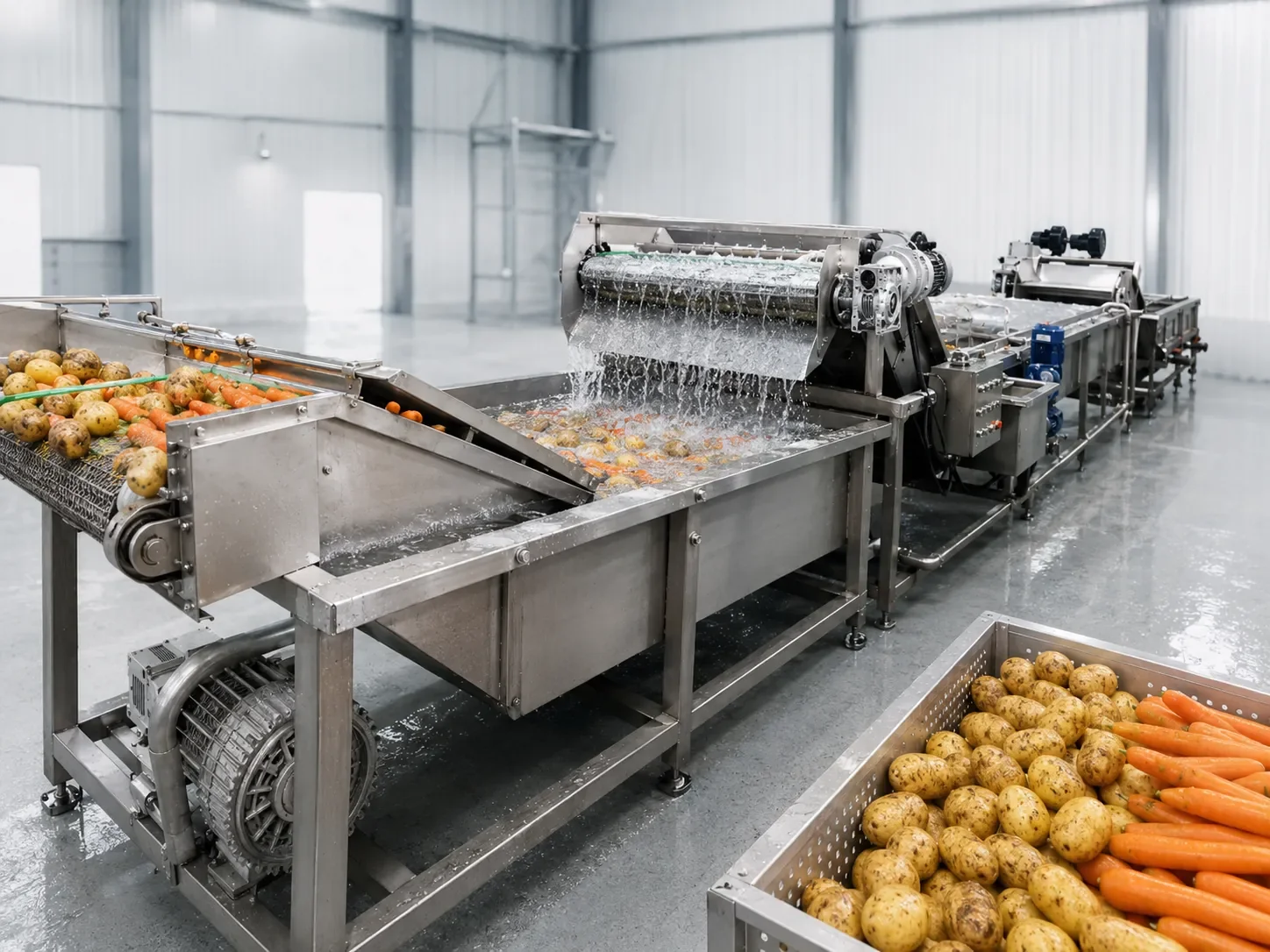
For large-scale operations like this 5,000 kg/h facility in the Dominican Republic, roller selection directly affects raw material yield.
Key Features of a High-Quality Industrial Peeler
When comparing equipment, capacity (usually ranging from 100 kg/h to 1,500 kg/h) is just the baseline. A reliable industrial peeling machine should include the following features:
High Peeling Rate with Controlled Yield
A quality machine should achieve a peeling rate of up to 95%. To protect your yield, look for machines with an adjustable timer control and a variable frequency drive (VFD). This allows the operator to precisely tune the roller speed and duration for different batches, stopping the cycle the moment the skin is gone.
Food-Grade Stainless Steel Construction
Root vegetable peeling is a wet, messy process involving soil, water, and plant acids. The entire machine body and all food-contact surfaces must be constructed from SUS 304 stainless steel to prevent rust and ensure compliance with food safety regulations.
Continuous Automatic Discharge
For high-throughput lines, manual unloading is a bottleneck. Advanced peelers feature an automatic discharge door that opens on a timer, dropping the peeled potatoes directly onto a conveyor feeding into the next stage, such as a slicer or a washing tank.
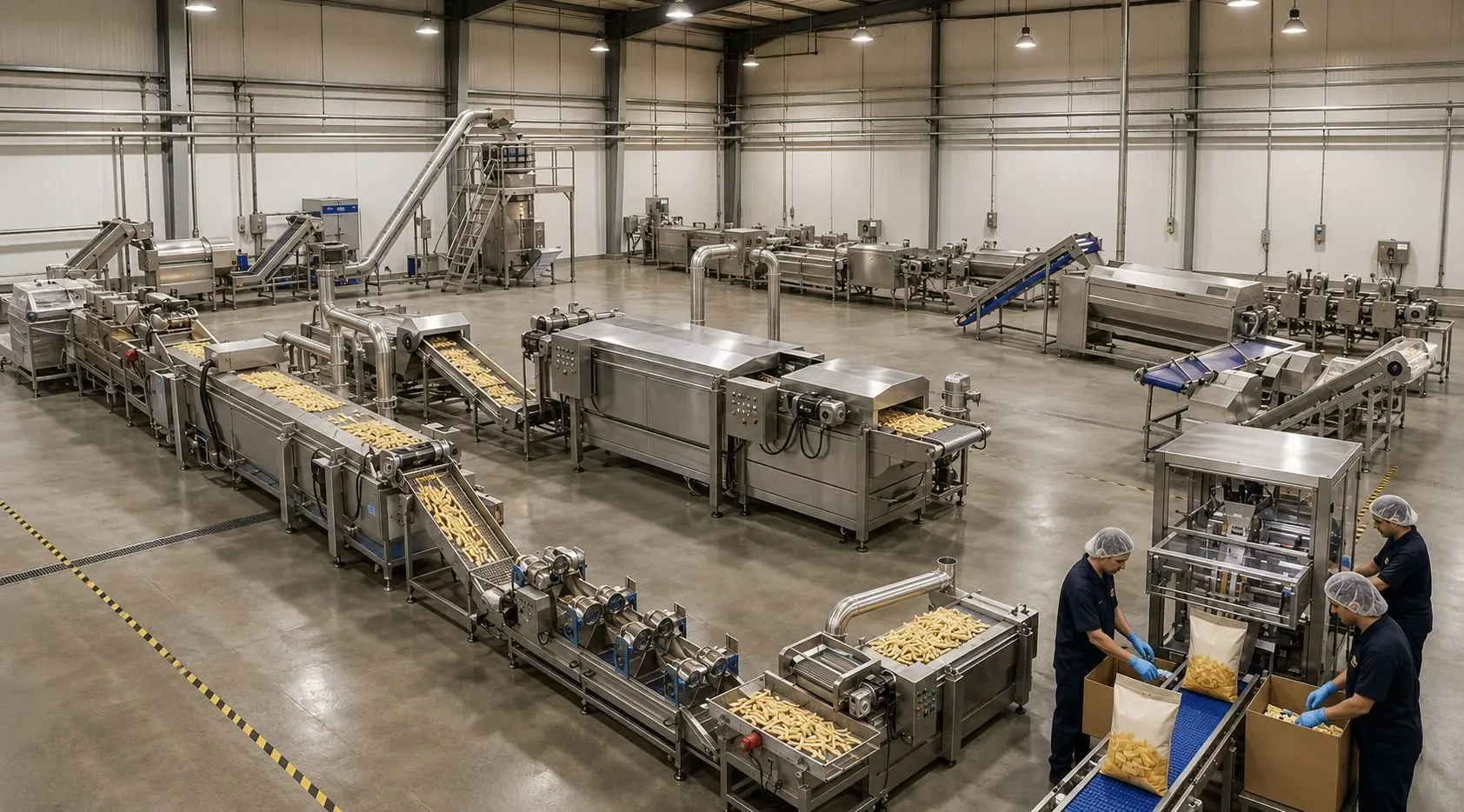
In a complete French fries line, the peeler must automatically discharge onto a conveyor to maintain continuous production.
Water Management and Recycling
Because abrasion peeling requires continuous water spray (consuming 0.5 to 2.5 m³/h depending on the model), efficient water management is vital. Look for machines with an integrated water collection and drainage design that can easily connect to a factory water-recycling system, separating the sludge and reducing utility costs.
Integrating the Peeler into Your Production Line
An industrial peeler rarely operates alone. It is the critical first step in several major processing lines.
For Potato Chips and French Fries:
The peeler feeds directly into an inspection conveyor where operators remove any remaining "eyes." The potatoes then proceed to a precision cutter, a blancher, and an industrial fryer. Efficient peeling ensures uniform slices and reduces oil contamination during frying.
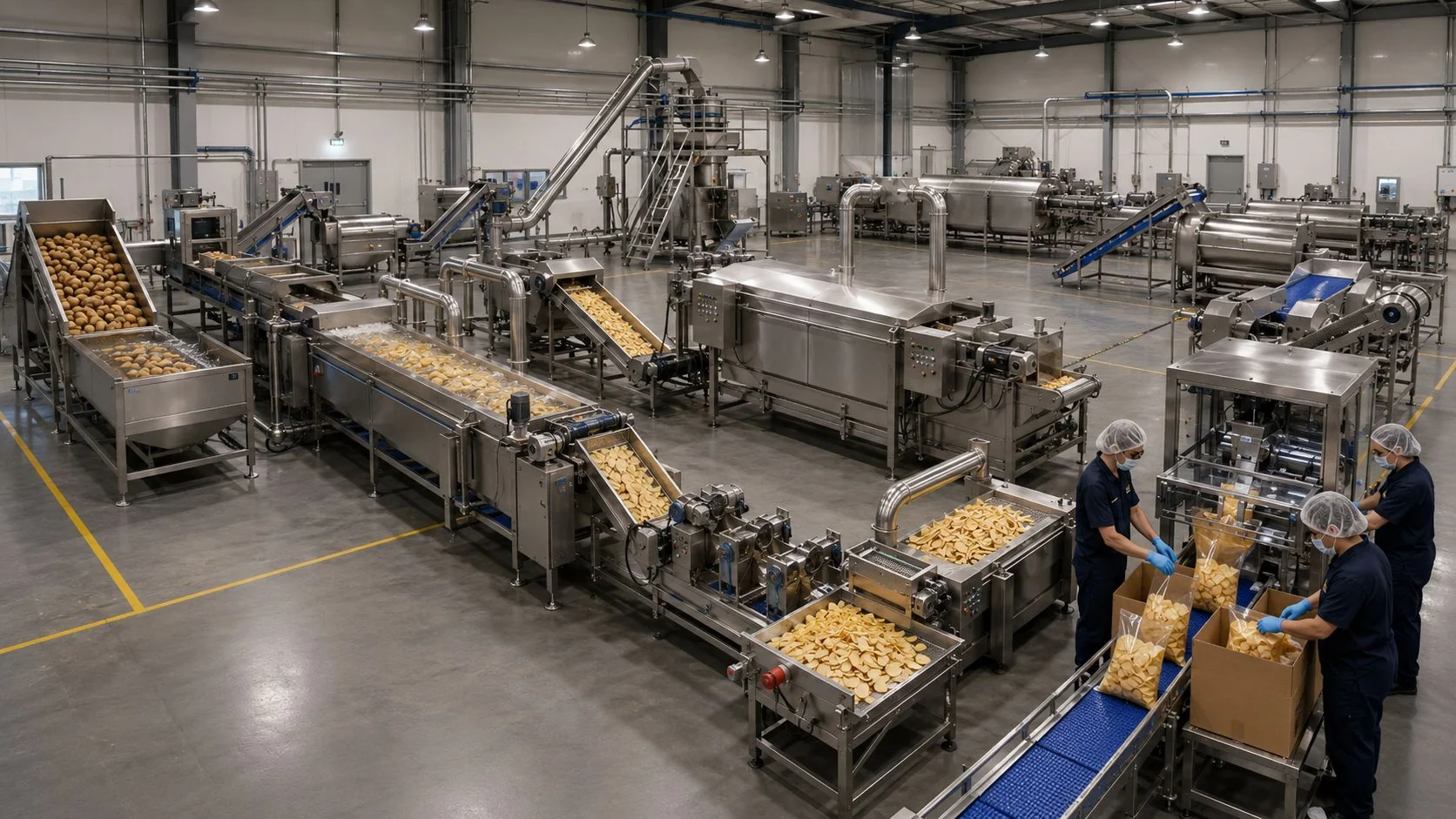
Consistent peeling is the foundation of high-quality, uniform potato chips and fries.
Frequently Asked Questions
Can one machine peel both potatoes and carrots?
Yes. By swapping the abrasive emery rollers (for potatoes) with stiff nylon brush rollers (for carrots) and adjusting the cycle time, the same machine frame can process both vegetables efficiently.
How do I prevent losing too much potato flesh?
Flesh loss occurs when the peeling cycle is too long or the roller speed is too high. You must calibrate the digital timer and variable speed drive based on the specific batch of potatoes. Once dialed in, flesh loss is kept to a minimum.
How often do the emery rollers need to be replaced?
The lifespan depends on daily usage and the amount of soil on the raw vegetables. In a high-volume factory, rollers may need replacing every 6 to 12 months. Joyshine designs the rollers for quick, easy replacement by your maintenance team.
Does the machine require manual loading?
Small models (100-300 kg/h) are often loaded manually. For larger industrial models (500-1,500 kg/h), we recommend installing an automatic hoist or inclined conveyor to feed the hopper continuously.
Optimize Your Root Vegetable Processing
Inefficient peeling wastes valuable raw material and slows down your entire factory. Whether you are processing cassava for starch, carrots for fresh-cut salads, or potatoes for a continuous frying line, selecting the right abrasion peeler is crucial for your profit margins.
Joyshine Machinery manufactures robust, customizable peeling equipment with capacities from 100 to 1,500 kg/h.
Contact Joyshine today to discuss your raw materials, and our engineers will recommend the exact roller configuration and machine size for your facility.