 English
  العربية
 Español
 Русский
Packaging is the final production step that turns a finished food product into a controlled retail or foodservice unit. A correct packaging machine must do more than close a bag: it has to match the product flow, target weight, bag format, film material, hygiene requirements, and the speed of the upstream line.
For chips, French fries, frozen vegetables, nuts, and other granular or piece-type foods, a vertical form-fill-seal system with a multi-head weigher is a common automatic solution. The Joyshine food packaging machine combines these functions for snack foods, frozen vegetables, chips, nuts, and similar products.
This guide explains how to select an industrial packaging system by product behavior, weighing method, bag format, line speed, and downstream handling requirements.
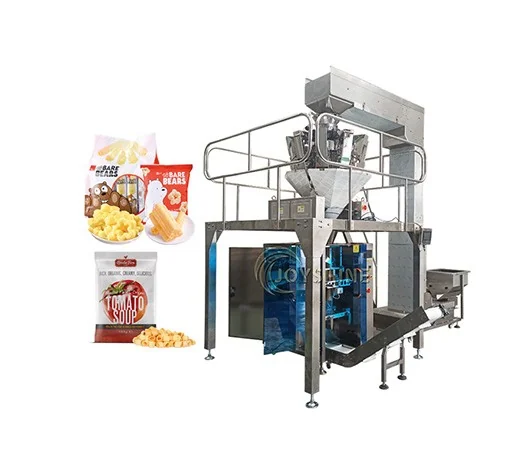
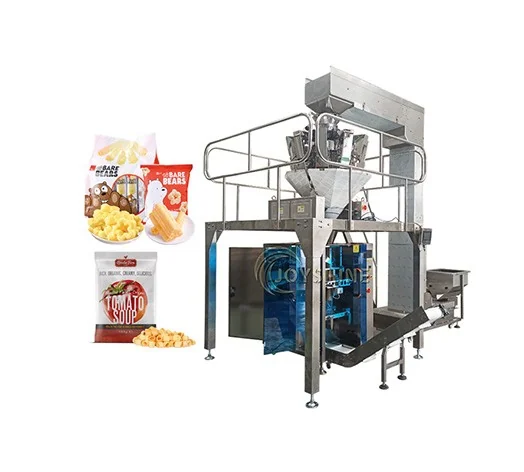
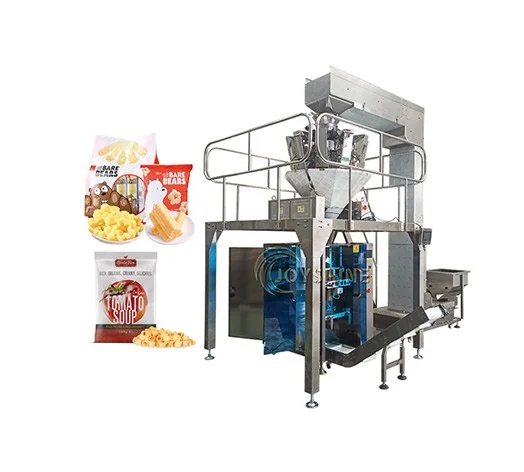
A multi-head weigher and vertical form-fill-seal system can weigh, fill, seal, and discharge finished bags in one continuous flow.
Understand the Core Packaging Process
A vertical form-fill-seal, or VFFS, system converts roll film into bags, fills them with a measured product quantity, and creates the final seals. When integrated with a multi-head combination weigher, the system can calculate combinations of product portions to approach the target weight before each discharge.
The practical process follows five stages:
- Film feeding: Roll film enters the transport system under controlled tension.
- Bag forming: A forming collar shapes the film into a tube and produces the longitudinal seal.
- Product weighing: The multi-head weigher prepares a target portion.
- Filling and sealing: Product drops into the formed bag, which is top- and bottom-sealed, then cut.
- Bag discharge: Finished bags move to accumulation, inspection, or case-packing equipment.
Start With the Product, Not the Machine Model
The same packaging machine platform cannot be configured identically for every product. Product flow characteristics affect hopper selection, drop height, weighing performance, bag size, and the connection between upstream and downstream conveyors.
| Product category | Key packaging concern | Typical configuration question |
|---|---|---|
| Potato chips and puffed snacks | Breakage during feeding and drops | Do you need gentle hoppers and reduced transfer height? |
| Frozen vegetables and IQF foods | Product flow at low temperature and changing piece size | Can the infeed and weigher keep a stable flow without bridging? |
| French fries | Product size, bag weight, and line-speed matching | Does the packing rate match the finished output from the freezer? |
| Nuts and dried fruit | Weight accuracy and recipe flexibility | What weighing range and bag formats are needed? |
A French fries production line typically ends with freezing and packing. The packaging system should be sized according to the finished frozen-fries flow, not the raw-potato input at the start of the line.
Match Weighing Range and Accuracy to the Target Bag
A multi-head weigher is useful for granular and piece-type foods because it can combine portions from multiple heads to reach the selected target weight. Joyshine lists 10-head and 14-head weigher configurations with a 50–1,000 g or 50–2,000 g weighing range, depending on the model.
When selecting a system, define:
- Target net weight for every bag size
- Minimum and maximum bag weights in the product portfolio
- Allowable variation in net weight
- Product bulk density and piece-size variation
- Required number of flavor or SKU changes per shift
The listed packaging-machine range uses multi-head weighing accuracy of ±1–3 g. Actual performance depends on product characteristics, target weight, feeding consistency, and machine setup, so trials with the real product are important before confirming a final configuration.
Choose a Bag Format That Fits the Product and Sales Channel
Bag format influences shelf presentation, film use, sealing design, and packing-machine settings. The Joyshine VFFS platform supports pillow bags, gusseted bags, and quad-seal bags.
| Bag format | Common use | Selection consideration |
|---|---|---|
| Pillow bag | Chips, frozen vegetables, snacks | Simple retail format; confirm width and length for the target weight |
| Gusseted bag | Products needing more internal volume or a wider base | Check product settling and carton-packing requirements |
| Quad-seal bag | Retail products requiring a more structured presentation | Confirm film selection, bag dimensions, and sealing requirements |
The listed machine range supports bag widths from 80 to 350 mm and lengths from 80 to 450 mm, depending on model. Film type must also match the desired barrier, sealing behavior, and product-storage conditions.
Match Packaging Speed to the Whole Production Line
Speed should be calculated from finished-product flow, target bag weight, and expected operating efficiency. A packaging machine can be fast on paper but still become a bottleneck if its target weight, product feed, or bag size does not match the upstream line.
Joyshine lists packaging speed from 10 to 120 packs per minute across the available packaging-machine range. Use the following planning logic:
$$
\text{Required packs per minute} = \frac{\text{Finished product flow per minute}}{\text{Target net weight per pack}}
$$
Then allow for normal production variation, product changeovers, quality checks, and the accumulation capacity between the upstream process and the packaging machine. Do not size a system only at its maximum rated speed.
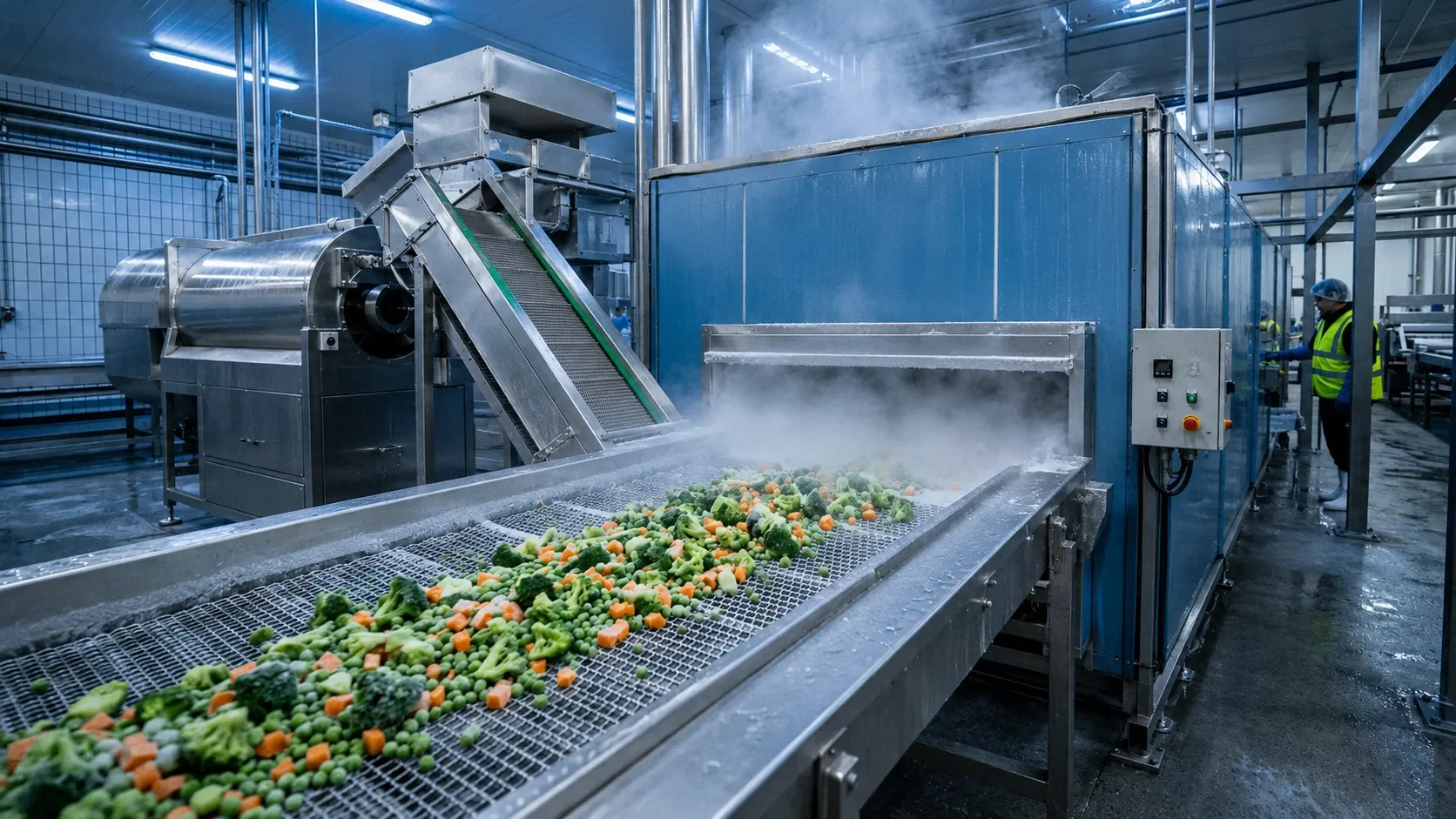
For frozen foods, packaging capacity should match the stabilized product flow leaving the IQF section.
Consider Film, Sealing, and Shelf-Life Options
The selected packaging film affects seal performance and product protection. The Joyshine packaging page states compatibility with laminated film, PE, and biodegradable films. It also lists a film-thickness range of 0.04–0.12 mm for the standard model range.
Ask these questions before choosing a film and sealing configuration:
- Does the product need moisture, oxygen, or grease barrier protection?
- What bag appearance and print requirements apply?
- Is nitrogen flushing required for the product and target shelf life?
- What seal strength is needed for product weight and distribution conditions?
- Can the selected film run reliably on the forming collar and sealing jaws?
Optional nitrogen flushing can displace air within the bag. Whether it is appropriate depends on the product, packaging specification, and shelf-life plan.
Plan Hygiene, Changeovers, and Inspection
Food packaging equipment should be selected around cleaning access as well as speed. Product-contact parts, hopper access, film-path accessibility, and changeover steps all affect daily uptime.
Joyshine specifies SUS 304 construction for the packaging machine and lists an IP65 washdown design. The page also lists optional metal detection and date coding. These options can be considered when your packaging process needs product inspection or batch identification.
For operations that handle multiple flavors, bag sizes, or products in a shift, document the required changeover sequence before choosing the equipment. This should include film roll changes, forming-collar changes, recipe selection, cleaning requirements, and test-bag approval.
Integrate Packaging With Freezing, Frying, and Finished-Product Handling
Packaging does not work as an isolated island. It must connect to the upstream line with enough buffer capacity to absorb normal production variation.
An IQF freezing line can process vegetables, fruits, seafood, meat, prepared foods, and frozen snacks, with packaging following product discharge. For frozen items, consider conveyor insulation, product temperature, product separation, and the distance between freezer discharge and the weigher.
The French fries production line includes freezing and packing as its final stage. Matching the packer to this final flow helps avoid product accumulation and supports stable retail-bag output.
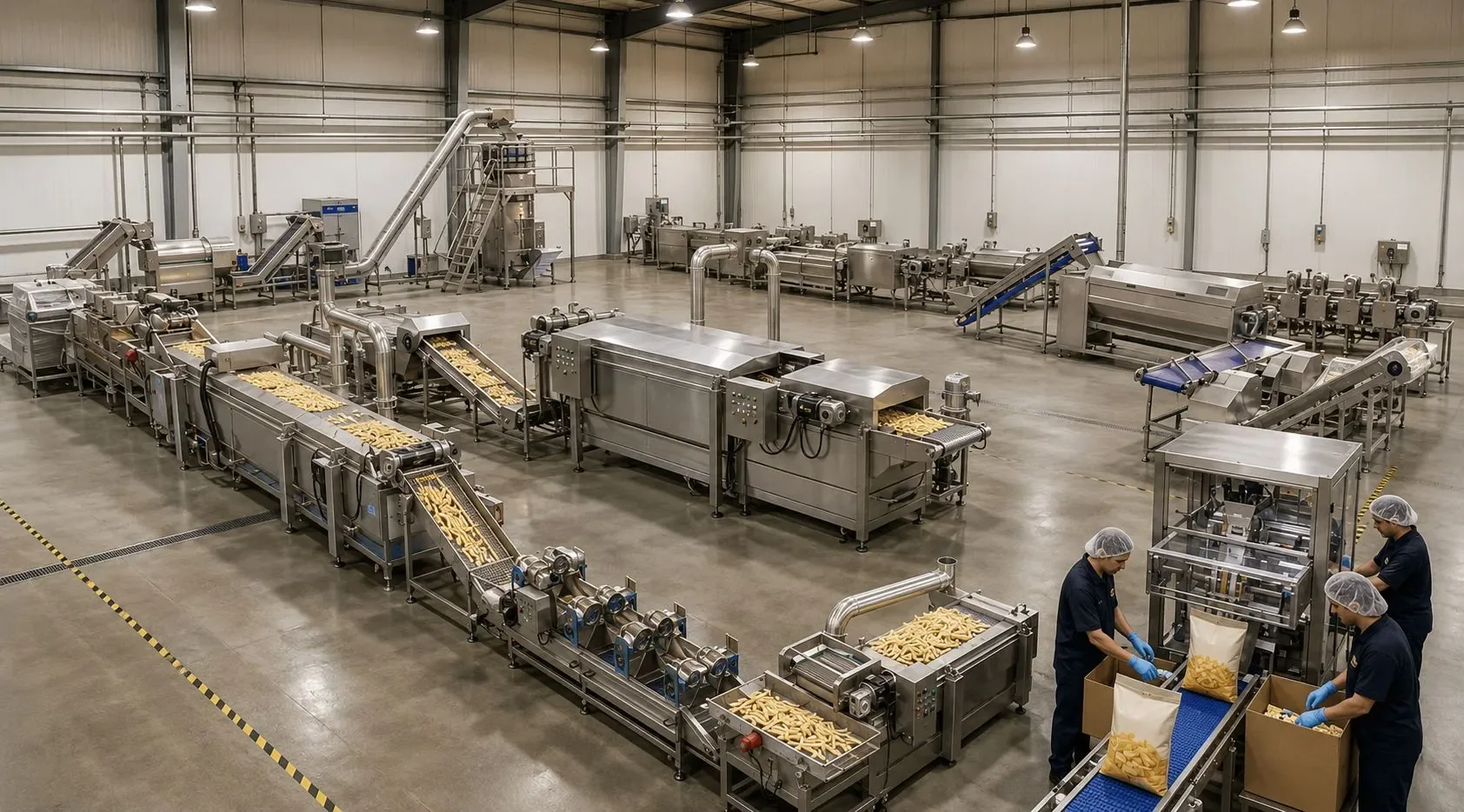
The final packing section should be planned with the upstream freezing or finished-product flow in mind.
Frequently Asked Questions
What products can a VFFS packaging machine pack?
A VFFS system with a multi-head weigher is suitable for granular and piece-type products such as snack foods, potato chips, French fries, frozen vegetables, nuts, dried fruit, and similar products. The final configuration should match the product’s flow, fragility, target weight, and bag format.
How do I choose between a 10-head and 14-head weigher?
Start with target bag weights, required speed, product flow, and accuracy expectations. A supplier can recommend the weigher arrangement after reviewing actual product samples and the required production rate.
Can the same machine pack different bag sizes?
The packaging page states that the system supports multiple bag formats and changeover between bag sizes. Confirm the required bag width, length, film type, forming components, and changeover procedure for your specific product range.
Is nitrogen flushing necessary for frozen foods or snacks?
It is an optional feature. Its suitability depends on the product, selected film, desired shelf life, and packaging specification. Confirm the final packaging requirement before selecting the gas-flushing configuration.
Select a Packaging System for Your Product
A suitable industrial food packaging machine should be selected after defining the product, target bag weight, expected output, bag format, film specification, factory conditions, and upstream-line connection.
Contact Joyshine with your product type, target package size, required packs per minute, and factory layout to discuss a packaging configuration for snacks, frozen foods, vegetables, or French fries.